Chicago’s Former Greyhound Station Gets a 2-Year Upgrade Plan After $19.2M City Purchase
CHICAGO— The future of Chicago’s main intercity bus terminal is becoming clearer.
After approving a $19.2 million purchase of the bus station at 630 W. Harrison St., city officials have now laid out a two-phase improvement plan extending through 2028, with upgrades planned for the aging terminal itself and the streets immediately surrounding it.
The investment is significant because the Harrison Street terminal is not a lightly used neighborhood bus stop. The facility has 24 bus bays, currently serves operators including Greyhound, FlixBus, Jefferson Lines and Barons Bus, and has historically handled about 500,000 passengers annually.
Phase One Starts With Security, HVAC, Roofing and Lighting
The first round of improvements is expected to take place in late 2026 and early 2027.
Rather than immediately redesigning the entire terminal, the city is prioritizing some of the building’s most immediate operational and safety needs.
Planned work includes:
A new HVAC system
A new roof
Repairs to exterior lighting
Improvements to the station’s camera-monitoring system
Continued deployment of two armed security guards around the clock
Monitoring and maintenance of 64 security cameras inside and outside the terminal
Security has been one of the biggest concerns surrounding the property. During earlier discussions about the acquisition, nearby residents and city officials raised issues involving safety, cleanliness and conditions around the terminal. City officials had already committed to maintaining armed security and reviewing the existing surveillance system as part of the public takeover.
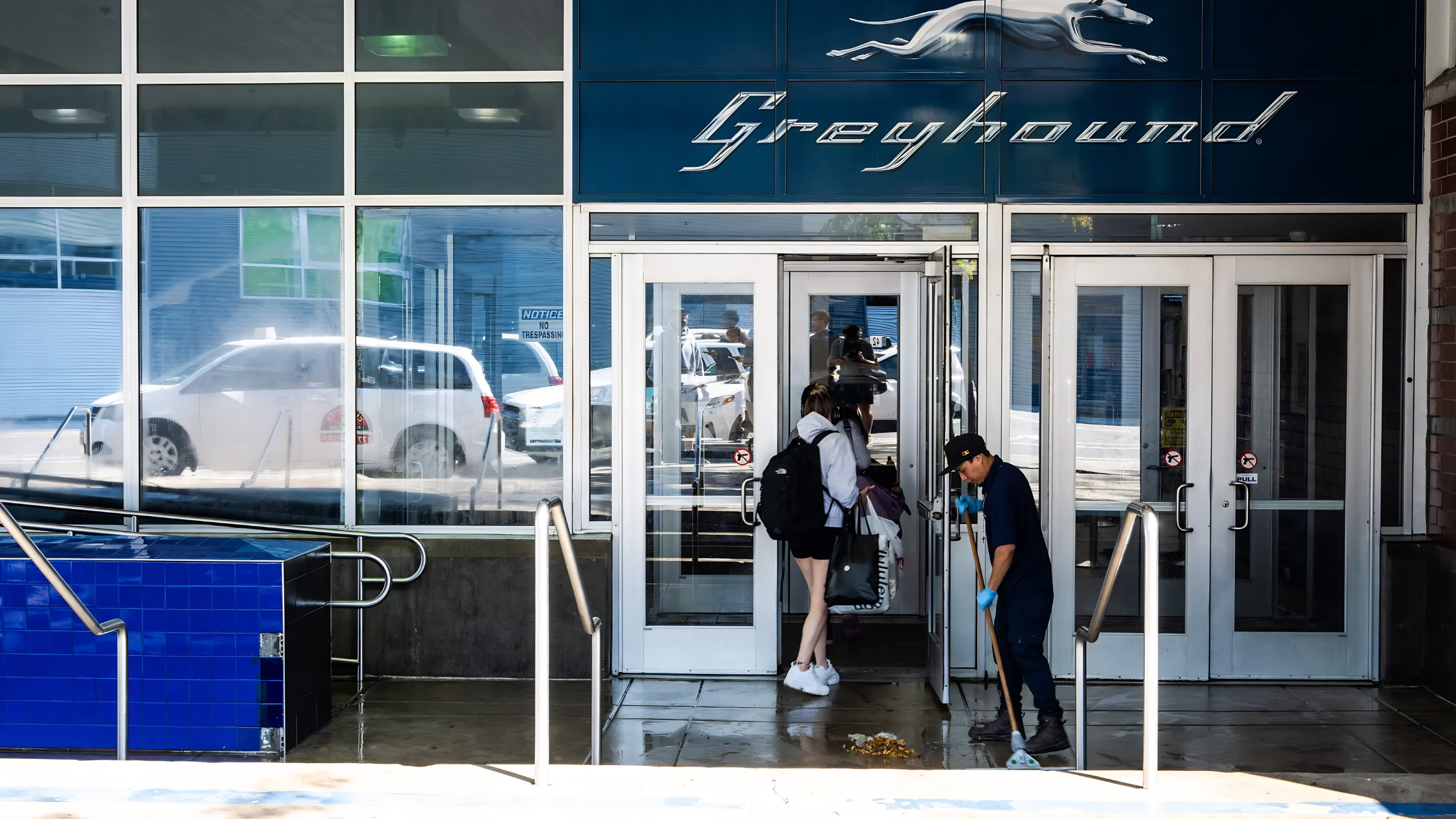
The Greyhound bus station, 630 W. Harrison St., on Aug. 7, 2024 in the Near West Side, could close as soon as September. Credit: Colin Boyle/Block Club Chicago
Ald. Bill Conway, whose 34th Ward includes the station, acknowledged those concerns during the latest community meeting while arguing that city ownership should bring greater accountability.
“My expectation is that things will get better at this facility under city ownership and not stay the same.”
Phase Two Could Bring Bigger Changes in 2027 and 2028
The second phase will be broader.
During 2027 and 2028, the city plans to undertake a more comprehensive assessment of the station and identify additional improvements needed for its long-term operation.
Potential projects include:
Additional safety and security upgrades
ADA accessibility improvements
New or upgraded fire alarms and sprinkler systems
Restroom improvements
Interior renovations
Structural work
Masonry repairs
Exterior improvements
The terminal dates to the late 1980s, so some of these improvements go well beyond cosmetic renovation.
The city has not yet presented a final design or total construction budget covering every possible Phase Two improvement. Much of that work will depend on what engineers and city departments find during the more detailed facility assessment.
The City Is Also Looking Two Blocks Beyond the Station
One of the more important details in the plan is that Chicago is not treating the issue as something that ends at the terminal doors.
The Chicago Department of Transportation is expected to examine infrastructure within roughly a two-block radius of 630 W. Harrison over the coming months.
That review will look at:
Street lighting
Traffic patterns
Sidewalk conditions
Pavement
Signage
Pedestrian safety
Vehicle circulation
Street-lighting improvements around the terminal are expected to be completed by December 2026, according to the timeline presented to residents.
That broader review matters because many of the complaints surrounding the station have focused on conditions outside the property, not simply what happens inside the waiting room.
City ownership gives departments more direct control over maintenance. Streets and Sanitation crews have already begun trimming trees and brush and cleaning around the station, with officials saying the property will move onto a regular maintenance schedule.
Greyhound and Flix Will Not Disappear Immediately
Passengers should not expect an abrupt operational change once the property changes hands.
Under the transition agreement, Flix, which owns Greyhound, can continue operating and managing the terminal for up to 12 months after the city closes on the acquisition.
The current Greyhound Chicago Bus Station remains listed at 630 W. Harrison St., with daily ticketing hours from 5 a.m. to 11 p.m.
Chicago City Council approved the acquisition on June 17, 2026, in a 38-10 vote. The purchase agreement was structured to provide a one-year operational bridge with Flix while the city transitions toward public ownership and a longer-term management model.
Why Chicago Decided the Station Was Worth Saving
The property’s future had been uncertain since Greyhound’s long-term lease expired in 2024, forcing the operator onto a month-to-month arrangement.
The possibility of losing the terminal raised larger transportation concerns.
A DePaul University Chaddick Institute analysis warned that losing Chicago’s dedicated station would create significant hardship for intercity bus passengers, particularly travelers who are lower-income, disabled, unemployed or do not have access to a private vehicle.
The station also sits only several blocks southwest of Chicago Union Station, creating an important connection point within a part of downtown already served by Amtrak, Metra, CTA and regional transportation networks. Chicago Union Station continues to direct Greyhound passengers to the Harrison Street terminal for many services.
That helps explain why city leaders ultimately decided preservation was preferable to allowing Chicago’s primary intercity bus terminal to disappear.
What the Upgrade Could Mean for the Surrounding Area
The real estate impact should not be overstated. A renovated bus terminal does not automatically raise nearby property values or trigger new development.
But there is a meaningful difference between an aging privately controlled transportation facility with an uncertain future and a publicly owned station receiving security, maintenance, accessibility and streetscape investment.
The property sits near the intersection of several rapidly changing parts of the city, including the South Loop, West Loop, University Village and the southern edge of Downtown Chicago.
Improvements to lighting, sidewalks, pedestrian movement and cleanliness could matter to nearby residents long before the full 2028 renovation program is complete.
The most important thing to watch now is execution: whether the city follows through on the late-2026 security and building improvements, what the Phase Two assessment recommends, and how the terminal will ultimately be operated once Flix’s transition period ends.
See How Downtown Infrastructure Changes Could Affect Your Next Move
Major transportation projects can change how individual blocks function, especially in neighborhoods where buyers are comparing walkability, transit access, development activity and everyday convenience.
If you are buying, selling or investing near the South Loop, West Loop, University Village or Downtown Chicago, connect with The Cory Tanzer Group at Option Premier for local insight on current inventory, nearby development, transportation access and how changes around a property may affect the bigger real estate picture.
Stay Connected
Ranked among the top 1% of real estate teams in the Chicagoland market, The Cory Tanzer Group at Option Premier is recognized for proven sales performance, neighborhood expertise, and consistent results across Chicago and the surrounding suburbs.
In the 2026 RealTrends Verified rankings, based on 2025 sales data, the team completed 181 transaction sides representing $79.28 million in sales volume. The Cory Tanzer Group ranked No. 13 in Illinois by transaction sides, No. 20 in Illinois by sales volume, No. 270 nationally by transaction sides, and No. 439 nationally by sales volume.
The team also earned The CARLY, the highest honor for Platinum Sales Dollars and Platinum Units Sold, at the Chicago Association of REALTORS® Sales Awards.
Led by Cory Tanzer, the team helps buyers, sellers, investors, landlords, and renters navigate real estate across Downtown Chicago, the North Shore, and the Western Suburbs, with local expertise in University Village, University Commons, South Loop, West Loop, Little Italy, Pilsen, and surrounding Chicagoland communities.
Connect with The Cory Tanzer Group at Option Premier for trusted local market insight, personalized guidance, and a proven strategy for your next Chicago real estate move.