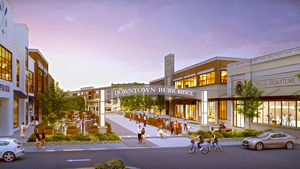
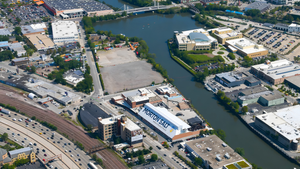
Is “The 78” Finally Happening? What the Chicago Fire Stadium Means for South Loop Real Estate

For years, investors and buyers have asked the same question about Chicago’s long-vacant riverfront site south of downtown: “Is this development actually going to happen?”
It’s a fair question. The area now branded as The 78 has seen no shortage of ambitious plans, renderings, and announcements — many of which never moved beyond the proposal stage. But today, there is one project that stands apart from the rest and is already reshaping the conversation around the South Loop’s future.
That project is the Chicago Fire FC’s privately funded stadium, officially approved and targeting an opening for the 2028 MLS season.
Why This Project Is Different From Past Promises?
Unlike previous proposals tied to public funding, political cycles, or market uncertainty, the Chicago Fire stadium is fully owner-funded and backed by private equity. The project has already received key zoning and city approvals, and the team has begun selling pre-sale tickets for its opening season, signaling real operational confidence — not speculation.
For investors, this matters. Private funding dramatically reduces the risk of delays caused by shifting public priorities. It also reflects long-term commitment from ownership to the location and the surrounding neighborhood.
In short, this isn’t a “maybe someday” plan. It’s a development with momentum, approvals, and capital already in place.
More Than a Stadium: An Anchor for Long-Term Growth
The significance of the Chicago Fire stadium goes far beyond match days. Stadium developments often act as anchor projects, unlocking additional investment by giving developers, retailers, and buyers confidence that an area is truly transitioning.
At The 78, the stadium is expected to accelerate:
New retail and dining opportunities
Increased foot traffic and year-round activity
Enhanced connectivity between the South Loop, riverfront, and downtown
Stronger demand for nearby residential properties
For neighboring South Loop communities, this kind of anchor development historically correlates with increased visibility, buyer interest, and long-term value growth.
What does this mean for South Loop Buyers and Investors?
If you’re evaluating opportunities in or near the South Loop, timing matters. Major neighborhood shifts often reward those who understand the fundamentals before construction cranes dominate the skyline.
The approval of the Chicago Fire stadium sends a clear signal:
The 78 is no longer just conceptual
Private capital is committed
A defined timeline is in place
Surrounding neighborhoods stand to benefit
Whether you’re considering a primary residence, a long-term rental, or an investment property, developments like this tend to reshape demand patterns well ahead of opening day.
Local Insight Matters When the Market Is Evolving
Not every property benefits equally from large-scale development. Proximity, walkability, zoning, and buyer profile all play a role — and that’s where local expertise becomes critical.
If you’re exploring real estate opportunities in the South Loop or want a clearer picture of how this development could impact your strategy, feel free to reach out. A quick conversation now can provide clarity — and potentially an edge — before this transformation fully unfolds.
Stay Connected
Ranked as a top 1% team in the Chicagoland market, Cory Tanzer and the Cory Tanzer Group specialize in the Chicago, North Shore, and Western Suburbs real estate market. With deep local market expertise and a proven track record, Cory and his team help clients buy and sell with clarity, confidence, and results.