Transportation Hub Proposed in Lawndale Could Transform Local Mobility and Community Space

Vision for a Multi-Modal Transportation and Community Hub in Lawndale
A significant new community and mobility project is on the horizon for Lawndale as local developers and planners have unveiled plans for a multi-modal transportation and community hub at 2107 South Pulaski Avenue. The proposal, known as “The Go Hub,” aims to reimagine vacant land near the Pink Line station as a place that not only connects people to transit but also supports local activities, community programming, and shared space.
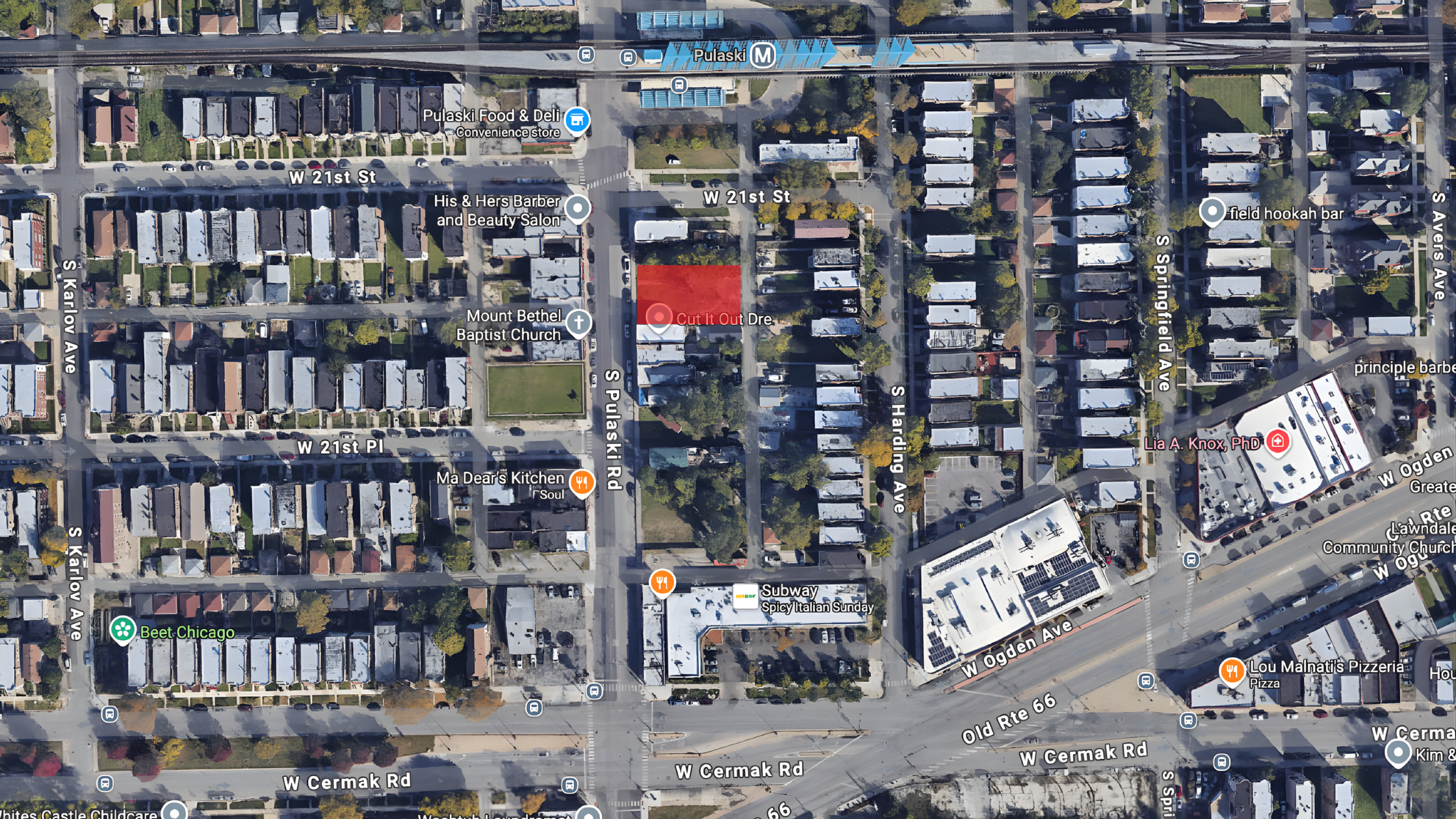
Site context map of The Go Hub via Google Maps
Situated just north of the intersection with West Cermak Road and steps from the CTA Pulaski Pink Line station, the hub is designed to take advantage of existing public transit while adding amenities for pedestrians, cyclists, and community members.
What The Go Hub Will Include
The proposed facility will be five stories tall and is being developed by Chicago nonprofit Equicity, an organization working to promote racial equity and community power building in historically underinvested areas. The hub’s design and programming reflect that mission with a mix of transit, community, and educational uses.
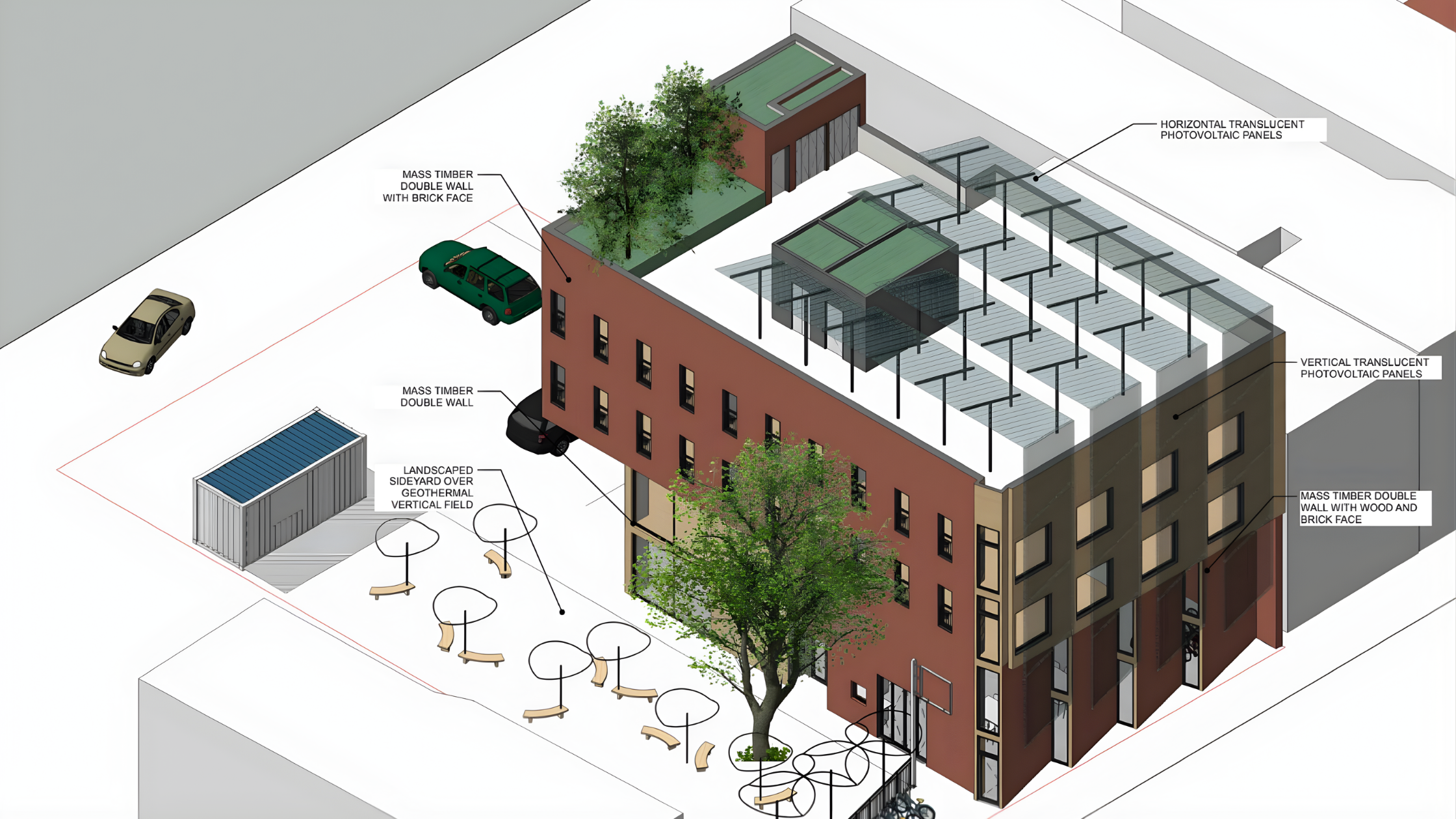
Rendering of The Go Hub by Oldile Compagnon
At ground level, The Go Hub will include a small parking area with electric vehicle charging stations, a landscaped lawn with seating and a stage for events, and a public bike repair station. Below grade, the basement will provide bike parking and secure storage.
Upstairs, spaces will be dedicated to community-oriented uses, including a central community center, a double-height bike workshop and classroom space, a kitchen/food prep area, co-working and “hoteling” office space, and new offices for Equicity itself — all designed to support programming, outreach, and local initiatives.
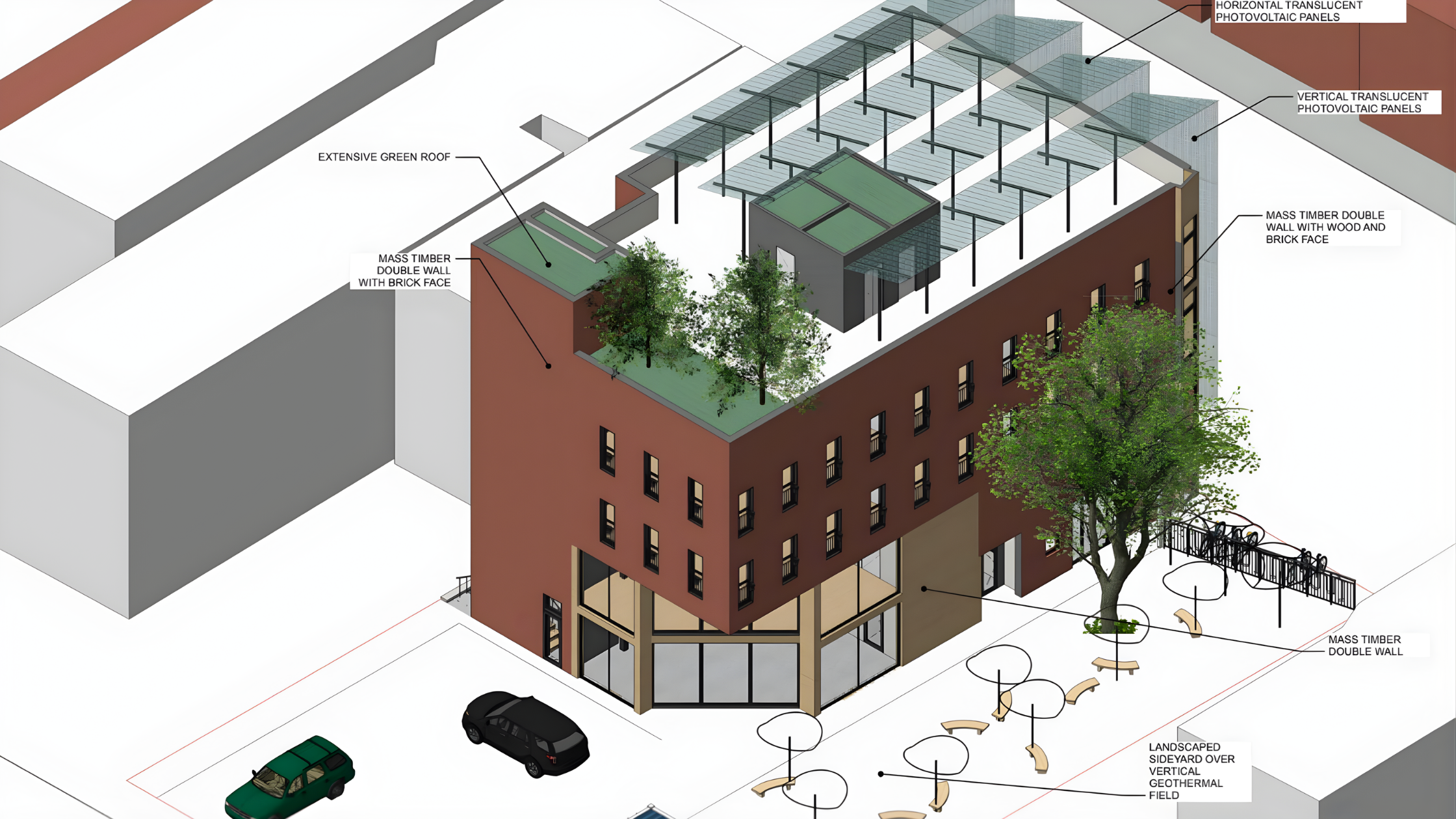
Rendering of The Go Hub by Oldile Compagnon
The top floor is envisioned as a large rooftop terrace shaded by solar panels arranged in a sawtooth pattern that extends down the front of the building. This terrace will offer outdoor gathering space and views of the neighborhood.
Programming, Mobility and Community Engagement
The Go Hub is intended to go beyond transit access. In addition to providing amenities for walkers, cyclists, and transit riders, the project would host mobility workshops, group bike rides, walking tours, and other activities focused on active transportation and community engagement. The center aims to become a local hub where residents can build connections, learn new skills, and participate in advocacy efforts around transportation equity and neighborhood development.
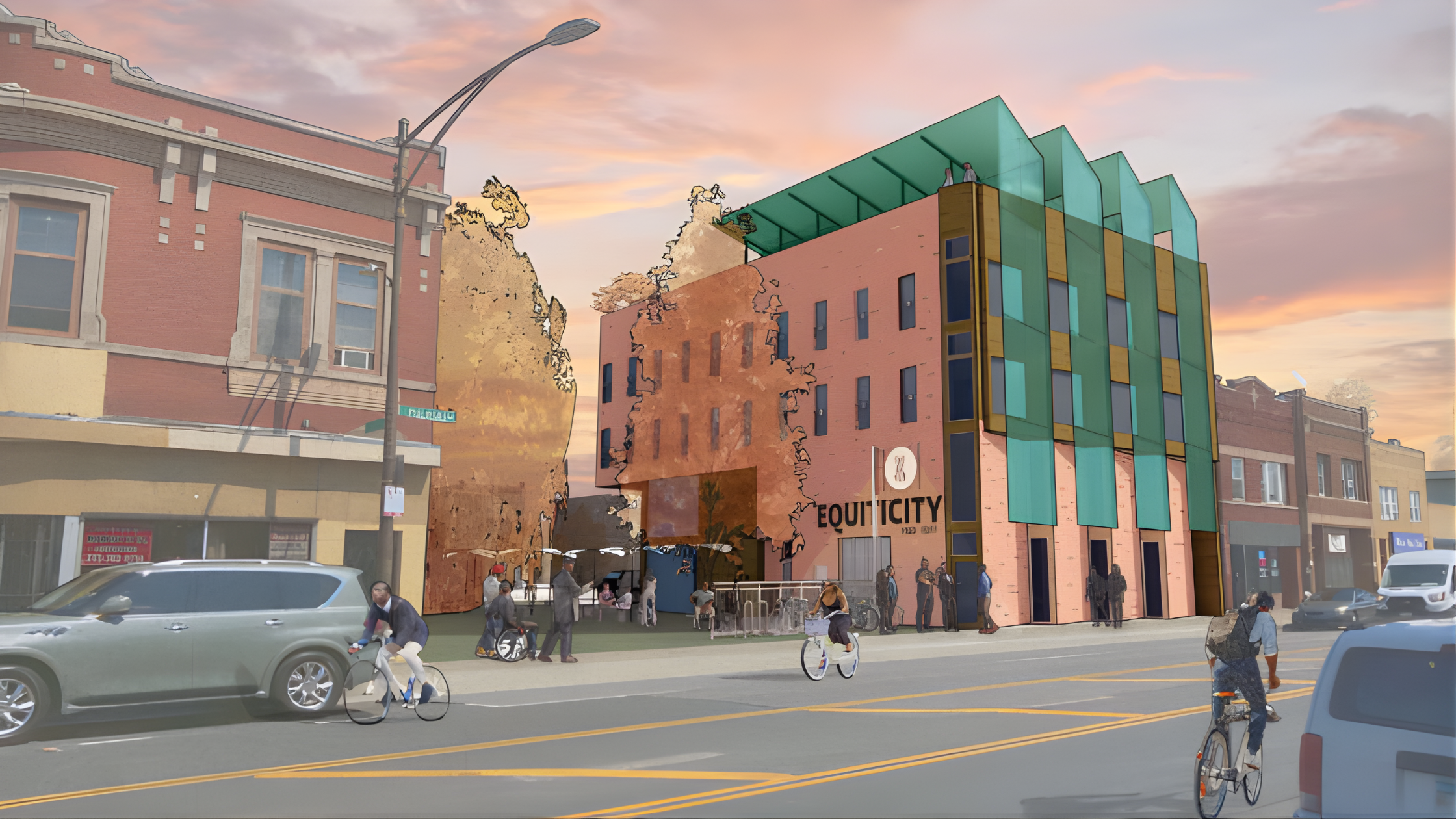
Rendering of The Go Hub by Oldile Compagnon
This approach reflects a broader trend in urban design that integrates transportation with community space, making transit access part of everyday neighborhood life rather than just a point of departure or arrival.
Why This Project Matters for Lawndale
Lawndale is a neighborhood historically shaped by economic shifts and disinvestment, like many parts of Chicago’s West Side. The presence of a dedicated hub adjacent to a major transit station can serve as both an access point for jobs and amenities across the city and a place that encourages local engagement and neighborhood activity.
Placing community space near transit aligns with transit-oriented development principles, which focus on creating walkable, accessible environments that reduce car dependence and enhance local quality of life. Lawndale’s strategic location near the Pink Line makes it a natural candidate for investments that connect residents to the broader Chicago region.
The project also aligns with broader transportation investments across Chicago, where agencies including the Chicago Transit Authority and Regional Transportation Authority are working to maintain and improve transit infrastructure and access citywide. Recent CTA budgeting efforts, for example, have focused on sustaining service levels while planning future improvements, pointing to ongoing regional efforts to keep transit strong and reliable.
Funding, Plaza and Next Steps
While the full $12 million needed to build The Go Hub is still being raised, the project team has already secured a smaller grant to construct a temporary plaza on the site. This plaza will activate the space and provide programming and public art as fundraising continues.
Supporters of the project see the plaza as a way to begin community engagement and create momentum while larger funding efforts move forward. It also provides an early opportunity for residents to experience the vision for a reimagined civic space.
As fundraising and planning progress, stakeholders including community groups and city leaders are expected to remain engaged to shape how the hub will integrate with surrounding streets, transit, and future neighborhood planning.
How This Fits Into Broader City Transit Initiatives
Chicago’s transit conversation in 2026 continues to emphasize equitable access, reliability, and modernization. The city’s recent approval of the CTA’s operating budget reflects ongoing investment in rapid transit services and efforts to balance cost-effective operations with rider expectations. Projects like
The Go Hub tie into that ecosystem by providing supporting infrastructure that connects riders directly to community space and resources.
Stay Connected
Ranked among the top 1 percent of real estate teams in the Chicagoland market, Cory Tanzer and the Cory Tanzer Group are experts in helping buyers and sellers navigate today’s market across Downtown Chicago, the North Shore, and the Western Suburbs. Recognized for their neighborhood expertise in areas like University Village, University Commons, South Loop, and Pilsen, the team helps clients stay one step ahead by understanding where the Chicago market is moving next.