Mortgage Rates Edge Higher Again, But the Payment Difference May Surprise Buyers

Mortgage rates have started creeping higher again after briefly dipping below 6% earlier this month. While headlines about rising mortgage rates can make prospective buyers nervous, the actual impact on monthly payments may be smaller than many expect.
According to Freddie Mac, the average 30-year fixed mortgage rate rose to 6.11%, up from 5.98% two weeks ago, when rates briefly fell below the 6% threshold for the first time since 2022.
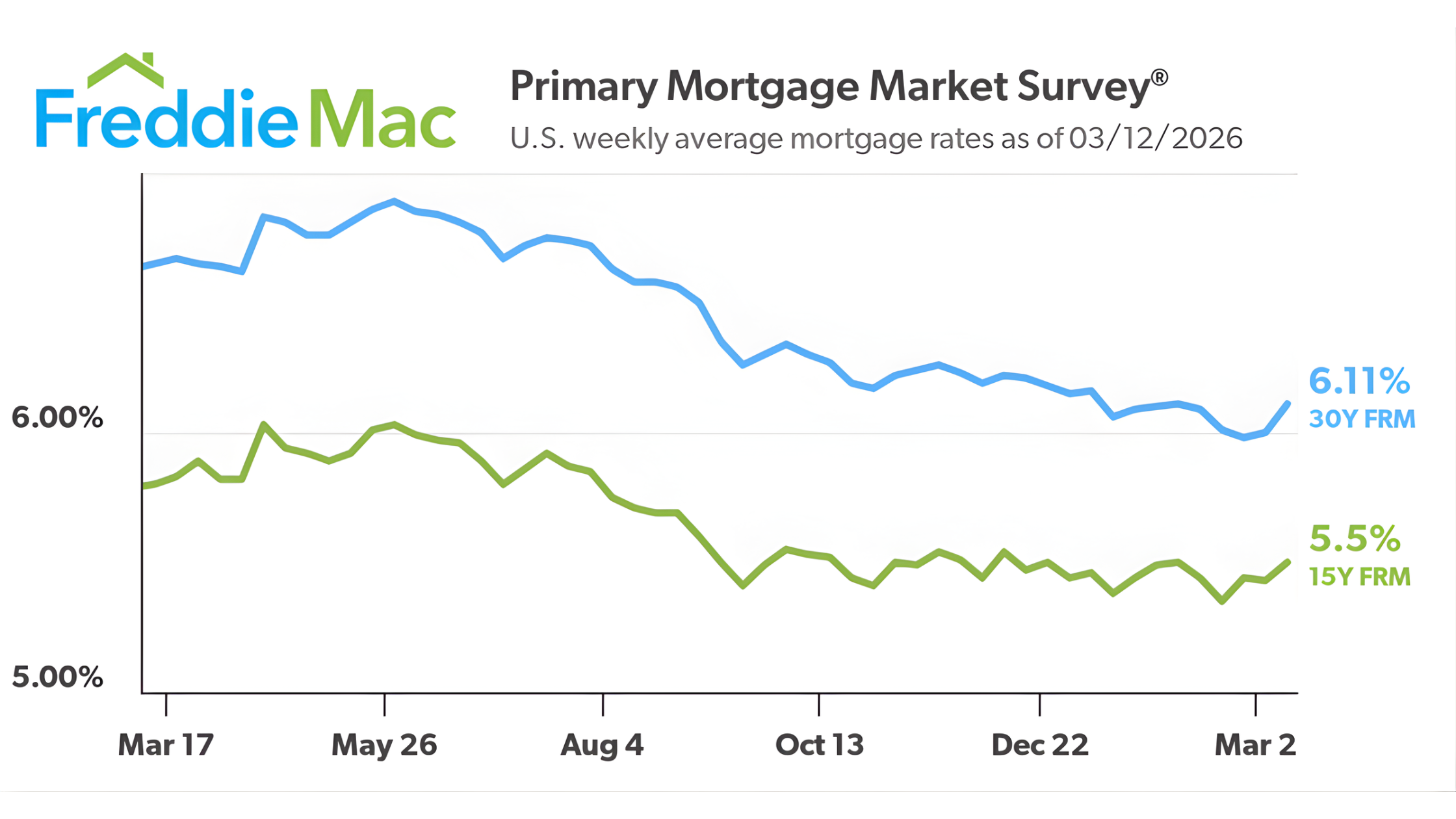
U.S. Weekly average mortgage rates as of 03/12/26 | Freddie Mac Data
The increase may sound significant, but the difference in monthly payments for many buyers could be relatively modest.
For a $400,000 home with 20% down, the move from 5.98% to 6.11% translates to roughly $27 more per month in a mortgage payment.
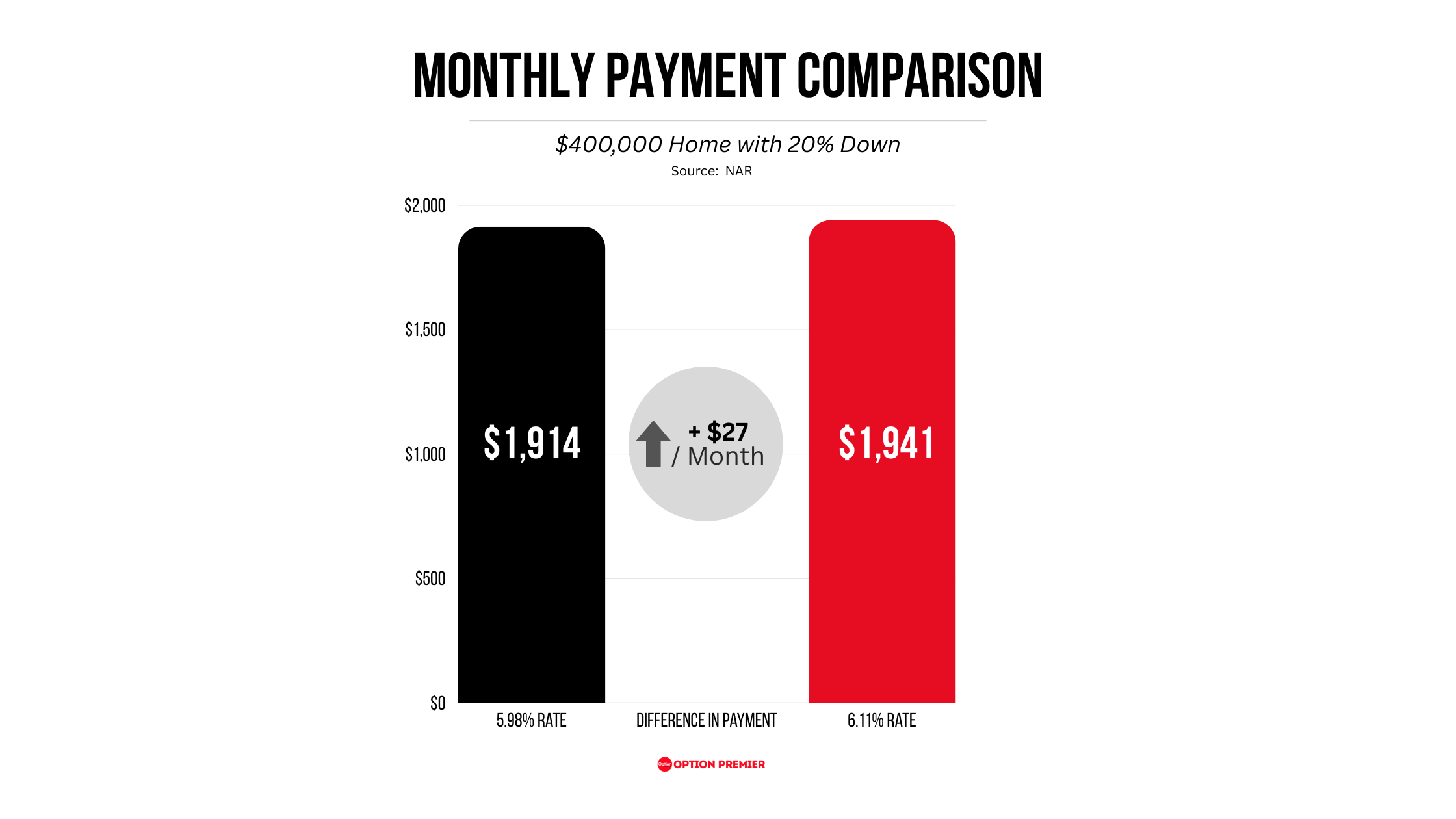
Monthly payment comparison
Market Volatility Behind the Rate Increase
Nadia Evangelou, principal economist and director of real estate research at the National Association of REALTORS®, said
“While the increase from 5.98% to 6.11% was a relatively strong move, it was largely expected given recent geopolitical developments and the upward trend in the 10-year Treasury yield, which mortgage rates tend to follow,”
She explained that global events can create short-term volatility in financial markets.
“Geopolitical developments can create short-term volatility in financial markets. Since mortgage rates tend to follow movements in the 10-year Treasury yield, the current shifts in global conditions are expected to bring temporary fluctuations in mortgage rates as well.”
Because mortgage rates typically move alongside the 10-year Treasury yield, shifts in global financial markets can influence borrowing costs for homebuyers.
The Psychological Impact of the 6% Threshold
Some analysts say the move above the 6% mark may be more psychological than financial for buyers. Many consumers view 6% as an important threshold, even though the actual difference in monthly payments between small rate changes is often relatively minor. Even so, headlines about mortgage rates crossing key levels can influence buyer sentiment and expectations about the housing market.
Global Events and Federal Reserve Signals
Recent global developments have also contributed to uncertainty in financial markets.
Rising tensions in the Middle East have added volatility to global markets and pushed energy prices higher. At the same time, the Federal Reserve is preparing for its next policy meeting to determine the direction of short-term interest rates.
Although the Fed does not directly set mortgage rates, its decisions often influence the broader financial environment and investor expectations.
“Financial markets were volatile last week amid the ongoing turmoil in the Middle East,” said Mike Fratantoni, chief economist at the Mortgage Bankers Association. “Borrowers in recent weeks were able to get 30-year conforming rates below 6%, but with the current volatility, longer-term rates have moved up.”
Rates Remain Lower Than Last Year
Despite the recent uptick, mortgage rates remain lower than they were a year ago. When rates averaged 6.65% last year, the monthly payment on that same $400,000 home would have been about $2,054, roughly $113 more per month than today’s average payment.
That improvement in affordability may be helping to bring some buyers back into the market.
Signs of Momentum in the Housing Market
The housing market is also showing early signs of improvement as the spring homebuying season approaches. The National Association of REALTORS® reported that existing-home sales rose 1.7% in February compared with January. Meanwhile, mortgage applications for home purchases were 11% higher than the same time last year, according to the Mortgage Bankers Association.
For buyers in Chicago and other major metro markets, even small mortgage rate changes can influence affordability and monthly budgets. But the recent improvement compared with last year’s rates could help support buyer activity heading into the spring season.
Economists say that if mortgage rates stabilize near current levels, the housing market could continue gaining momentum as more buyers return to the market.
Stay Connected
Ranked among the top 1% of real estate teams in the Chicagoland market, Cory Tanzer and the Cory Tanzer Group are experts in helping buyers and sellers navigate today’s market across Downtown Chicago, the North Shore, and the Western Suburbs. Recognized for their neighborhood expertise in areas such as University Village, University Commons, South Loop, and Pilsen, the team helps clients stay one step ahead by understanding where the Chicago market is headed next.