Chicago Condo Closing Costs: What Buyers Need Beyond the Down Payment
When you buy a condo in Chicago, the purchase price is just the starting point. Chicago closing costs typically add thousands of dollars in fees, taxes, and prepaid expenses that you need to have ready before you get your keys.
Key Takeaways
Chicago closing costs for condo buyers include city and county transfer taxes, lender fees, attorney fees, appraisal costs, and prepaid expenses.
The City of Chicago imposes a real estate transfer tax that applies to buyers on certain transactions, so confirm your specific obligation with your attorney.
Cook County property tax proration can create a significant credit or debit at closing depending on where you are in the tax cycle.
Condo-specific fees such as HOA move-in fees, special assessment disclosures, and escrow reserves can add hundreds or thousands of dollars beyond typical closing costs.
Working with an experienced local brokerage gives you a clearer picture of what to budget before you make an offer.

What Actually Goes Into Chicago Closing Costs
Chicago closing costs cover a wide range of charges, and understanding each one helps you avoid being blindsided at the closing table. Here is a breakdown of the main categories condo buyers face.
City and County Transfer Taxes
Chicago levies a real estate transfer tax that is paid at closing. The city rate is $3.75 per $500 of the purchase price for buyers and $1.50 per $500 for sellers, as of 2026. Cook County and the State of Illinois also impose their own transfer taxes on the seller side, but buyers should still confirm their total exposure with their attorney before closing.
Lender Fees
If you are financing your purchase, your lender will charge origination fees, underwriting fees, and a loan processing fee. These vary by lender but can easily run into the thousands of dollars on a mid-range Chicago condo purchase. Comparing loan estimates from multiple lenders is one of the smartest moves a buyer can make early in the process.
Appraisal and Inspection
Your lender requires an appraisal, which typically costs between $400 and $700 in the Chicago market. A professional home inspection is separate and strongly recommended for condo buyers. Inspections can reveal issues with unit systems, shared building infrastructure, or deferred maintenance that a seller has not disclosed.
Attorney Fees
Illinois law does not require buyers to hire an attorney, but it is standard practice in Chicago real estate transactions. Attorney fees in Chicago typically range from $500 to $1,500 depending on complexity. Your attorney reviews the contract, the condo association documents, and any chicago condo special assessments that could affect your costs after closing.
Title Insurance and Recording Fees
Title insurance protects you from ownership disputes that may surface after closing. In Illinois, buyers typically pay for a lender's title policy and have the option to purchase an owner's policy as well. Recording fees are paid to Cook County to officially record the deed.
Condo-Specific Costs That Catch Buyers Off Guard
Buying a condo adds a layer of costs that single-family home buyers do not face. These fees are tied to the homeowners association and the building itself.
HOA Move-In Fees and Deposits
Many Chicago condo associations charge a move-in fee, a move-in deposit, or both. Move-in fees are non-refundable and typically run from $100 to $500. Deposits are refundable but must be paid upfront, which affects your total cash to close.
Prepaid HOA Dues
You may be required to prepay one or more months of HOA dues at closing. Some associations also require buyers to fund a reserve contribution at the time of purchase, which can be a few hundred dollars on top of regular dues.
Special Assessments
Special assessments are one-time charges levied by a condo association to cover major building repairs or improvements. Your attorney should request a disclosure from the association before closing. If a large assessment has been passed or is pending, it can significantly affect your out-of-pocket costs and the long-term value of the unit. Buildings like the marielle on the park west loop condos offer newer construction that may carry lower near-term assessment risk, though no building is entirely immune.

Prepaid Expenses and Escrow Reserves
Beyond fees and taxes, buyers must fund prepaid expenses at closing. These are not fees you pay to a service provider. They are funds you deposit to cover future obligations.
Prepaid homeowners insurance: Most lenders require at least one year of HO-6 condo insurance paid upfront.
Prepaid mortgage interest: Interest accrues from the closing date to the end of the month, and you pay that amount at closing.
Property tax escrow: Your lender will collect several months of property taxes upfront to seed your escrow account.
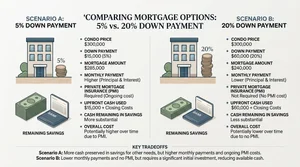
Mortgage insurance escrow: If your down payment is below 20%, your lender may escrow for private mortgage insurance as well.
Cook County property taxes are paid in arrears, which means the seller typically provides a tax proration credit to the buyer at closing. However, because taxes are reassessed periodically, the actual amount can be higher than the proration, leaving buyers to cover the difference when the bill arrives.
How Much Cash Should You Budget Beyond the Down Payment?
A reasonable rule of thumb for Chicago condo buyers is to budget 2% to 4% of the purchase price in closing costs, separate from your down payment. On a $400,000 condo, that means setting aside $8,000 to $16,000 in addition to your down payment. On a $600,000 purchase, the range moves to $12,000 to $24,000.
This estimate can vary significantly depending on your lender's fees, the building's HOA requirements, and whether any special assessments are in play. Getting a home valuation early in your search helps you calibrate your total budget more accurately.
Before closing, your lender is required by federal law to provide a Closing Disclosure at least three business days in advance, as explained on the Consumer Financial Protection Bureau's closing disclosure page. Review every line item and flag anything that does not match your original Loan Estimate. You can also consult the Illinois Department of Financial and Professional Regulation for information on licensed brokers and attorneys in your transaction.
The HUD homebuying resources page offers federally vetted guidance on what to expect at closing, which is especially useful for first-time buyers.

Reach Out to the Cory Tanzer Group Before You Close
Knowing your numbers before you make an offer is one of the most valuable things you can do as a Chicago condo buyer. The Cory Tanzer Group at Option Premier works with buyers every day to map out realistic closing cost estimates, navigate HOA documentation, and avoid costly surprises. Our experienced team brings deep neighborhood knowledge across the West Loop, South Loop, River North, and beyond. Call us at (312) 218-4483 or reach out online to schedule a buyer consultation before your next offer.
Things to Know
Illinois real estate closings almost always involve a real estate attorney, even though it is not legally required. Budget for this cost.
HOA move-in fees and deposits are not included in your lender's Closing Disclosure because they are paid directly to the association.
Special assessments passed before closing but not yet collected can become the buyer's responsibility depending on how the contract is written.
Cook County property taxes are paid in arrears, which means you may receive a tax proration credit at closing but face a higher actual bill later.
Seller concessions toward buyer closing costs are negotiable but must be structured correctly to comply with lender guidelines.
Frequently Asked Questions
-
Most Chicago condo buyers should budget 2% to 4% of the purchase price in closing costs, separate from their down payment.
This range covers transfer taxes, lender fees, attorney fees, title insurance, prepaid expenses, and HOA-related charges. Actual costs vary based on purchase price, lender, and the specific condo building.
-
Both buyers and sellers pay a portion of the Chicago real estate transfer tax, with the buyer's rate set at $3.75 per $500 of purchase price as of 2026.
Cook County and Illinois also have transfer taxes, but those are traditionally paid by the seller. Your attorney will confirm the exact breakdown for your transaction.
-
Yes, seller concessions toward buyer closing costs are allowed and negotiable, but they must fall within limits set by your lender.
Conventional loan guidelines typically cap seller concessions at 3% of the purchase price for buyers putting less than 10% down. Your lender can confirm what is allowed on your specific loan type.
-
Illinois does not legally require a buyer's attorney, but hiring one is standard practice in Chicago and strongly recommended.
Your attorney reviews the purchase contract, condo association documents, financial statements, and any pending special assessments before you are committed to closing.
-
A property tax proration is a credit the seller gives the buyer at closing to cover the portion of the tax year the seller owned the property.
Because Cook County taxes are paid in arrears, the seller credits you for their share based on the prior year's tax bill. If the actual bill comes in higher when it is issued, the buyer is responsible for the difference.
The Bottom Line on Chicago Closing Costs
Chicago closing costs are real, they are significant, and they require careful planning before you ever sign a purchase contract. Between transfer taxes, lender fees, attorney costs, HOA requirements, and prepaid expenses, condo buyers in Chicago need to have a clear and honest budget that goes well beyond the down payment.
The best step you can take right now is to connect with a local team that knows the Chicago condo market inside and out. Reach out to Option Premier at (312) 500-5808 or visit optionpremier.com to start your buyer consultation today.
Stay Connected
Ranked among the top 1% of real estate teams in the Chicagoland market, The Cory Tanzer Group at Option Premier is recognized for proven sales performance, neighborhood expertise, and consistent results across Chicago and the surrounding suburbs.
In the 2026 RealTrends Verified rankings, based on 2025 sales data, the team completed 181 transaction sides representing $79.28 million in sales volume. The Cory Tanzer Group ranked No. 13 in Illinois by transaction sides, No. 20 in Illinois by sales volume, No. 270 nationally by transaction sides, and No. 439 nationally by sales volume.
The team also earned The CARLY, the highest honor for Platinum Sales Dollars and Platinum Units Sold, at the Chicago Association of REALTORS® Sales Awards.
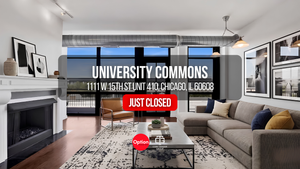
Led by Cory Tanzer, the team helps buyers, sellers, investors, landlords, and renters navigate real estate across Downtown Chicago, the North Shore, and the Western Suburbs, with local expertise in University Village, University Commons, South Loop, West Loop, Little Italy, Pilsen, and surrounding Chicagoland communities.
Connect with The Cory Tanzer Group at Option Premier for trusted local market insight, personalized guidance, and a proven strategy for your next Chicago real estate move.