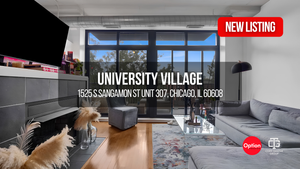
Chicago Condo or Single-Family Home: Which Builds Better Long-Term Value?
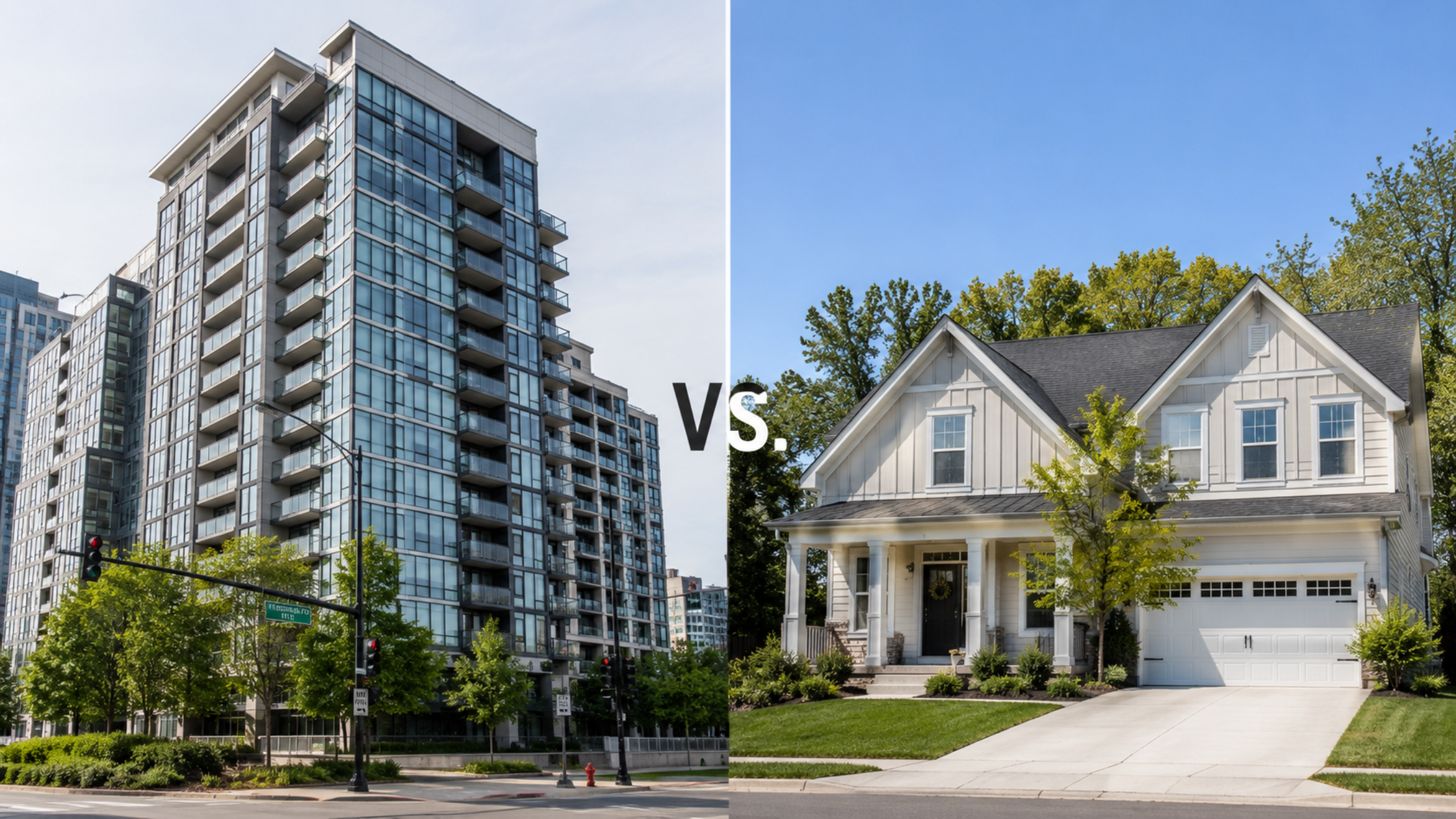
When buyers ask whether a South Loop condo, a West Loop loft, or a single-family home in the Western Suburbs is the smarter investment, the honest answer is that each property type earns its return differently.
A condo can put you in a high-demand Chicago neighborhood with a lower entry point, easier maintenance, and strong rental appeal. A single-family home gives you more control, more land, and a larger resale pool among buyers looking for space, privacy, and long-term roots.
Both can perform well. The better choice depends on your budget, timeline, lifestyle, and how hands-on you want to be as an owner.
Condos and Single-Family Homes Build ROI Differently
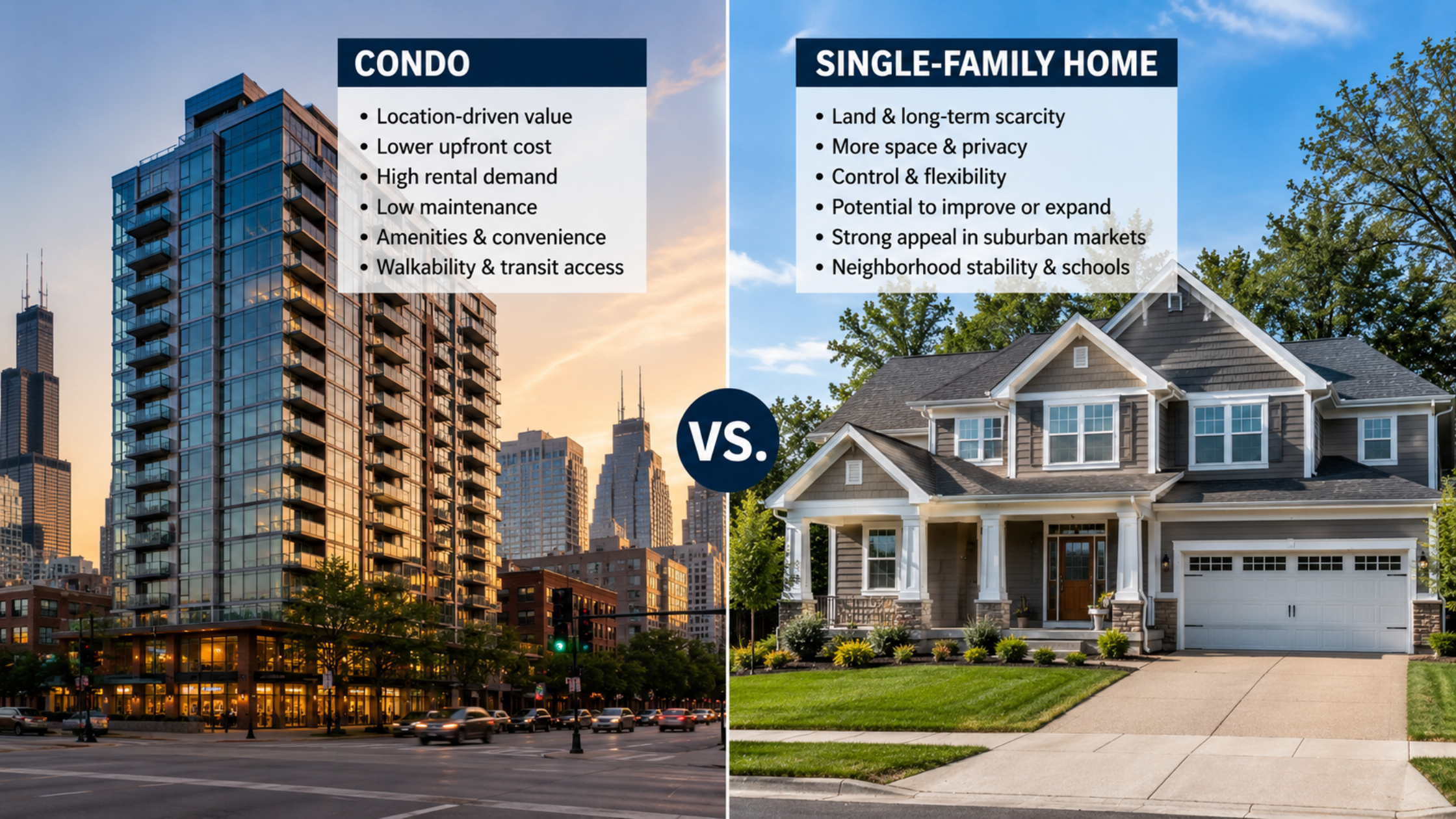
A condo and a single-family home may both appreciate over time, but they do not usually create value the same way.
A Chicago condo often performs through location, convenience, rental demand, and lower upfront cost. Buyers are paying for access to the neighborhood, transit, restaurants, amenities, parks, downtown offices, and a more convenient daily routine.
A single-family home often performs through land, control, privacy, and long-term scarcity. In many Western Suburbs and North Shore communities, buyers are paying for more space, a yard, schools, neighborhood stability, and the ability to improve or expand the property over time.
That difference matters because the best investment is not always the one with the lowest price. It is the one with the strongest long-term fit for how you plan to use, hold, rent, or eventually resell the property.
What Drives ROI on a Chicago Condo?
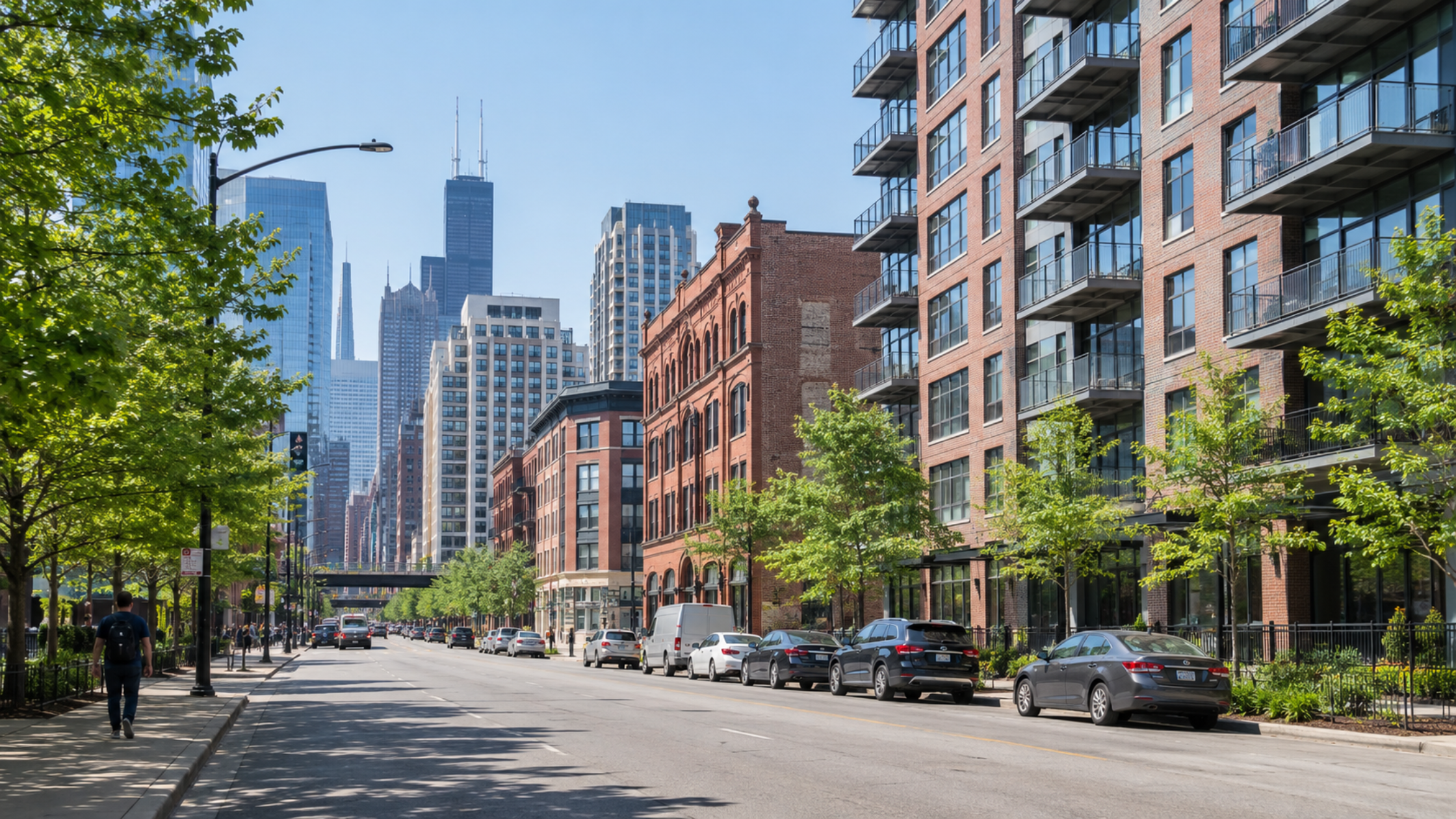
A condo can be one of the most efficient ways to buy into a strong Chicago location.
In areas like South Loop, West Loop, University Village, University Commons, Pilsen, River North, and Streeterville, buyers often choose condos because they want walkability, transit access, restaurants, lakefront proximity, downtown convenience, and lower-maintenance ownership.
The return on a condo is usually driven by:
Location strength
Rental demand
Building quality
Monthly HOA costs
Amenities
Parking
Unit layout
Resale history
Neighborhood momentum
For example, a South Loop condo near Grant Park, Museum Campus, Roosevelt Road, or The 78 development area may attract buyers who value downtown access and long-term neighborhood growth. A West Loop condo or loft may appeal to buyers who want restaurants, nightlife, office access, and Fulton Market energy.
For a deeper look at the South Loop as an investment market, read Is South Loop Chicago a Good Investment? What Buyers Need to Know Before They Buy.
Why Condo Carrying Costs Matter

With condos, the purchase price is only part of the equation.
Monthly HOA assessments can significantly affect your return. A condo that looks affordable on paper may become less attractive once you factor in assessments, taxes, parking, insurance, and possible special assessments.
Before buying a condo, review:
Monthly HOA assessment
What the assessment includes
Building reserves
Recent or upcoming special assessments
Rental restrictions
Owner-occupancy levels
Parking ownership
Pet rules
Building maintenance history
Recent comparable sales
A healthy building with strong reserves and responsible management can protect your investment. A poorly managed building with deferred maintenance can quietly reduce your ROI, even if the unit itself looks great.
That is why condo investing is not only about choosing the neighborhood. It is also about choosing the right building.
What Drives ROI on a Single-Family Home?
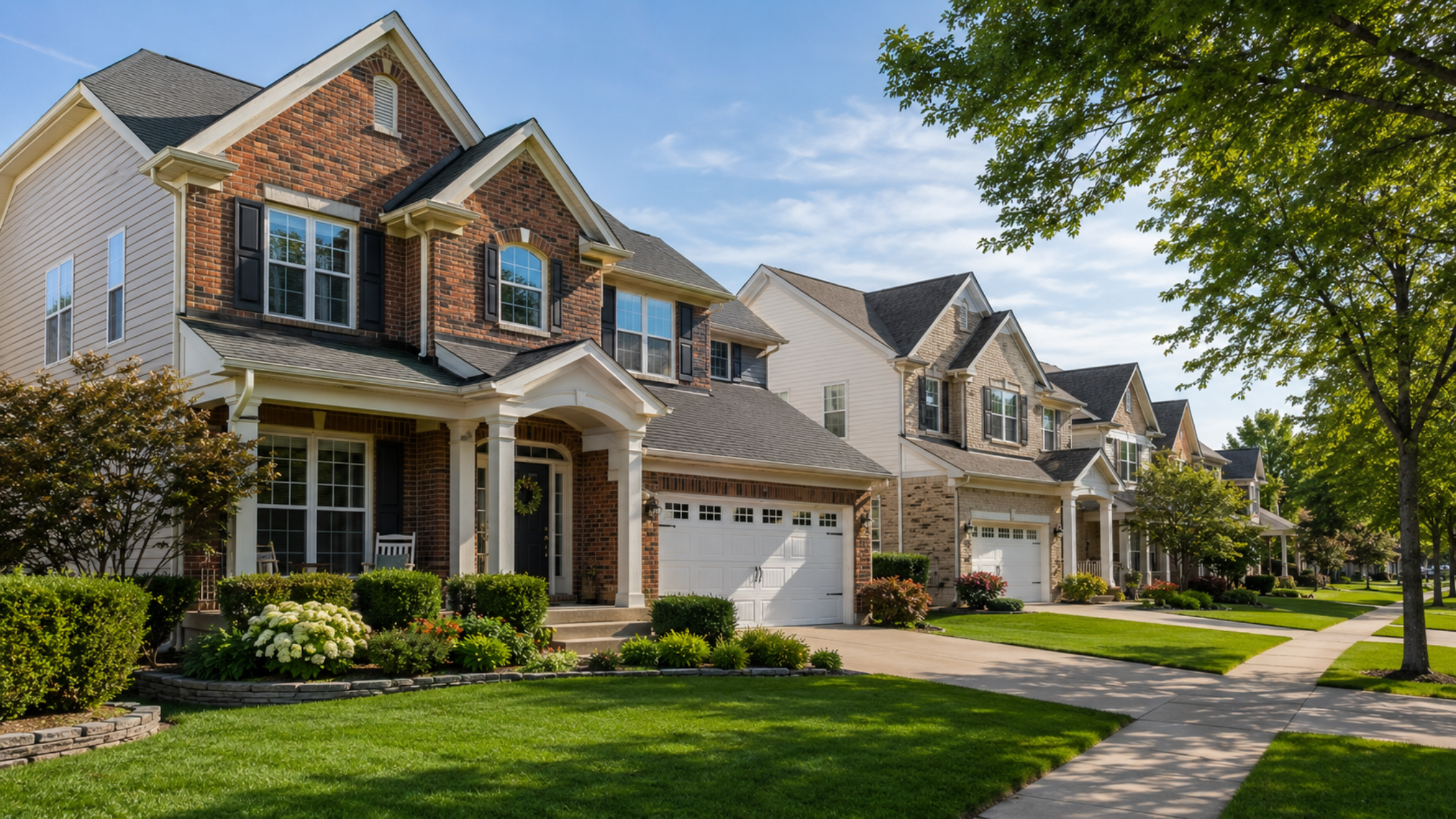
A single-family home usually creates return through a different formula.
In the Western Suburbs, North Shore, and other established Chicagoland communities, single-family homes often appeal to buyers who want more space, private outdoor areas, school access, garages, finished basements, and long-term stability.
The return on a single-family home is often driven by:
Land value
Lot size
School district demand
Neighborhood reputation
Condition and updates
Ability to renovate or expand
Outdoor space
Garage and parking
Resale buyer pool
Long-term ownership appeal
Unlike a condo, a single-family home gives the owner more control. You can often update the kitchen, finish a basement, improve outdoor space, add a home office, change landscaping, or make larger renovations without going through a condo board.
That control can create value over time, especially in markets where move-up buyers are consistently looking for updated homes.
Why Single-Family Homes Can Offer More Control
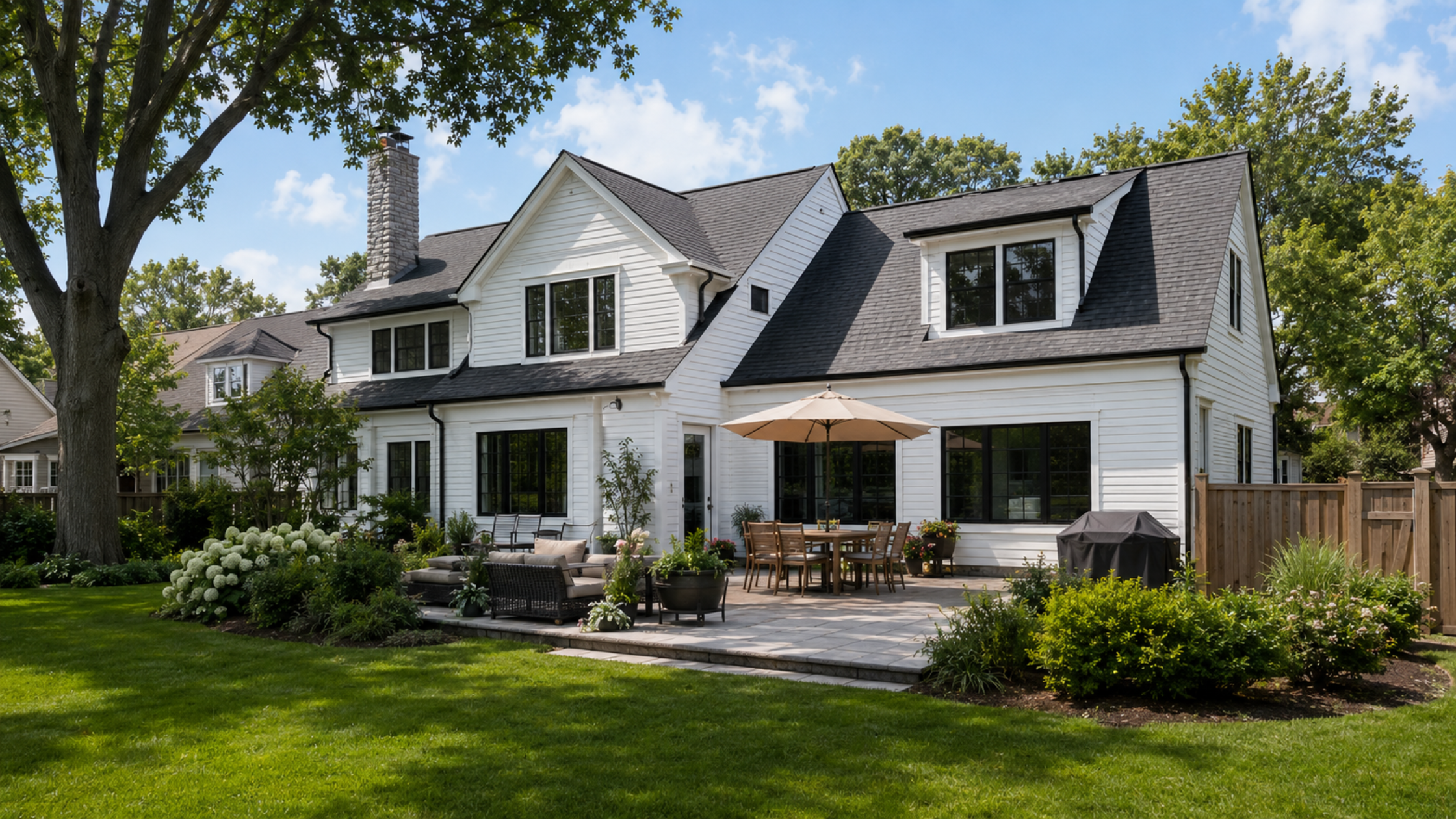
Single-family ownership comes with more responsibility, but also more flexibility.
If you own a home in Glen Ellyn, Downers Grove, Elmhurst, Naperville, Oak Brook, Highland Park, Evanston, or nearby communities, you are usually responsible for the full property. That means roof, mechanicals, landscaping, exterior maintenance, snow removal, and repairs are all on you.
But it also means you control the property more directly.
You can improve curb appeal, create a better backyard, update the floor plan, finish a lower level, modernize bathrooms, or make the home more attractive to the next buyer.
That ability to add value is one reason many long-term buyers prefer single-family homes when their budget and lifestyle allow for it.
How Carrying Costs Change the Math
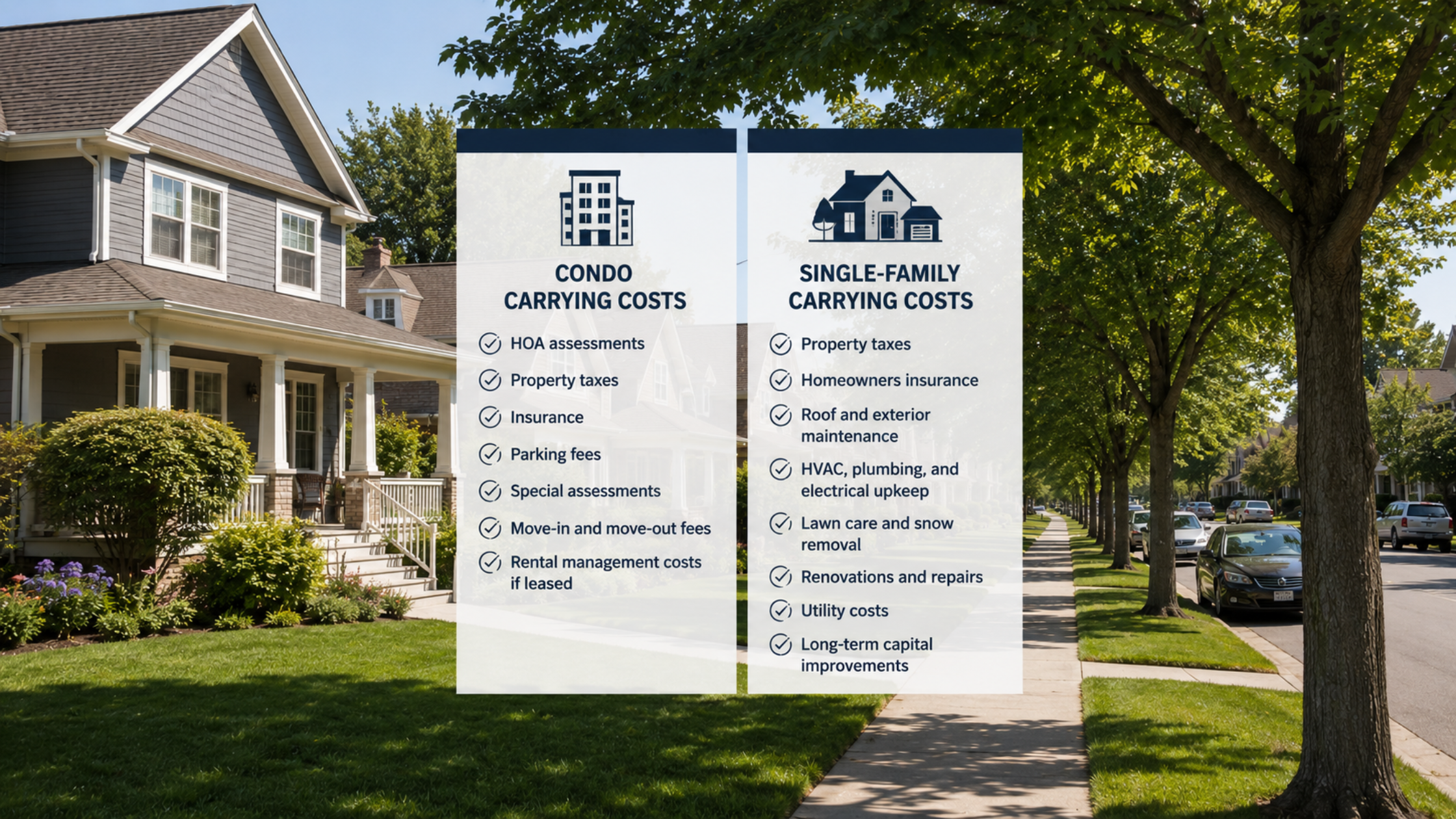
The real return is not based only on what you buy for and what you sell for.
It is based on what you keep after all costs.
For condos, key carrying costs include:
HOA assessments
Property taxes
Insurance
Parking fees
Special assessments
Move-in and move-out fees
Rental management costs if leased
For single-family homes, key carrying costs include:
Property taxes
Homeowners insurance
Roof and exterior maintenance
HVAC, plumbing, and electrical upkeep
Lawn care and snow removal
Renovations and repairs
Utility costs
Long-term capital improvements
This is where buyers need to run the full math. A condo may have a lower purchase price but higher monthly assessments. A single-family home may have no HOA, but higher maintenance costs and larger repair responsibilities.
The better investment depends on the total cost of ownership, not just the price tag.
Which Strategy Fits Chicago Condo Buyers?
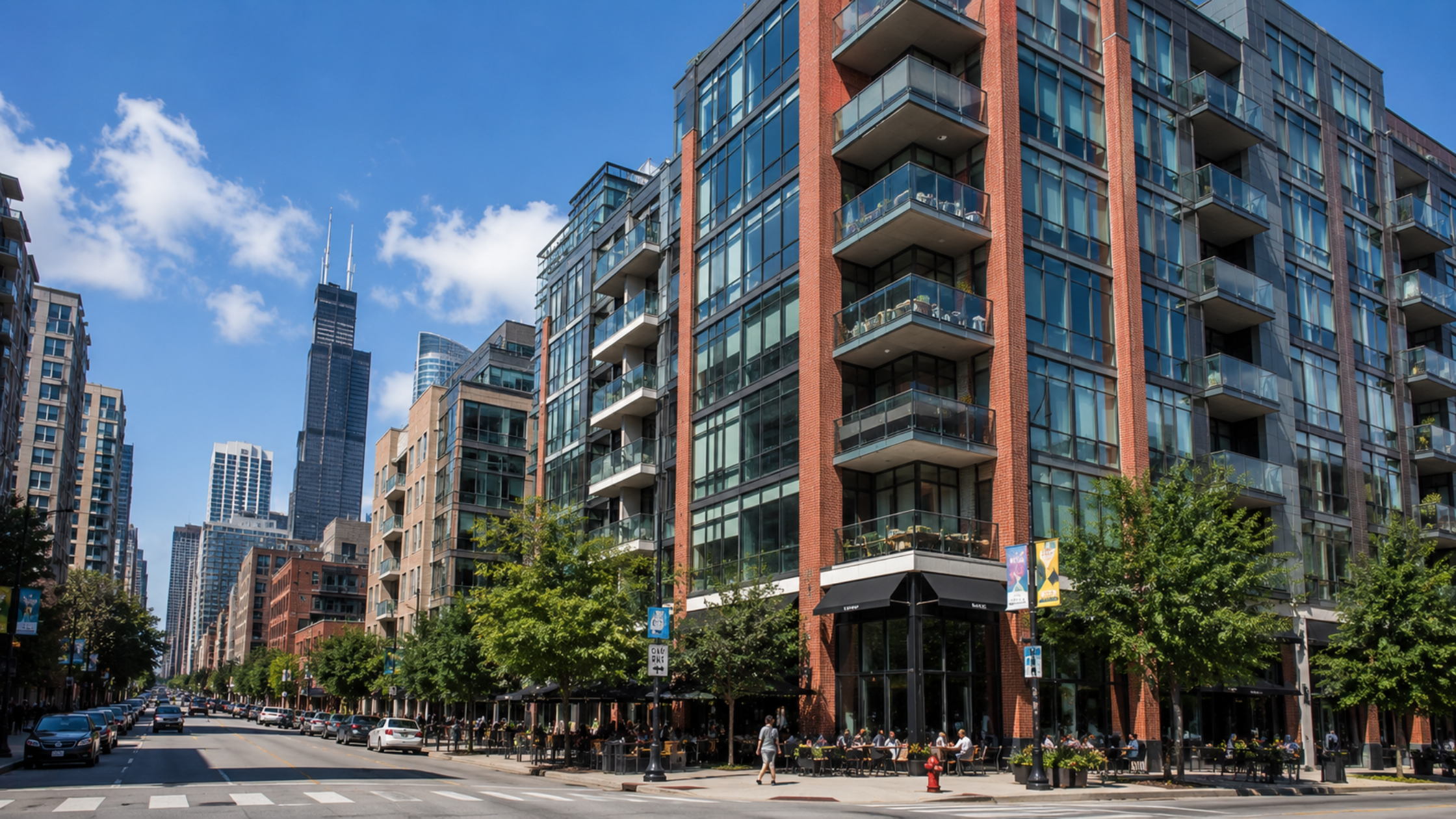
A condo may be the stronger fit if you want:
A lower entry point into a desirable neighborhood
Easier maintenance
Strong rental potential
Walkability
Transit access
Building amenities
Downtown proximity
A lock-and-leave lifestyle
Less exterior responsibility
This can make sense in areas like South Loop, West Loop, University Village, University Commons, Pilsen, and nearby downtown neighborhoods where lifestyle and location drive demand.
For buyers comparing South Loop buildings specifically, Best Condo Buildings in South Loop Chicago 2026 Guide is a helpful place to start.
Which Strategy Fits Single-Family Buyers?
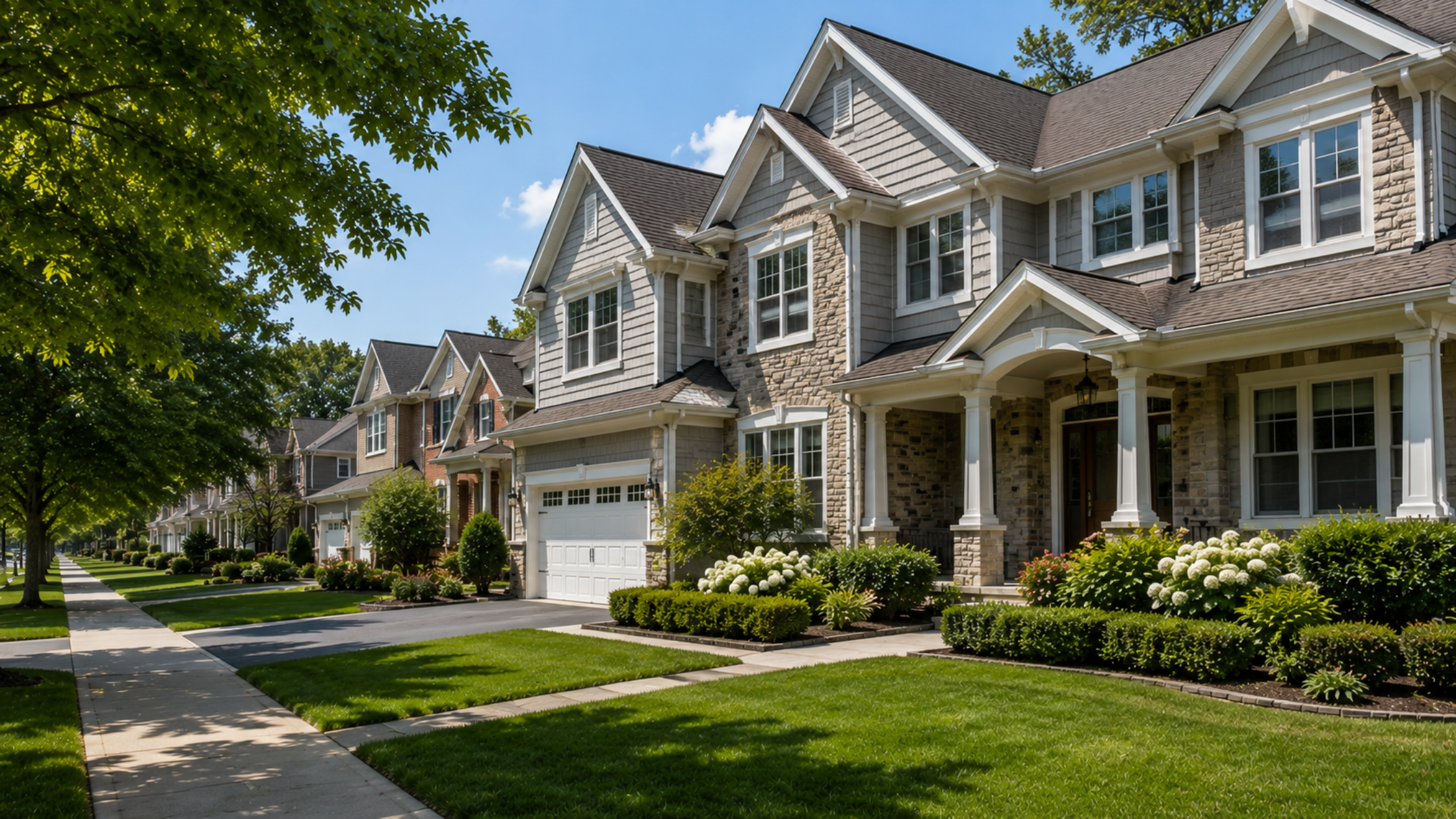
A single-family home may be the stronger fit if you want:
More space
A private yard
More control over improvements
Longer-term ownership
Strong resale appeal among families
School district demand
Garage parking
Fewer building rules
Land value
Room to renovate or expand
This often fits buyers looking in the Western Suburbs, North Shore, and other communities where single-family homes make up a larger share of the market.
For these buyers, ROI is often tied to choosing the right town, school district, block, home condition, and improvement strategy.
Location Still Comes First
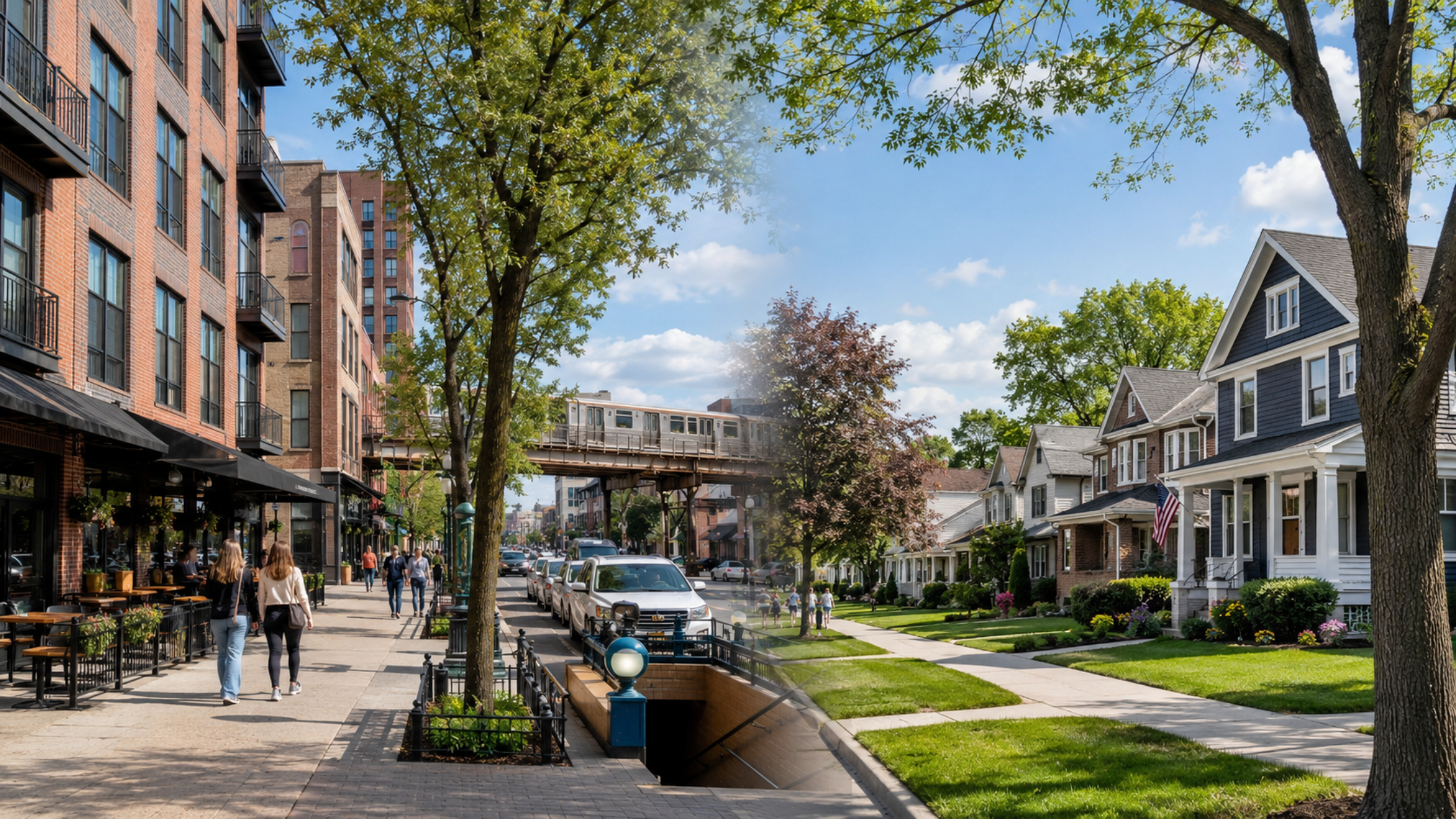
Whether you are buying a condo or a single-family home, location is still one of the biggest drivers of return.
For condos, location may mean being near the CTA, parks, restaurants, downtown offices, lakefront access, or major developments.
For single-family homes, location may mean being near schools, parks, Metra, expressways, downtown districts, or established residential streets.
A beautifully renovated home in the wrong location may not perform as well as a more modest property in a stronger long-term location. That is why local market knowledge matters so much.
The Takeaway
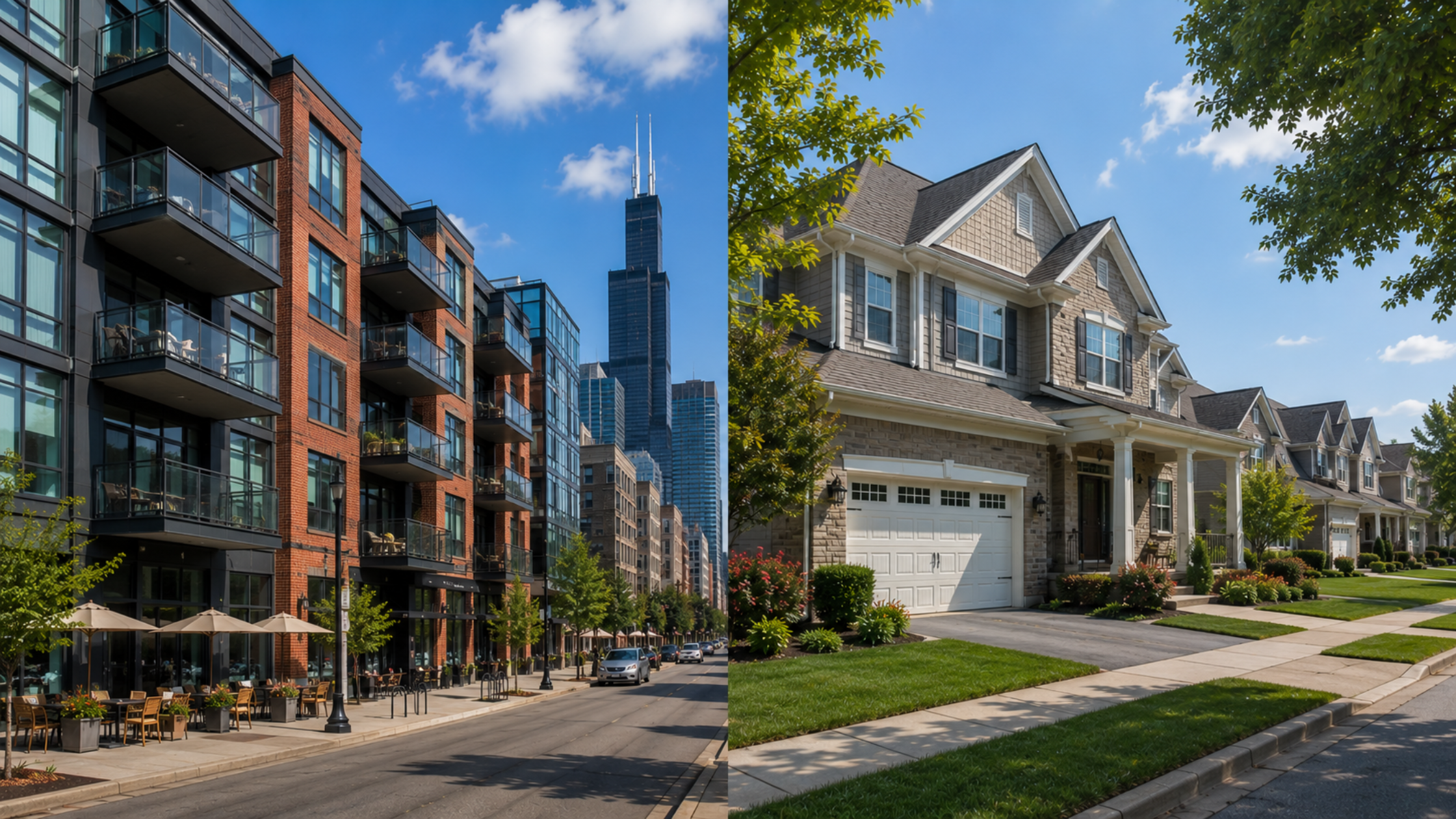
So, is a Chicago condo or a single-family home the better investment?
Neither wins automatically.
A condo can offer a lower entry point, stronger convenience, easier upkeep, and demand in walkable city neighborhoods. A single-family home can offer land, control, privacy, and long-term appeal in suburban and residential markets.
The smartest choice depends on your goals.
If you want location, convenience, and lower-maintenance ownership, a condo in South Loop, West Loop, University Village, or University Commons may make sense.
If you want space, land, and more control over long-term improvements, a single-family home in the Western Suburbs or North Shore may be the better fit.
The key is comparing the full picture: purchase price, monthly costs, taxes, maintenance, rental potential, resale demand, and how the property fits your long-term plan.
Looking to Compare Chicago Condos and Single-Family Homes?
Whether you are considering a condo in South Loop, West Loop, University Village, or University Commons, or exploring single-family homes in the Western Suburbs or North Shore, connect with the Cory Tanzer Group at Option Premier for expert guidance on location, carrying costs, resale value, and long-term investment potential.