Living in Downtown Chicago: What It's Really Like in 2026
Living in Downtown Chicago means stepping outside your front door to world-class transit, lakefront access, and a walkable urban core that genuinely supports a car-free lifestyle. Whether you are relocating for work or simply looking for a change of pace, the downtown area offers a density of amenities that few American cities can match.
Key Takeaways
Downtown Chicago is not one neighborhood but a collection of distinct areas including the Loop, River North, Streeterville, South Loop, and West Loop, each with its own character.
The CTA's L train and bus network make car-free living genuinely practical for most downtown residents.
Grocery options, green space, and restaurant access vary significantly depending on which downtown neighborhood you choose.
Costs are higher than Chicago's outer neighborhoods, but the density of amenities often offsets the premium for people who value time and convenience.
Working with a local real estate team that knows downtown's micro-markets helps you avoid expensive mismatches between lifestyle expectations and actual neighborhood conditions.
Safety perceptions differ across downtown sub-neighborhoods, and understanding those distinctions matters before you sign a lease or close on a condo.
What "Downtown Chicago" Actually Means (and Why the Distinction Matters)
A lot of people use "Downtown Chicago" loosely, and that vagueness can create real confusion when you are apartment hunting or buying a condo. The Loop is Chicago's official downtown core, the dense grid of skyscrapers and offices bounded by the elevated train tracks. But when most people say they want to live downtown, they are usually referring to a broader footprint that includes River North, Streeterville, South Loop, and increasingly West Loop.
Each of these areas has a different personality. River North is dense with restaurants, galleries, and nightlife. Streeterville hugs the lakefront near Navy Pier and feels more residential and quieter than River North. South Loop is generally more affordable, family-friendly, and close to the Museum Campus. West Loop has become one of the city's most desirable addresses thanks to the restaurant scene on Randolph Street and the tech and creative office presence.
Understanding these distinctions before you start your search is not a minor detail. A condo on Michigan Avenue in Streeterville and an apartment near Wicker Park on the western edge of what some people casually call "downtown" will deliver completely different day-to-day experiences. The types of homes in Chicago resource breaks down what housing stock looks like across these different areas, which is a useful starting point before you tour anything.

Getting Around Without a Car: Transit, Walkability, and Real-World Commutes
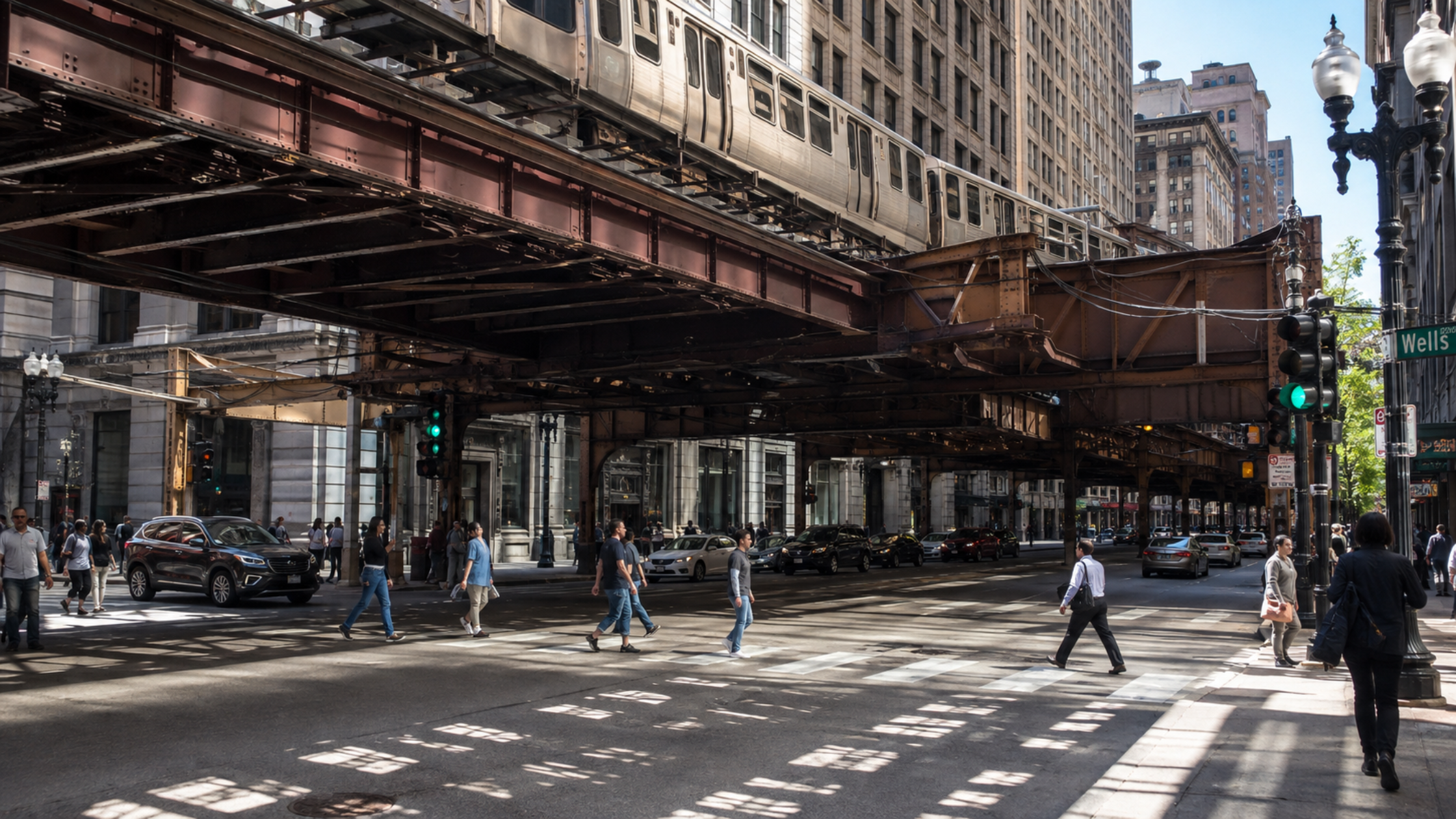
One of the biggest practical advantages of living in this part of the city is the public transportation network. The Chicago Transit Authority (CTA) operates the L train and an extensive bus system, and the downtown area is served by multiple L lines converging at or near the Loop. If you work in the central business district, River North, or Streeterville, you may not need a car at all.
Walk Score consistently rates most downtown Chicago neighborhoods above 90, which places them in the "Walker's Paradise" category. That is not just marketing language. You can realistically handle groceries, medical appointments, dry cleaning, and dinner reservations entirely on foot or by transit in most parts of the downtown core.
Biking is also a realistic daily option. Chicago's Divvy bike-share network has stations throughout the downtown area, and protected bike lanes have expanded considerably on major corridors in recent years.
Grocery Shopping and Daily Errands Downtown
One of the most common questions people ask before moving downtown is about grocery access. The honest answer is that it depends heavily on exactly where you live.
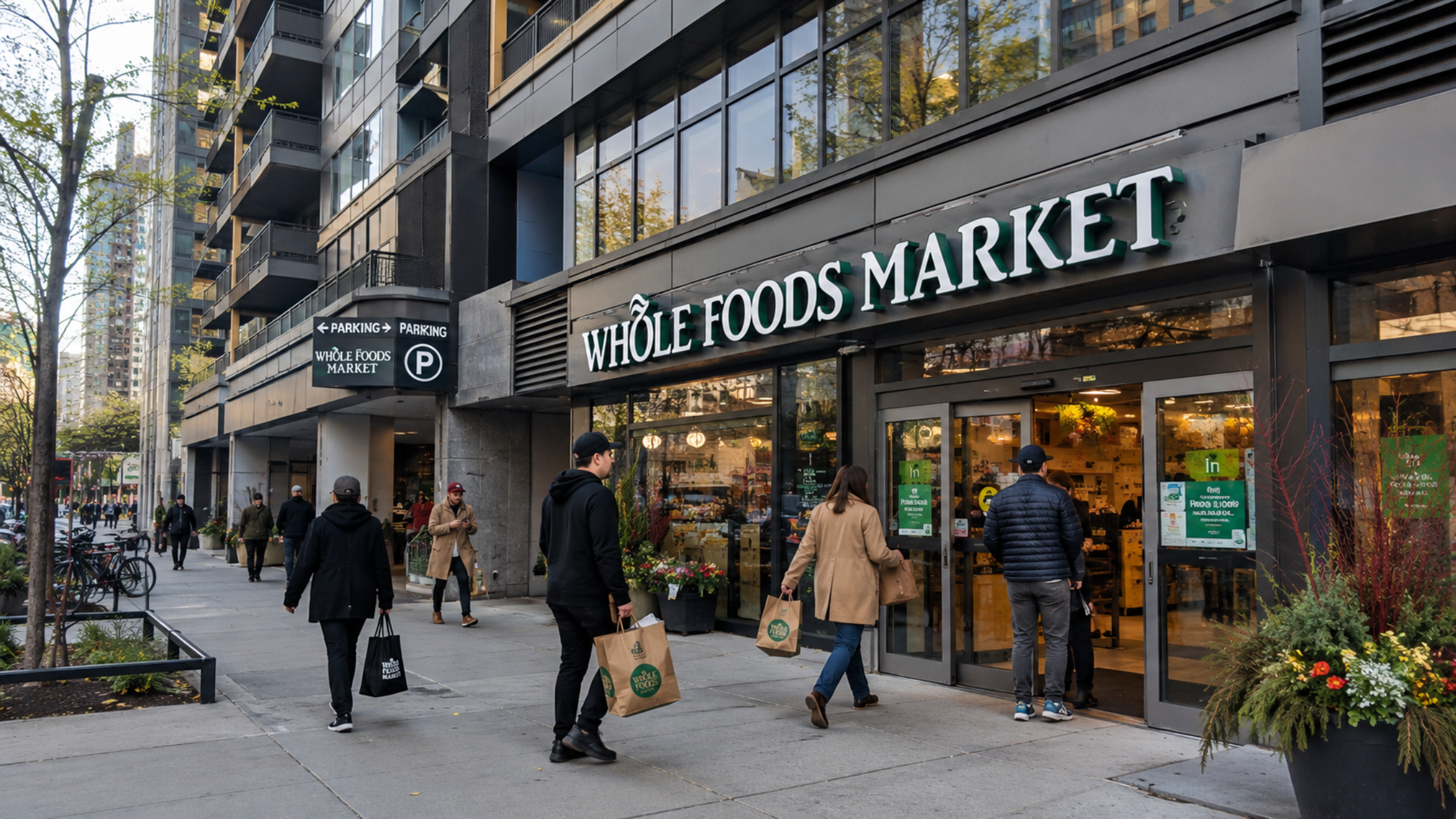
Streeterville residents have access to a Whole Foods on Grand Avenue. South Loop residents are generally well-served by a Jewel-Osco on Wabash. West Loop residents can reach the Mariano's on Madison Street or several smaller specialty stores. The Loop itself, which is primarily an office district, is thinner on everyday grocery options, though delivery services like Instacart and Amazon Fresh fill the gap for many residents who live in high-rises there.
Farmers markets also play a real role in downtown food culture. The Green City Market in Lincoln Park is one of the most popular in the Midwest and is reachable by transit in under 20 minutes from most downtown neighborhoods. The USDA Agricultural Marketing Service maintains a directory of certified farmers markets if you want to research seasonal options near your specific address before committing to a lease.
Parks, Green Space, and the Lakefront
Access to green space is one of the strongest selling points for living in Downtown Chicago. Millennium Park and Grant Park sit at the heart of the lakefront and are walkable from virtually every downtown neighborhood. Maggie Daley Park, directly east of Millennium Park, has a climbing wall, a mini-golf course, and one of the more impressive playgrounds in the city.
The Chicago Riverwalk runs along the south bank of the Chicago River from Lake Shore Drive west to Lake Street and is lined with restaurants, kayak rentals, and seating areas. It has become an everyday amenity for residents who want a place to walk, run, or sit outside that does not feel like a tourist attraction, even though tourists use it heavily in the summer.
For residents in neighborhoods adjacent to downtown, green space looks a little different. The parks near University Village and University Commons article highlights how the neighborhoods just south and west of downtown have their own park infrastructure that many people overlook when they are focused exclusively on the lakefront.
The 18-mile Lakefront Trail, which runs along Lake Michigan from the north side to the south side, is accessible from multiple downtown entry points and is one of the most-used urban paths in the country. According to the Chicago Park District, the lakefront parks system is among the largest municipally managed lakefront green space networks in the United States.
The Cost of Downtown Chicago Living in 2026
Pricing in the downtown area is meaningfully higher than in Chicago's outer neighborhoods. Rents for a one-bedroom in River North or Streeterville typically run well above the city average. Condos in South Loop are generally more accessible, but pricing in buildings with newer amenities or lakefront views reflects that premium.
Beyond rent or mortgage, cost of living downtown includes parking (if you keep a car), higher costs at nearby grocery stores versus suburban alternatives, and dining and entertainment expenses that are easy to underestimate when you are surrounded by excellent restaurants. That said, residents often offset some of these costs by eliminating car payments, insurance, and fuel entirely.

Choosing the Right Neighborhood for Your Lifestyle
No two people need the same downtown neighborhood. A single professional in their late twenties who wants to walk to bars and music venues has different priorities than a couple with a toddler who wants a quiet street and a park within two blocks.
River North works well for people who want dense restaurant and nightlife access without commuting to find it. Streeterville suits people who value proximity to the lakefront and a quieter residential feel. South Loop is popular with young families, dog owners, and people who want more square footage for their dollar. West Loop attracts people drawn to the restaurant scene, the tech office presence, and the Fulton Market corridor.
Safety in Downtown Chicago: What the Data Actually Shows
Safety is one of the most common concerns people raise before moving downtown, and it deserves a straightforward answer rather than a dismissive one. Crime patterns in Chicago vary significantly by neighborhood, and the downtown area is not uniform. Streeterville, the Magnificent Mile corridor, and most of River North are generally considered lower-crime areas. The Loop sees a mix of office workers and tourists during the day but can feel emptier at night, which affects perception more than statistical risk.
The Chicago Police Department's crime data portal publishes neighborhood-level crime statistics and is worth reviewing for any specific address you are seriously considering. It is also worth talking to current residents, building staff, and a local agent who spends time in those neighborhoods, because raw statistics do not always capture what a block actually feels like at 10 p.m. on a Wednesday.
The FBI's Uniform Crime Reporting Program provides national context if you want to compare Chicago's downtown crime patterns to peer cities, though direct city-to-city comparisons require careful interpretation.
Things to Know
Downtown Chicago is divided into distinct sub-neighborhoods that differ significantly in price, vibe, and daily convenience. Do not treat it as a single area.
Walk Score ratings are high across most of downtown, but grocery access varies. Research your specific address before signing a lease.
The Divvy bike-share network and CTA make car-free living practical, but if you plan to keep a vehicle, budget for parking costs that can run $200 to $400 per month or more in many buildings.
South Loop tends to offer more space per dollar than River North or Streeterville and is worth serious consideration if budget matters.
The lakefront is genuinely close for most downtown residents, but access points and trail quality vary depending on your starting block.
Building quality, association fees, and special assessments in older condo buildings can affect your total monthly costs significantly, especially in the Loop where some buildings are decades old.
Stop Searching and Start Making a Real Decision
If you have been researching living in Downtown Chicago for a while, the next step is a conversation with someone who actually knows these streets. Call the Cory Tanzer Group at Option Premier at (312) 218-4483 and tell them which neighborhoods you are considering, what your timeline looks like, and what your budget is. The team will give you honest, neighborhood-specific guidance instead of a generic overview. Whether you are buying a condo in South Loop or renting in River North while you get oriented, get a real local expert on your side before you commit to anything.
Frequently Asked Questions
-
For people who value walkability, transit access, and proximity to culture and the lakefront, living downtown Chicago is generally worth the higher cost.
The premium you pay in rent or mortgage is often offset by eliminating car expenses and gaining significant time savings on commutes. The trade-off is real, though: you are likely getting less square footage for your dollar than you would in the outer neighborhoods or suburbs.
-
Chicago consistently ranks among the top large cities in the United States for quality of life, largely because of its combination of world-class dining, cultural institutions, affordable housing relative to coastal cities, and strong public transportation.
The city has challenges, including weather that is genuinely brutal from December through February, and crime patterns that vary significantly by neighborhood. For people who do their research and choose neighborhoods thoughtfully, Chicago delivers a high quality of urban life at a more accessible price point than New York or San Francisco.
-
Most of downtown Chicago is safe to walk during the day and reasonably safe at night in higher-activity areas like River North, Streeterville, and the Magnificent Mile.
As with any large American city, awareness of your surroundings matters, and some blocks and times of night carry more risk than others. The Chicago Police Department publishes block-level crime data that lets you evaluate specific routes rather than relying on generalizations.
-
Streeterville is widely considered the safest sub-neighborhood within the broader downtown area, followed closely by the Magnificent Mile corridor and parts of River North near densely populated residential blocks.
These areas benefit from high foot traffic, significant retail and restaurant presence, and strong building security in most residential towers. South Loop has also become increasingly residential and generally reports lower crime rates than its reputation from earlier decades might suggest.
-
Downtown Chicago is one of the most walkable urban environments in the United States, with most daily errands, restaurants, transit stations, parks, and workplaces reachable entirely on foot.
Walk Score consistently rates the Loop and surrounding downtown neighborhoods above 95 out of 100, placing them among the top-rated walkable districts in the country. Grocery stores, pharmacies, gyms, coffee shops, and medical offices are distributed across the central area at a density that makes car ownership genuinely optional for most residents. The lakefront trail, the Chicago Riverwalk, and the connected park system mean that recreational walking is just as practical as errand walking. For newcomers who have spent their lives in car-dependent suburbs, the transition to downtown Chicago's walkability is often the single biggest quality-of-life improvement they notice in the first month.
The Bottom Line on Living in Downtown Chicago
Living in Downtown Chicago is not just a lifestyle choice. It is a practical decision about how you want to spend your time, your money, and your daily energy. The transit infrastructure is genuinely strong, the lakefront and park system are exceptional, and the concentration of restaurants, cultural institutions, and neighborhood amenities means that most of what you need is within walking distance on any given day. The trade-offs are real: higher rents and condo prices, Illinois property taxes, building HOA fees, and winters that demand a good coat and a reliable sense of humor. But for the right person, no other Chicago neighborhood delivers the same combination of convenience, access, and urban energy.
If you are seriously considering a move downtown, your next step is to talk to people who work in these specific neighborhoods every single day. The Cory Tanzer Group at Option Premier knows the difference between buildings and blocks, not just zip codes. Reach out at (312) 218-4483 or email cory@optionpremier.com to start a conversation about where you want to land and what makes sense for your situation.