March 2026 Chicago Downtown & Surrounding Neighborhoods Housing Market Updates

The Chicago housing market continues to show steady activity as 2026 progresses. According to InfoSparks data as of March 2026, several key neighborhoods across Downtown and nearby areas are experiencing consistent price growth, reflecting ongoing buyer demand and stable market conditions.
From centrally located areas like the Loop and Near West Side to neighborhoods such as Bridgeport and the Lower West Side, the market offers a mix of steady appreciation and stronger growth pockets.
Market Highlights Across Chicago Neighborhoods (March 2026)
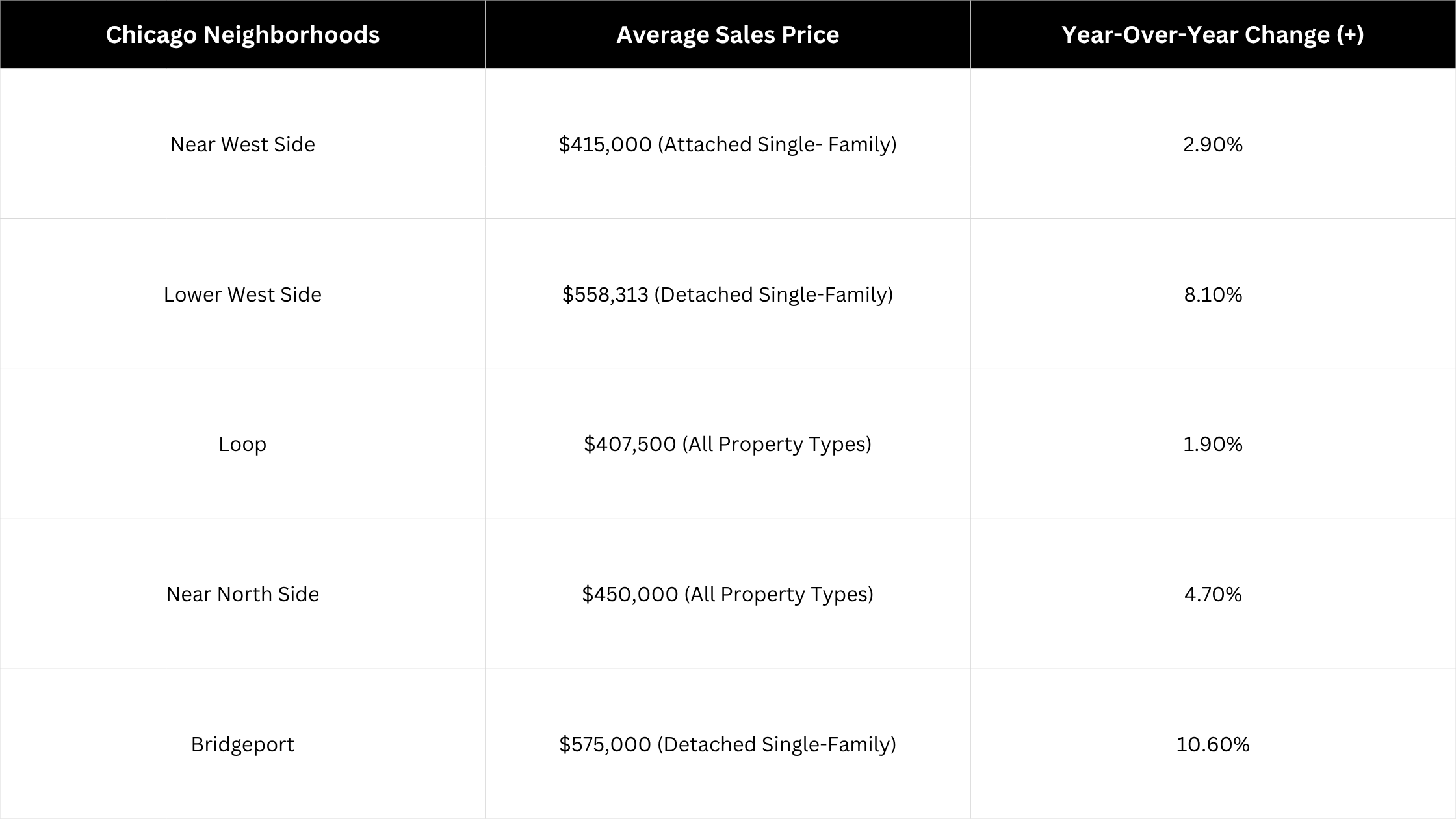
Near West Side Chicago – Median attached home price $415,000, +2.9% year-over-year
Near West Side Chicago continues to show stable growth, driven by its proximity to downtown, major employment hubs, and ongoing development.
Lower West Side Chicago – Median detached home price $558,313, +8.1% growth
Lower West Side Chicago is seeing strong appreciation, supported by buyer interest in historic homes and a vibrant neighborhood culture.
Loop Chicago – Median home price $407,500, +1.9% growth
The Loop remains a balanced market, offering steady appreciation and continued demand for downtown living.
Near North Side Chicago – Median home price $450,000, +4.7% growth
Near North Side Chicago continues to attract buyers with its walkability, lakefront access, and strong lifestyle appeal.
Bridgeport Chicago – Median detached home price $575,000, +10.6% growth
Bridgeport stands out with double-digit appreciation, reflecting increasing demand and growing interest in the area.
What the Numbers Mean for Chicago Neighborhoods – March 2026
Average Sales Price March 2026
The data shows a balanced urban market with pockets of strong appreciation. While some areas are seeing moderate growth, others are experiencing higher demand and faster price increases.
For homeowners:
Continued equity growth across most neighborhoods
Strong buyer demand for well-located properties
Favorable conditions for selling in select high-growth areas
For buyers:
A mix of stable and competitive markets
Opportunities across different price points and property types
Long-term value driven by location and urban lifestyle
Why Buyers Are Targeting These Chicago Neighborhoods
Several key factors continue to drive demand:
Location & Accessibility: Immediate access to Downtown Chicago, public transit, and major employment centers
Lifestyle & Amenities: Walkable neighborhoods with dining, shopping, parks, and entertainment
Diverse Housing Options: Condos, attached homes, and detached properties across various price ranges
Long-Term Value: Strong demand supported by location, development, and lifestyle appeal
These fundamentals continue to support steady home values and consistent buyer activity.
Summary
The March 2026 Chicago housing market across these neighborhoods reflects a healthy mix of stability and growth. Areas like Bridgeport and the Lower West Side are seeing stronger appreciation, while the Loop and Near West Side remain balanced and steady. Overall, these neighborhoods continue to offer opportunity, accessibility, and long-term value for both buyers and sellers.
Have questions about the market or your next move? We’re here to help.
Stay Connected
Ranked among the top 1% of real estate teams in the Chicagoland market, Cory Tanzer and the Cory Tanzer Group are experts in helping buyers and sellers navigate today’s market across Downtown Chicago, the North Shore, and the Western Suburbs. Recognized for their neighborhood expertise in areas such as University Village, University Commons, South Loop, and Pilsen, the team helps clients stay one step ahead by understanding where the Chicago market is headed next.