Should You Sell Your Chicago Home in December or Wait Until Spring 2027?

Actual Chicago residential street, photographed November 2023. Credit: Warren LeMay / Wikimedia Commons. Photo source · CC BY-SA 2.0.
CHICAGO— If you're thinking about selling your Chicago home, you may be wondering whether it's better to list in December 2026 or wait until the spring 2027 housing market.
Spring is traditionally one of the busiest seasons for real estate, but that doesn't automatically mean waiting will result in a higher sale price. December can offer an advantage of its own: fewer competing homes and buyers who may have a specific reason to move.
For Chicago homeowners, the right decision depends on neighborhood inventory, property type, pricing, preparation, and personal timing.
Here's how the two seasons compare and what sellers should consider before deciding when to list.
What Chicago's Housing Market Says Heading Into December 2026
Chicago enters the final weeks of 2026 with fewer homes available for sale than a year earlier.
According to Illinois REALTORS® October 2026 housing data, the City of Chicago recorded:
$390,000 median sale price, up 5.4% from October 2025.
3,767 homes for sale, down 19.1% year over year.
1,612 closed sales, an 11.7% annual decline.
26 days on market until sale, compared with 29 days a year earlier.
These figures describe the city's overall residential market, not every individual neighborhood or property type.
The decline in available homes is particularly relevant for sellers considering a December listing. With inventory already lower than a year ago, a well-presented home could face relatively limited competition within its immediate market segment.
However, fewer listings don't necessarily mean stronger offers. Buyer activity, financing conditions, and comparable property prices still influence the outcome.
A condo in the South Loop, a townhome in University Commons, and a single-family home in Beverly may face very different competitive conditions.
That's why a neighborhood-specific market analysis matters more than relying on Chicago's citywide median price alone.

Photo: Snow-covered residential homes in Chicago during winter. Credit: formulanone / Wikimedia Commons. Archival photograph.
Why Selling Your Chicago Home in December Could Make Sense
December is usually a slower month for residential real estate, partly because families are traveling, preparing for the holidays, and managing year-end commitments.
But a slower market isn't necessarily a bad market for sellers.
The National Association of REALTORS®' winter home-selling guide identifies fewer competing listings and buyers with specific moving needs as potential advantages of winter selling.
Less competition from other sellers
Many homeowners postpone listing until after the holidays. If your property is one of relatively few comparable homes available in its neighborhood and price range, buyers may have fewer alternatives to consider.
That can help a well-priced, move-in-ready listing stand out.
Buyers with a reason to move
Some December buyers are relocating for work, adjusting to family changes, or trying to purchase within a particular timeline.
However, not every winter buyer is highly motivated, and sellers should still expect price negotiations, inspections, and financing contingencies.
An earlier start to your next move
Listing in December can allow sellers to begin the process before the spring wave of new listings arrives.
It may also help homeowners who are coordinating a relocation, purchasing another property, or managing the costs of maintaining a vacant home.
The trade-off is that winter showings require flexibility.
Shorter daylight hours, cold weather, holiday schedules, and occasional snow can make preparation and access more challenging.
If you list in December, focus on bright professional photography, comfortable indoor temperatures, clear walkways, and flexible showing appointments.
A December listing also doesn't guarantee a December closing. Depending on how quickly the property receives an offer and the terms of the transaction, closing may take place in January or February.

Photo: Bright, professionally presented residential living room illustrating interior preparation for winter showings. Credit: Franco Debartolo / Unsplash.
Why Waiting Until Spring 2027 May Be the Better Strategy
Spring generally brings more residential real estate activity as temperatures rise and more buyers begin scheduling tours.
According to the National Association of REALTORS®' analysis of spring market patterns, national existing-home sales have historically increased from February through May, while inventory also tends to rise as more sellers enter the market.
For Chicago homeowners, that creates both opportunities and challenges.
Potentially more buyers
Spring may bring additional buyers who were waiting through the holidays or want to coordinate a move before summer.
More buyer activity can increase showing opportunities for appropriately priced properties.
Better conditions for exterior presentation
For single-family homes, townhouses, and properties with outdoor amenities, warmer weather can make it easier to photograph landscaping, patios, decks, and exterior features.
Buyers can also evaluate outdoor spaces without snow or severe winter conditions.
Additional time for preparation
Sellers who need to repaint, complete repairs, declutter, arrange staging, or coordinate contractors may benefit from a few extra months.
A home that's fully prepared in March may perform better than one rushed onto the market in December.
But waiting also introduces uncertainty.
More homeowners typically list during spring, increasing competition. Interest rates, buyer affordability, economic conditions, and local inventory may also change before 2027.
A stronger spring market is not a guarantee that your specific home will sell for more.
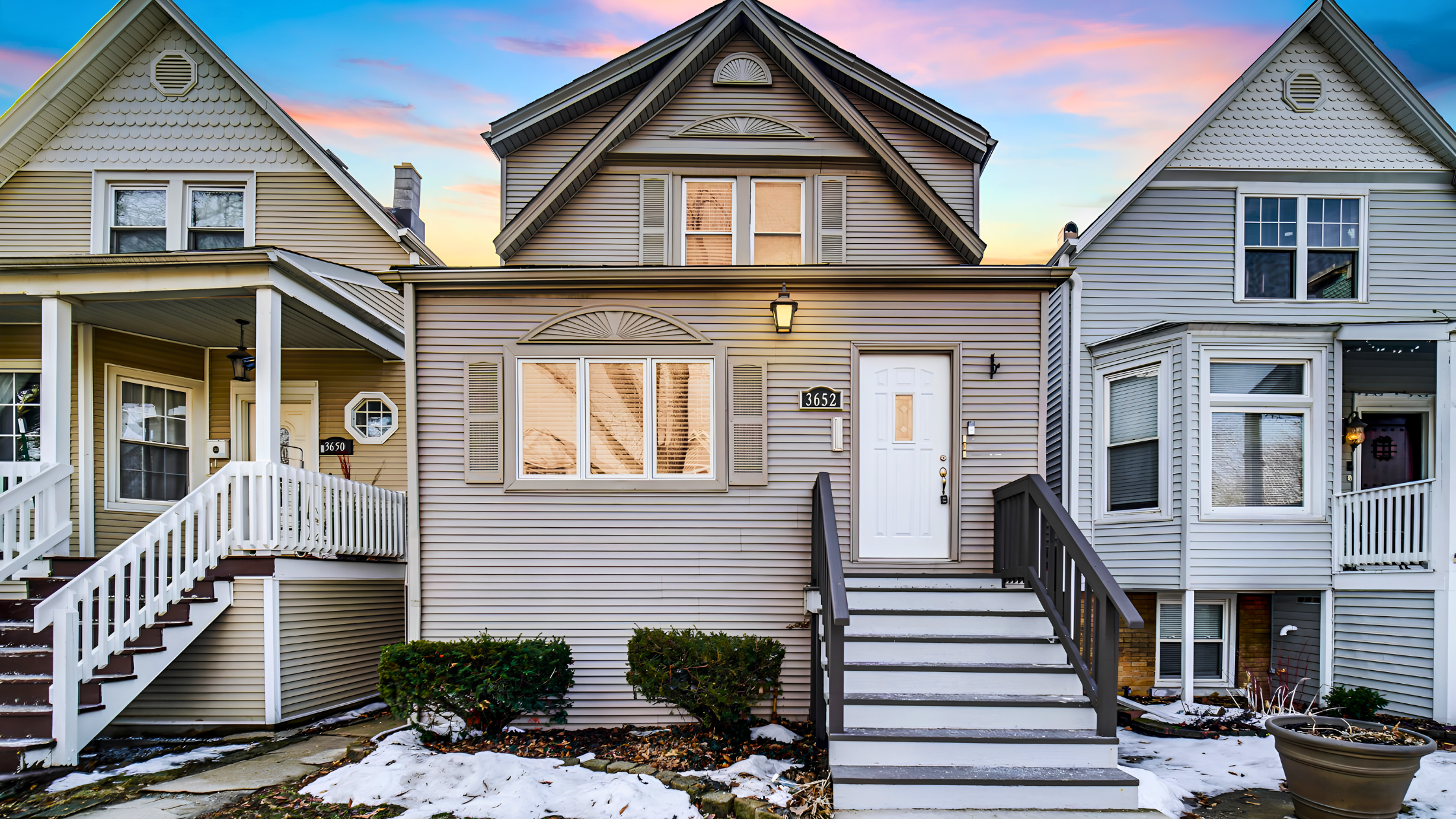
Photo: Residential homes along Tripp Avenue in Chicago's Irving Park neighborhood. Credit: Warren LeMay / Wikimedia Commons. Archival neighborhood photograph.
December 2026 vs. Spring 2027: Which Is Better for Chicago Sellers?
The decision becomes clearer when comparing each season's practical advantages and limitations.
| Selling Factor | December 2026 | Spring 2027 |
|---|---|---|
| Buyer Activity | Typically lower | Typically higher |
| Competing Listings | Often fewer | More homes generally enter the market |
| Buyer Motivation | Some buyers have specific deadlines | Wider range of buyers and timelines |
| Home Presentation | Cold weather and limited daylight | More favorable exterior conditions |
| Showing Flexibility | Holidays may complicate schedules | Scheduling may be easier |
| Preparation Time | Shorter if listing immediately | More time for repairs and staging |
| Sale Price | Depends on local demand and pricing | Depends on local demand and pricing |
| Best Suited For | Prepared sellers with an earlier timeline | Sellers who benefit from more preparation |
General seasonal patterns, not property-specific forecasts. Compare local market conditions before choosing a listing date. Consult The Cory Tanzer Group
These are typical seasonal patterns, not predictions for individual Chicago neighborhoods.
What About Your Specific Chicago Neighborhood?
A seller's decision should begin with the competition around the property.
For example, a two-bedroom condominium in the South Loop should be compared with recently sold, pending, and active condos with similar layouts, square footage, amenities, parking, and association fees.
A University Commons or University Village seller may need to evaluate comparable units within the same development and nearby buildings.
For detached homes in neighborhoods such as Beverly, Lincoln Square, or Jefferson Park, condition, lot characteristics, updates, and nearby comparable sales may carry different weights.
Sellers in the surrounding suburbs should likewise use their municipality's local market data rather than Chicago citywide figures.
This is where a comparative market analysis (CMA) becomes valuable.
A local real estate professional can evaluate recent sales, active listings, pending contracts, days on market, price reductions, and competing properties to help determine a realistic listing strategy.
Should You List Now or Prepare for Spring? A Seller's Decision Guide
Before choosing a listing date, Chicago homeowners should answer four questions.
1. Is your home ready to show?
If the property is clean, well-maintained, appropriately priced, and ready for professional photography, December may be worth considering.
If substantial repairs or updates are still needed, additional preparation time could be more valuable.
2. How many similar homes are currently for sale?
Look beyond the number of listings in your neighborhood.
Focus on properties that buyers would realistically compare with yours, including similar size, price range, condition, and features.
3. How much would waiting cost?
Mortgage payments, association assessments, insurance, utilities, taxes, maintenance, and other carrying expenses may continue while you wait.
Selling later could also affect the timing and costs of your next purchase or move.
4. What does the local market analysis suggest?
Ask for two potential plans: one for a December listing and another for a spring launch.
Compare the proposed asking-price strategy, necessary preparations, competitive inventory, expected marketing approach, and estimated net proceeds under reasonable scenarios.
The goal isn't to predict the exact future selling price. It's to understand your options before making a decision.
The Bottom Line: There Is No Universally Best Month to Sell
If your Chicago home is market-ready and you have a reason to sell soon, December 2026 may offer an opportunity to compete against fewer listings.
If the property needs substantial preparation or your personal timeline is flexible, spring 2027 may be a reasonable alternative.
What matters most is not simply the season, but how your property is positioned against similar homes and how the selling strategy supports your goals.
Thinking About Selling Your Chicago Home?
Before deciding between December and spring, find out what your property could realistically compete against in today's market.
The Cory Tanzer Group at Option Premier works with homeowners across Chicago and Chicagoland, including the South Loop, West Loop, University Village, University Commons, and surrounding communities.
Our team can help you evaluate comparable sales, local listing competition, pricing, home preparation, and timing so you can develop a strategy based on your specific property rather than the calendar alone.
Stay Connected
Ranked among the top 1% of real estate teams in the Chicagoland market, The Cory Tanzer Group at Option Premier is recognized for proven sales performance, neighborhood expertise, and consistent results across Chicago and the surrounding suburbs.
In the 2026 RealTrends Verified rankings, based on 2025 sales data, the team completed 181 transaction sides representing $79.28 million in sales volume. The Cory Tanzer Group ranked No. 13 in Illinois by transaction sides, No. 20 in Illinois by sales volume, No. 270 nationally by transaction sides, and No. 439 nationally by sales volume.
The team also earned The CARLY, the highest honor for Platinum Sales Dollars and Platinum Units Sold, at the Chicago Association of REALTORS® Sales Awards.
Led by Cory Tanzer, the team helps buyers, sellers, investors, landlords, and renters navigate real estate across Downtown Chicago, the North Shore, and the Western Suburbs, with local expertise in University Village, University Commons, South Loop, West Loop, Little Italy, Pilsen, and surrounding Chicagoland communities.
Connect with The Cory Tanzer Group at Option Premier for trusted local market insight, personalized guidance, and a proven strategy for your next Chicago real estate move.