Who Pays Property Taxes When Buying or Selling a Home in Chicago?
Buying or selling a home in Chicago? One of the biggest questions at closing is who pays the property taxes, especially when the next tax bill has not arrived yet.
In Illinois, property taxes are generally paid in arrears, meaning homeowners pay taxes for a previous calendar year.
Because of this, sellers typically provide buyers with a property tax credit at closing to cover their share of taxes that have accumulated but have not yet been paid.
The exact amount depends on the closing date, estimated taxes and terms negotiated in the purchase contract.
Why Are Illinois Property Taxes Paid a Year Later?
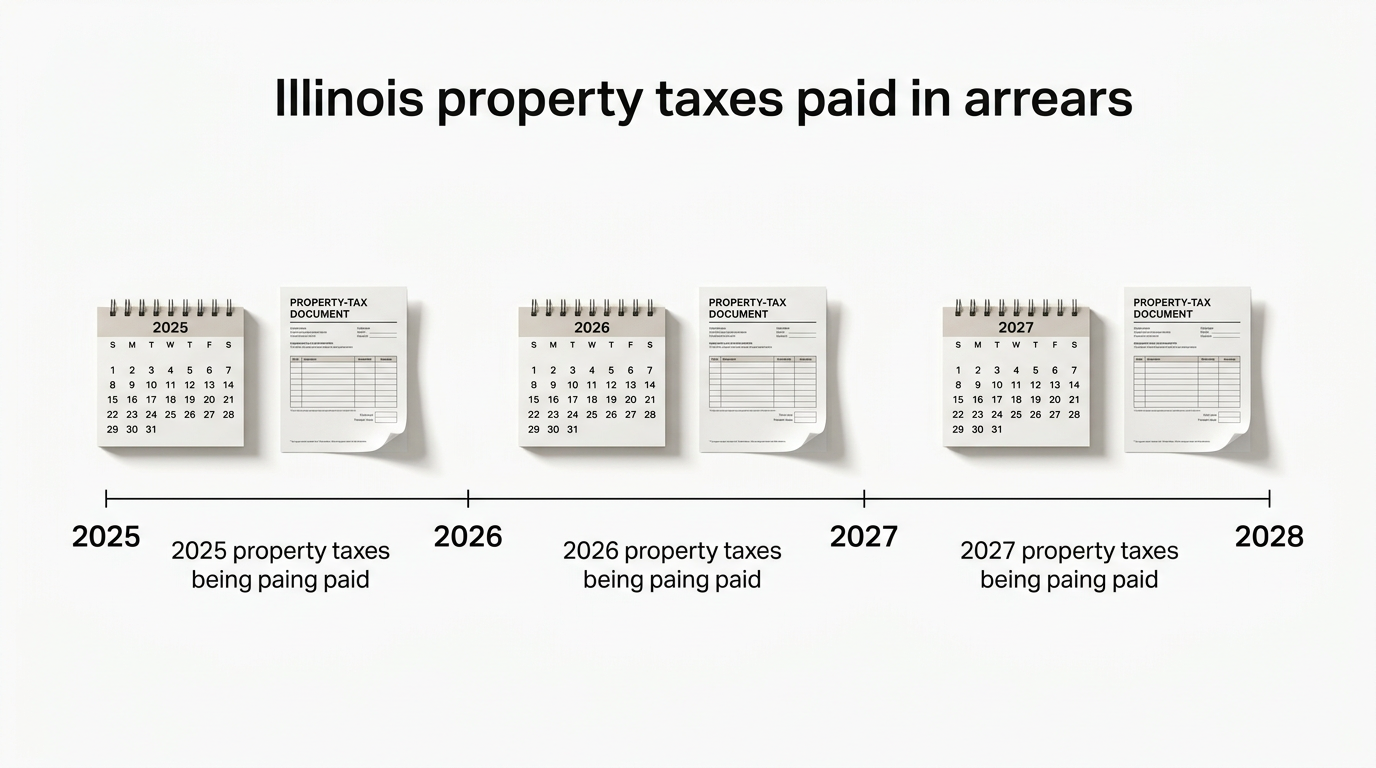
Illinois property taxes follow a billing cycle that can be confusing for first-time buyers.
For example:
2025 property taxes are billed and paid during 2026.
2026 property taxes will generally be billed and paid during 2027.
2027 property taxes will generally be billed and paid during 2028.
This means someone purchasing a Chicago condo in November 2026 could receive tax bills in 2027 covering a year when the seller owned the property for most of the time.
To address this, the buyer and seller divide responsibility through a process called property tax proration.
According to the Illinois Department of Revenue, sellers generally pay outstanding property tax bills and provide buyers a credit for their ownership period before closing, based on the contract.
Buyers are then generally responsible for paying property tax bills that become due after closing.
How Does Property Tax Proration Work at Closing?
Property tax proration divides the estimated annual tax obligation based on how long each party owns the home.
Here's a simplified example of a Chicago home closing on November 2, 2026.
Assume the property has an estimated annual tax bill of $7,300, the 2025 taxes have already been paid, and the purchase contract calls for a 100% proration using a 365-day year.
Under these assumptions, the seller provides a $6,100 credit to the buyer at closing.
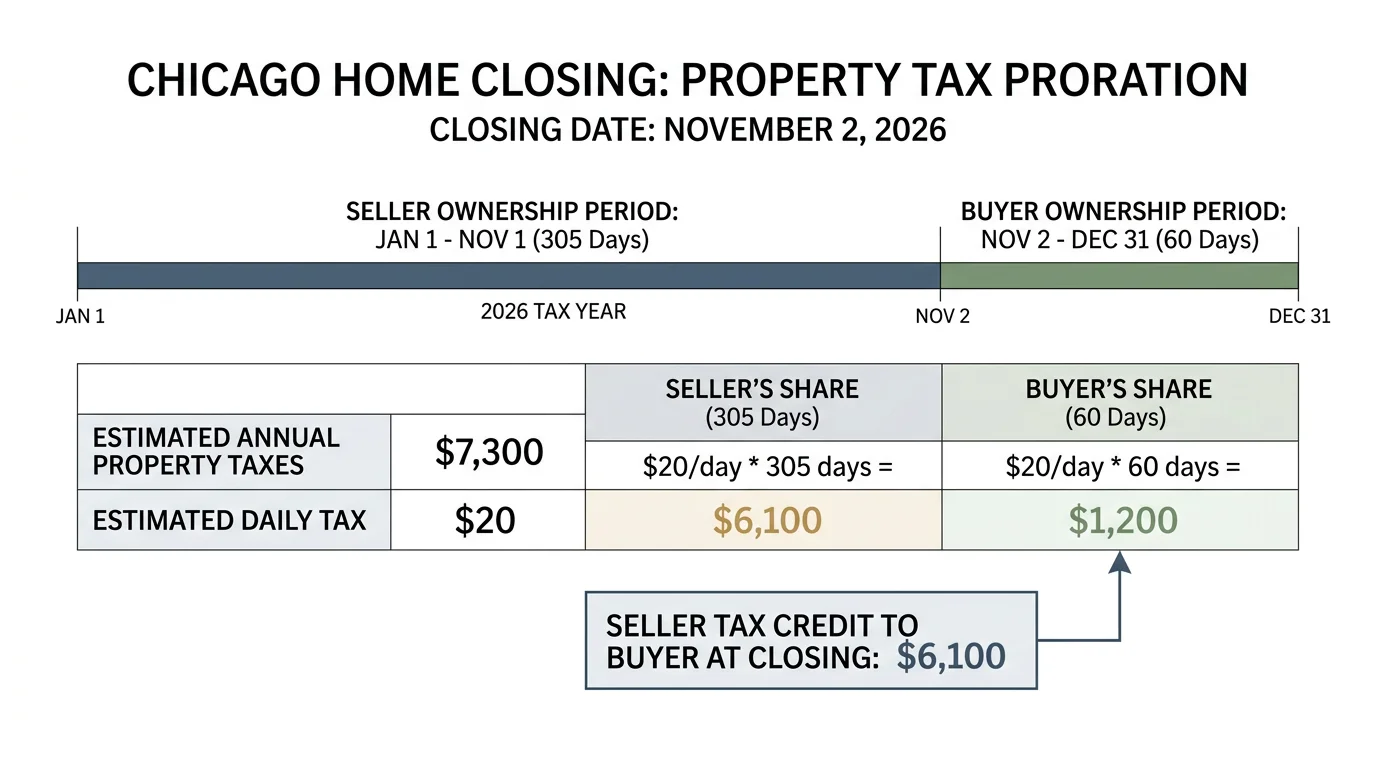
The buyer does not necessarily receive that amount as cash. Instead, the credit reduces the amount the buyer must bring to closing.
When the actual 2026 property tax bills become payable in 2027, the buyer is generally responsible for making those payments.
Important: This example is illustrative. The final proration can differ depending on the contract's tax estimate, percentage, day-count method and allocation of the closing date.
Why Your Actual Tax Credit Could Be Different
One reason property taxes create confusion is that the final bill for the current tax year often isn't available when the home sells.
To estimate the seller's responsibility, buyers and sellers may negotiate a proration based on the most recent available tax bill.
For example, some Chicago-area transactions use 105% or 110% of the previous year's tax amount, rather than 100%, to account for potential increases.
However, there is no single percentage that automatically applies to every transaction. The agreed contract terms control the calculation.
Several factors can also affect the property's future taxes:
Property reassessments: Changes in assessed value may affect future bills.
Homeowner exemptions: The seller's exemptions may not apply to the new owner.
Taxing district changes: Local levies and tax rates can change.
New construction or improvements: Newly assessed improvements can significantly change the tax obligation.
Buyers should not assume the seller's latest tax bill will remain unchanged after purchasing the property.
A contract may also state that the closing proration is final or permit a later adjustment once the actual bill is known. Buyers and sellers should review this provision with their real estate attorney before closing.
What Chicago and Suburban Buyers Should Check Before Closing
The tax proration process applies broadly throughout Illinois, but billing schedules can vary by county.
For Cook County, property taxes are issued in two installments.
For the 2025 tax year, the first installment was due April 1, 2026, while the second installment was due October 1, 2026.
If you're closing after those dates, confirm that the seller's outstanding bills have actually been paid. Any unpaid taxes should be addressed as part of the closing process.
Buyers purchasing in DuPage County or other Chicago-area suburbs should check the applicable county treasurer's records because payment dates and billing procedures can differ.
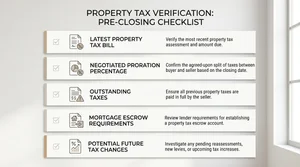
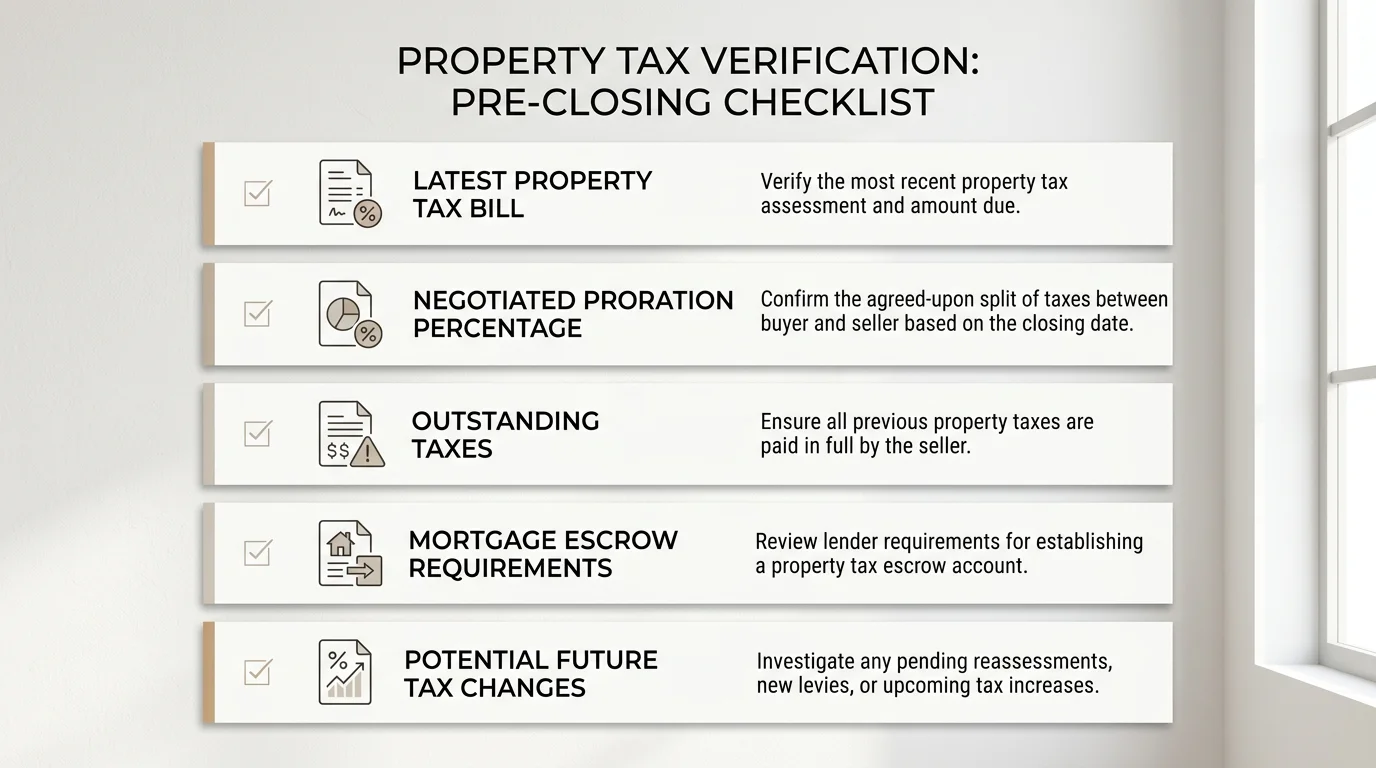
Before signing your final closing statement, verify:
The latest property tax bill: Check the actual amount and payment history.
The negotiated proration: Confirm the percentage, estimated tax amount and number of days used.
Outstanding taxes: Make sure unpaid prior-year bills are properly addressed.
Mortgage escrow requirements: Your lender may require additional funds for future property tax payments.
Potential future changes: Review exemptions, reassessments and any known adjustments that could affect later bills.
Buyers can review Cook County property tax bills and payment records through the Cook County Treasurer's Office.
For sellers, understanding these credits before listing can help produce a more accurate estimate of net proceeds.
A seller with substantial accrued taxes may receive less cash at closing than expected, even after accounting for the mortgage payoff and other selling costs.
Before You Buy or Sell, Understand Your Closing Costs
Property tax prorations are just one part of a Chicago real estate closing.
For buyers, understanding the seller's tax credit, mortgage escrow deposits, insurance and other expenses can help avoid surprises when reviewing the final amount due.
For sellers, estimating property taxes alongside transfer taxes, mortgage payoff, commissions and other closing expenses provides a clearer picture of expected proceeds.
The Cory Tanzer Group at Option Premier helps buyers and sellers navigate Chicago's housing market, including condos in University Village, University Commons and the South Loop, as well as homes throughout the Western Suburbs.
Planning to buy or sell in Chicagoland? Connect with our team to understand local market conditions, prepare for closing expenses and coordinate with your real estate attorney and lender.
Stay Connected
Ranked among the top 1% of real estate teams in the Chicagoland market, The Cory Tanzer Group at Option Premier is recognized for proven sales performance, neighborhood expertise, and consistent results across Chicago and the surrounding suburbs.
In the 2026 RealTrends Verified rankings, based on 2025 sales data, the team completed 181 transaction sides representing $79.28 million in sales volume. The Cory Tanzer Group ranked No. 13 in Illinois by transaction sides, No. 20 in Illinois by sales volume, No. 270 nationally by transaction sides, and No. 439 nationally by sales volume.
The team also earned The CARLY, the highest honor for Platinum Sales Dollars and Platinum Units Sold, at the Chicago Association of REALTORS® Sales Awards.
Led by Cory Tanzer, the team helps buyers, sellers, investors, landlords, and renters navigate real estate across Downtown Chicago, the North Shore, and the Western Suburbs, with local expertise in University Village, University Commons, South Loop, West Loop, Little Italy, Pilsen, and surrounding Chicagoland communities.
Connect with The Cory Tanzer Group at Option Premier for trusted local market insight, personalized guidance, and a proven strategy for your next Chicago real estate move.