Chicago Investment Property for Beginners: How to Analyze Your First Rental Purchase
Buying your first rental property in Chicago is one of the most effective ways to build long-term wealth in one of the country's most resilient real estate markets. The Chicago investment property guide beginners need starts with understanding how to run the numbers, pick the right neighborhood, and avoid the costly mistakes that trip up most first-timers.
Key Takeaways
Chicago's diverse neighborhoods offer a wide range of price points and rental yields, making it accessible for investors at different budget levels.
Cash flow analysis, not just appreciation, should drive every purchase decision you make as a beginner.
Multi-unit properties (two-flats and three-flats) are among the most beginner-friendly investment vehicles in Chicago.
Property taxes in Illinois are notably high and must be factored into your cash flow projections from day one.
Working with a local brokerage that knows Chicago's micro-markets can save you from overpaying or buying in a declining rental corridor.
Chicago's 2025-2026 market conditions are favoring investors in specific pockets of the South Side, West Side, and select Northwest neighborhoods.
Why Chicago Is Still One of the Best Cities for First-Time Investors
Chicago isn't a flashy Sun Belt market with parabolic price growth. What it offers is something more valuable for beginners: stability, diversity, and genuine cash flow potential. The city has a massive renter population, with approximately 55% of Chicago households renting rather than owning, according to U.S. Census Bureau housing data. That's a structural advantage for landlords.
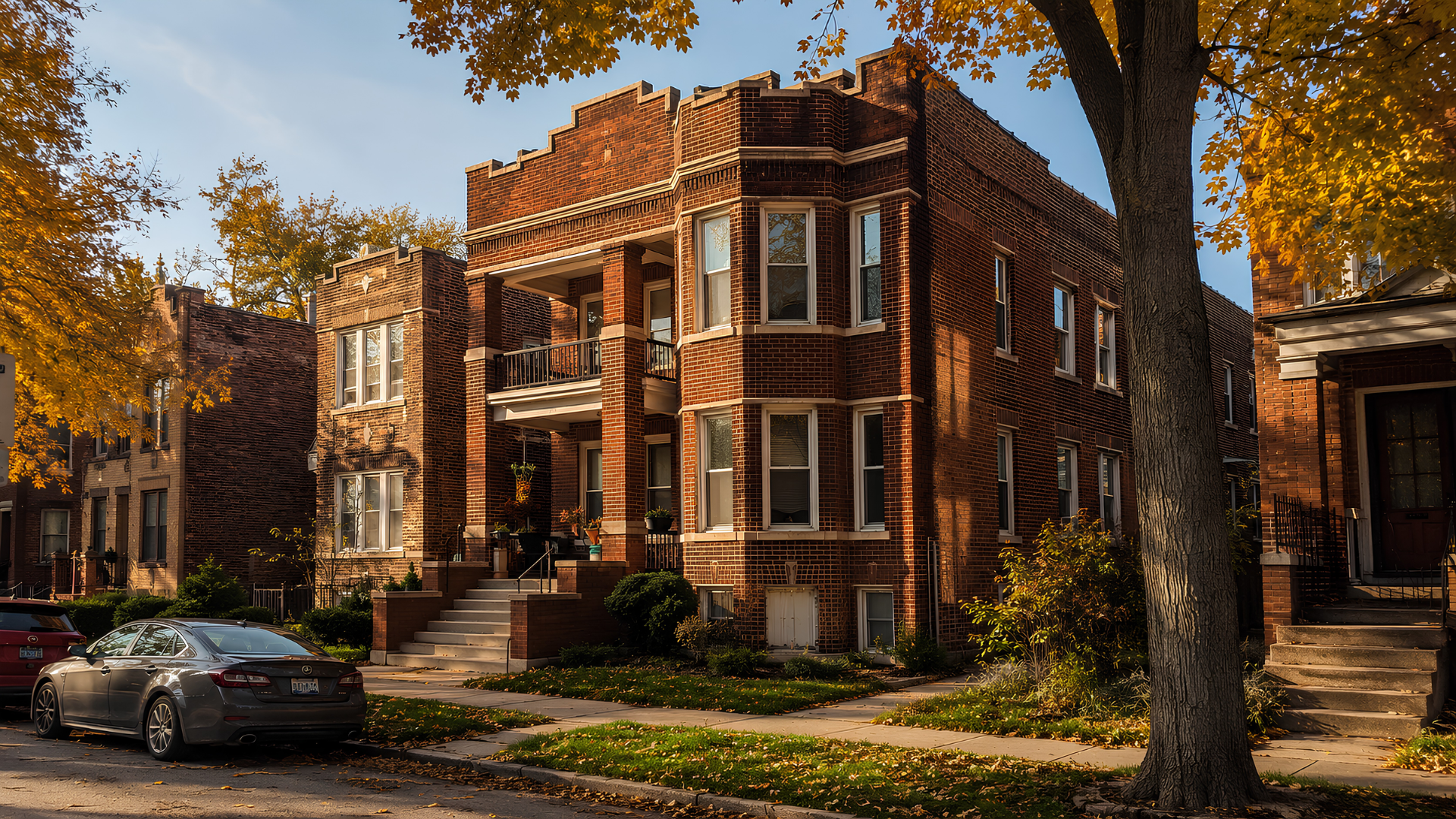
The city also has a well-established multi-unit housing stock. Two-flats, three-flats, and six-flats are common throughout Chicago's neighborhoods, which means beginners can house-hack (live in one unit while renting the others) or buy a small multi-unit building as a standalone investment. Entry prices for two-flats in neighborhoods like Pilsen, Auburn Gresham, and Avondale still start in the $300,000s, making them far more accessible than comparable properties in New York, Los Angeles, or Miami.
If you want to understand how the broader market is moving before committing to a purchase, chicago home prices are leading the nation again what buyers and sellers must know in 2026 is a solid starting point for context.
How to Run the Numbers on a Chicago Rental Property
This is where most beginners make their biggest mistakes. They fall in love with a property and work backward to justify the numbers. You need to do the opposite.
The Core Metrics Every Beginner Must Know
Gross Rental Yield is your annual rent divided by the purchase price. In Chicago, you're generally targeting 7% or higher for a property to make sense as a straight rental. Below 6%, you're betting almost entirely on appreciation.
Net Operating Income (NOI) is your annual rent minus operating expenses (property taxes, insurance, maintenance, property management, vacancy allowance). This is not profit; it's income before your mortgage payment.
Cash-on-Cash Return divides your annual pre-tax cash flow by the cash you actually invested (down payment, closing costs, initial repairs). Most experienced Chicago investors target 6-10% cash-on-cash for a solid first property.
Cap Rate is your NOI divided by the purchase price. For Chicago rental properties in 2025-2026, cap rates typically range from 5% to 8% depending on neighborhood and property type.
Here's a simplified example of how these numbers might look on a Chicago two-flat:
| Metric | Example Value |
|---|---|
| Purchase Price | $380,000 |
| Monthly Rent (2 units) | $3,200 |
| Annual Gross Rent | $38,400 |
| Operating Expenses (35%) | $13,440 |
| Annual NOI | $24,960 |
| Cap Rate | 6.6% |
| Down Payment (25%) | $95,000 |
| Annual Cash Flow (after mortgage) | $7,200 |
| Cash-on-Cash Return | 7.6% |
Chicago-Specific Costs You Cannot Ignore
Illinois has the second-highest property tax burden in the country, according to WalletHub's property tax analysis. On a $380,000 two-flat in Chicago, you could be paying $8,000 to $12,000 per year in property taxes alone. Factor that in before you make any offer.
You should also budget for:
A landlord insurance policy (typically $1,200-$2,500/year for a two-flat)
A 5-8% vacancy rate on each unit
A maintenance reserve of $150-$250 per unit per month
Property management fees of 8-12% of gross rent if you're not self-managing
Choosing the Right Chicago Neighborhood for Your First Investment
Not every neighborhood works equally well for every investor. Your choice should be driven by your budget, your risk tolerance, and your target tenant profile.
Neighborhoods With Strong Cash Flow Potential
The South Side (Roseland, Auburn Gresham, Chatham) offers the lowest entry prices and the highest gross yields, but requires more active management and a stronger stomach for vacancy fluctuations.
Austin and Humboldt Park on the West Side offer similar dynamics with growing community investment in some corridors.
Pilsen and Little Village have seen consistent rent growth and gentrification pressure, creating a middle ground between cash flow and appreciation.
Avondale and Albany Park on the Northwest Side offer strong renter demand from young professionals and working families, with two-flat prices that still pencil out for new investors.
If you're open to investing just outside city limits, our article on the best Chicago suburbs for buyers who want more space near the city covers several suburbs where rental demand is rising and entry costs are lower than the city proper.

Financing Your First Investment Property in Chicago
Investment property financing is different from buying a primary residence. Lenders consider rental properties higher risk, which means stricter requirements across the board.
What Lenders Typically Require
A minimum credit score of 680 (720+ gets you the best rates)
A down payment of 20-25% for a non-owner-occupied property
Cash reserves of 6 months of mortgage payments after closing
Documented rental income history if the property already has tenants
One strategy many Chicago beginners use is the FHA house-hack approach: buy a two-flat or three-flat as your primary residence (FHA loans allow up to four units), put 3.5% down, live in one unit, and rent the others. This dramatically lowers your barrier to entry. The NIH-adjacent HUD guidelines on FHA loans outline eligibility in detail.
If you're weighing whether it even makes sense to own versus continuing to rent while you invest, the analysis in Is Buying Better Than Renting in Chicago: What South Loop and West Loop Renters Need to Know walks through that exact decision.
Chicago Landlord Laws Every Beginner Must Understand
Chicago has the Residential Landlord and Tenant Ordinance (RLTO), one of the most tenant-protective municipal codes in the country. Violating it can cost you significantly more than the property earns you in a year.
Key points you need to know:
Security deposits must be kept in a federally insured interest-bearing account and returned within 30 days of lease end.
You must provide a written summary of the RLTO to every tenant at the start of their tenancy.
Late fees are capped at $10 for the first $500 of monthly rent and 5% on amounts above $500.
Chicago has a Just Cause for Eviction ordinance (effective 2024) that limits your ability to non-renew leases without documented cause for tenants who have lived in a unit for at least 60 days.
You can review the full ordinance text at the Chicago city government's tenant rights resource page.

Working With the Right Real Estate Team in Chicago
Buying an investment property is not the place to try going it alone to save on commissions. A good buyer's agent who specializes in investment properties will help you identify off-market deals, negotiate inspection credits, and spot properties with title or zoning issues before you're locked in.
Option Premier LLC, a full-service independent brokerage located at 1021 W Adams St, Suite 200, Chicago, IL 60607, works with beginner and experienced investors across the city and suburbs. The team at Option Premier includes specialists across Downtown Chicago, the Western Suburbs, the North Shore, the South Side, and the Northwest Side, which means your agent will actually know the micro-market you're buying in.
Before you make an offer on any property, use the home valuation tool to get a baseline sense of what comparable properties are worth in your target neighborhood. That context is invaluable when you're negotiating.
Cory Tanzer, CEO and founder of The Cory Tanzer Group at Option Premier, has spent years working with first-time investors and buyers throughout the city. You can reach the brokerage at (312) 500-5808 or at info@optionpremier.com. For more resources on the Chicago market, the Option Premier blogs section is regularly updated with neighborhood-level analysis and buyer guides.

Things to Know
Property taxes in Chicago are assessed at roughly 10% of the county assessor's fair market value for residential properties, but can shift significantly after reassessment years. Always verify the current tax bill, not just the listing's estimate.
The Illinois Residential Real Property Disclosure Act requires sellers to disclose known material defects, but it does not replace a thorough professional inspection.
Multi-unit buildings with six or more units fall under different city licensing requirements than two-flats and three-flats. Know which category your target property falls into.
Chicago's rental market is highly seasonal. Properties listed in January and February typically rent for less than those listed in April through July, which affects your projected rents if you're buying in winter.
1031 exchanges allow you to defer capital gains taxes when you sell one investment property and roll proceeds into another. This is a powerful long-term strategy, even if it's not relevant for your very first purchase. The IRS 1031 exchange rules are worth bookmarking now.
Always pull the city's open building permits on any property before you close. Unpermitted work becomes your problem the moment you take title.
Ready to Make Your First Investment Property Offer?
The single most actionable step you can take right now is to define your target neighborhood and your minimum cash-on-cash return threshold before you look at a single listing. Decide on your criteria first, then let the properties compete against your standards, not the other way around. Once you have those parameters set, contact the team at Option Premier at (312) 500-5808 and let them know you're looking for your first investment property. A focused conversation with an agent who knows Chicago's investment corridors will save you months of spinning your wheels on listings that never would have worked.
Frequently Asked Questions
-
Most beginners need $60,000-$120,000 in liquid capital to get started, depending on the property type and neighborhood. A conventional investment property loan requires 20-25% down plus closing costs (typically 2-3% of the purchase price) plus an initial repair reserve. If you use the FHA house-hack strategy on a two-flat, that minimum drops significantly, sometimes to $20,000-$30,000 total out of pocket.
-
Two-flats are generally better for beginners because they provide two income streams and often qualify for owner-occupant financing if you plan to live in one unit. Single-family homes can work well in suburban markets with strong appreciation, but in Chicago proper, multi-unit properties almost always pencil out better on a cash flow basis.
-
The most reliable way to find off-market deals is to work with an agent who is actively connected to local investor networks and property owners. Direct mail campaigns, driving for dollars (identifying distressed properties in your target neighborhood), and networking with local landlord associations are also effective strategies. The Chicago Apartment Owners Association is one active local group worth joining.
-
Plan for 90-120 days from accepted offer to having a paying tenant in place. Closing typically takes 30-45 days for a financed purchase. Then allow 2-4 weeks for any necessary repairs or cosmetic updates, and 2-4 weeks to market the unit and screen tenants. Tighter timelines are possible if the property is already tenant-occupied.
-
Self-managing is feasible for a one or two-unit property if you live nearby and are comfortable with basic maintenance coordination and tenant communication. However, Chicago's RLTO compliance requirements are detailed and unforgiving, so many beginners benefit from at least a part-time property manager or a real estate attorney relationship during their first year.
The Bottom Line on Chicago Investment Property for Beginners
The Chicago investment property guide beginners actually need is not about finding the perfect property. It is about building a repeatable analysis process, understanding your local market, and working with people who have done this in Chicago specifically. The city rewards patient, informed investors who buy based on cash flow fundamentals rather than hype.
Start by running the numbers on five to ten properties in your target neighborhood before you ever write an offer. By the time you make your first real bid, you'll know the market cold, and that knowledge is worth far more than any single deal you might find on the MLS.
Reach out by submitting a form to connect with a local real estate agent and take the first step toward your next move!