Chicago Home Prices Are Leading the Nation Again — What Buyers and Sellers Must Know in 2026
Chicago home prices are leading the nation again, outpacing many coastal and Sun Belt markets that surged during the pandemic years and have since pulled back. If you've been waiting for Chicago real estate to cool down before making a move, the data from mid-2026 suggests that strategy may be costing you more than it's saving.
This isn't a fluke or a short-term spike. Several structural forces are keeping Chicago's housing market tight, and understanding those forces is what separates buyers who act strategically from those who keep sitting on the sidelines.

Why Chicago's Housing Market Is Outperforming in 2026
The national narrative around housing in 2026 centers on affordability fatigue, elevated mortgage rates hovering near 6.5–7%, and softening demand in once-hot markets like Austin, Phoenix, and Boise. Chicago tells a different story.
According to S&P CoreLogic Case-Shiller Home Price Index data, Chicago has ranked among the top-performing major metro areas for year-over-year price growth for several consecutive reporting periods. The city's median home price has climbed steadily while markets in Florida and the Southwest have plateaued or declined.
Several factors explain this:
Relative affordability at baseline. Chicago entered the pandemic-era surge at significantly lower price-per-square-foot levels than New York, Los Angeles, or Miami. That gap gave the market more room to grow without hitting the ceiling of buyer exhaustion.
Population stability. Unlike some narrative predictions suggested, Chicago's population stabilized post-pandemic, with steady demand from young professionals, international buyers, and families priced out of coastal metros.
Limited new housing supply. Permitting and construction timelines in Cook County remain constrained by labor costs, zoning complexities, and financing challenges for developers. Less supply with consistent demand pushes prices upward.
Strong rental demand supporting investor activity. Chicago's rental market remains one of the tightest in the Midwest, which keeps investor buyers active and sustains competition for multi-family and mixed-use properties.
The National Association of Realtors has consistently highlighted Midwest metros as the strongest value-to-growth markets heading into the second half of 2026, with Chicago frequently cited as the standout.
The Neighborhoods Driving the Most Growth
Price appreciation in Chicago in 2026 is not uniform. It is hyperlocal, which is exactly why working with agents who know specific corridors matters enormously.
Near West Side and University Village
The Near West Side, including the University Village and University Commons corridor along West 15th Street, has seen consistent appreciation driven by its proximity to the Illinois Medical District, UIC, and strong transit access. Option Premier LLC, based at 1021 W Adams St in Chicago's West Loop, has deep roots in this neighborhood. Cory Tanzer, the CEO and founder of The Cory Tanzer Group at Option Premier, has become so closely associated with this area that he's earned the nickname "Mayor of University Village" for his neighborhood involvement and knowledge.
For renters and buyers evaluating the area, listings like the 3-bedroom corner loft rental under 4k in University Commons 1111 W 15th St Unit 322 Chicago IL 60608 illustrate exactly the kind of value this neighborhood offers at price points that would be unthinkable in comparable Chicago urban cores.
Lakeview and the North Side Corridors
Lakeview continues to be a standout for both homeowners and investors. Multi-family properties in Lakeview are generating high rental income, making them attractive in a higher-rate environment where cash flow matters more than speculative appreciation. A property like the Lakeview multi-family investment property with 7k monthly income 1507 W George St Chicago IL 60657 demonstrates the real-world income potential that's drawing investors to Chicago's established North Side neighborhoods.
Logan Square, Pilsen, and the Southwest Corridor
These neighborhoods have absorbed significant buyer demand as Wicker Park and Bucktown pushed beyond what many first-time buyers could afford. Pilsen in particular has seen sharp appreciation as buyer interest intensifies and new food and retail businesses continue to invest in the area.
What Buyers Get Wrong About "Waiting for Prices to Drop"
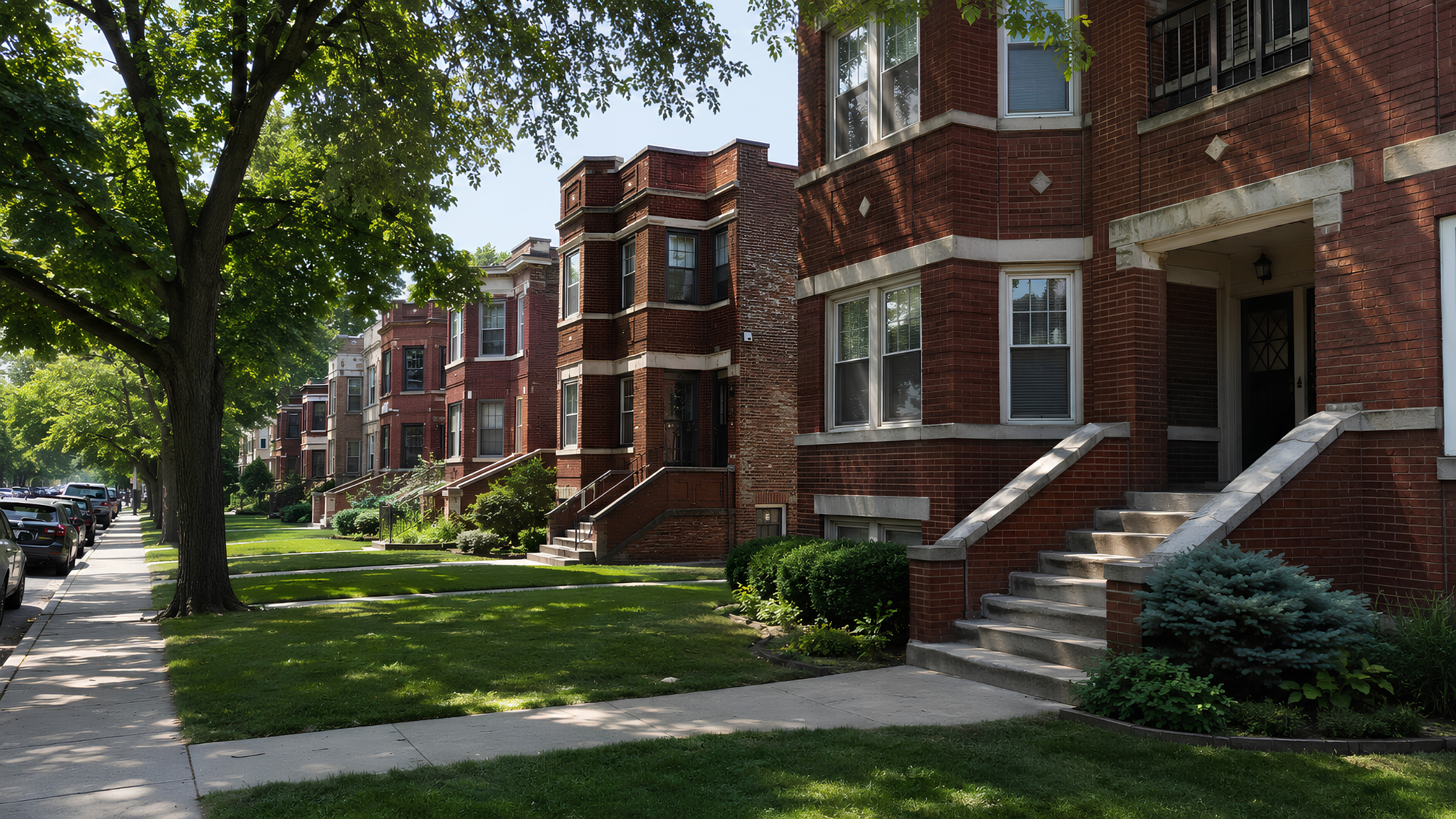
One of the most common mistakes we see buyers make in a market like this is the assumption that patience will be rewarded with lower prices. In Chicago's current environment, waiting typically means two things: paying more later, and competing with more buyers.
Here's the math that matters. If a home is priced at $450,000 today and appreciates at a conservative 5% annually, that same home costs $472,500 in twelve months. Meanwhile, if mortgage rates stay flat or tick up even slightly, your monthly payment on that $472,500 purchase will be meaningfully higher than what you'd pay today. The Consumer Financial Protection Bureau offers mortgage calculators that make this comparison easy to run yourself.
The other reality is that Chicago's inventory levels remain historically low. The Illinois Realtors Association’s monthly market reports consistently show active inventory well below pre-pandemic norms across Cook County. Low inventory means sellers hold leverage, and buyers who wait for "better conditions" may find fewer choices, not more.
Getting a current home valuation is one of the smartest first steps any buyer or seller can take right now. Understanding what your current home is worth, or what a target property is likely to appraise for, gives you a negotiating anchor that emotion alone can't provide.
Understanding the Condo Market and HOA Costs
Chicago's condo and loft market operates with its own set of dynamics that are easy to underestimate. While single-family and multi-flat properties have been the strongest performers in price appreciation, condos remain an important entry point for first-time buyers and urban investors.
One factor that consistently catches buyers off guard is HOA fees. In Chicago's condo buildings, monthly assessments can range from under $200 for a smaller vintage building to $1,000 or more for a full-amenity high-rise. These fees affect affordability calculations, mortgage qualification, and long-term carrying costs in ways that aren't always obvious until you're deep into a transaction.
We've covered this topic in detail in our piece on HOA fees in Chicago condo costs coverage and what every buyer should know, which walks through the components of assessments, what reserve funds mean for building health, and red flags to watch for in condo disclosures.

The Investment Case for Chicago Real Estate Right Now
For buyers thinking beyond primary residences, Chicago's investment fundamentals in mid-2026 are compelling. Cap rates in the 5–7% range on well-located two-flats and three-flats are increasingly rare in major American cities, where coastal markets have compressed returns dramatically.
Chicago's rental vacancy rates remain low across most North Side, West Loop, South Loop, and Near West Side submarkets. Demand from university students, young professionals, healthcare workers from the Illinois Medical District, and downtown office workers keeps occupancy rates strong.
The Urban Land Institute's Emerging Trends in Real Estate report has noted the Midwest, and Chicago specifically, as a target for institutional and individual investors looking for yield in a rate environment that has made coastal trophy assets difficult to cash-flow.
For buyers exploring investment opportunities or relocation decisions in Chicago, the team at Option Premier LLC includes brokers and specialists serving Downtown Chicago, the Western Suburbs, the North Shore, the South Side, and the Near West Side, each with deep local knowledge of their respective submarkets.
Things to Know
Chicago home prices have appreciated consistently over the past two years while several other major metros have seen flat or negative growth.
Mortgage rate fluctuations affect monthly payments significantly on Chicago properties, but the affordability gap versus coastal cities remains wide enough that Chicago still represents relative value.
Low inventory is a structural condition, not a temporary one, meaning buyers should not expect a flood of new listings to shift negotiating power dramatically.
Multi-family properties in Chicago generate some of the strongest cap rates among large U.S. cities, making them attractive to investors even at elevated borrowing costs.
HOA fees in Chicago condo buildings vary enormously and need to be factored into any affordability analysis from the very beginning of a home search.
Working with a brokerage that has specific neighborhood expertise, like Option Premier, makes a measurable difference in a competitive, hyperlocal market.
For deeper reading on Chicago real estate trends, market conditions, and specific neighborhoods, the Option Premier blogs section is updated regularly with local market analysis and property-specific content.

Frequently Asked Questions
-
Most market indicators point to continued price growth in Chicago through the remainder of 2026, though the pace may moderate slightly in the second half of the year.
Supply remains constrained and demand from buyers in the sub-$600,000 range is still strong. Barring a significant economic shock or a sharp rise in mortgage rates beyond current projections, Chicago's price floor looks well-supported.
-
Yes, Chicago remains one of the strongest cities in the U.S. for residential investment property, particularly multi-family assets in established North Side and Near West Side neighborhoods.
Cap rates in the 5–7% range are achievable in neighborhoods like Lakeview, Logan Square, and University Village. Rental demand is structurally strong, and purchase prices remain well below comparable assets in coastal markets.
-
As of mid-2026, the median home sale price in Chicago proper is approximately $340,000, though prices vary significantly by neighborhood, property type, and proximity to transit.
Condos in downtown high-rises can range from $250,000 to well over $1 million. Single-family homes and two-flats in neighborhoods like Lakeview, Lincoln Park, or Bucktown typically range from $500,000 to $900,000+.
-
Waiting for rate drops while prices continue rising often results in a higher total cost of ownership, not a lower one.
If you buy now and rates drop, refinancing is a relatively straightforward process. If you wait and prices rise 5–8% before rates improve, you've absorbed that appreciation as a permanent addition to your purchase price.
-
Pilsen, Bridgeport, Avondale, and parts of the Near West Side offer the best combination of affordability, appreciation potential, and urban amenity access for first-time buyers in mid-2026.
These neighborhoods have seen meaningful price growth but still offer entry points that are more accessible than Wicker Park, Bucktown, or Lincoln Park. Working with a local brokerage that knows these corridors in depth is essential.
Ready to Buy, Sell, or Invest Before the Market Moves Further?
The single most actionable step you can take right now is to get a current market assessment for the property you own or the one you're targeting. Contact the team at Option Premier LLC directly at (312) 500-5808 or reach out to Cory Tanzer at (312) 218-4483. You can also email info@optionpremier.com or visit optionpremier.com to access listings, tools, and agent connections. The Chicago market moves quickly, and having local expert guidance before you need it is always better than scrambling after a listing goes live.
The Bottom Line on Chicago Home Prices Is Leading the Nation Again
Chicago home prices are leading the nation again for reasons that are structural, not seasonal, which means the conditions driving this performance are unlikely to reverse quickly. Buyers who understand the hyperlocal nature of this market, factor in carrying costs like HOA fees and taxes, and work with experienced local brokers are positioned to make sound decisions regardless of where mortgage rates settle over the next year.
Whether you're a first-time buyer evaluating your entry point, a homeowner thinking about selling into a favorable market, or an investor looking for cash-flowing multi-family assets, the Chicago market in 2026 rewards decisiveness backed by good data.
Reach out by submitting a form to connect with an agent to start your search with people who know these buildings from the inside out.