A $10 Billion Plan Could Bring the Chicago Bears to Bronzeville, With a Domed Stadium and an Entire New Neighborhood
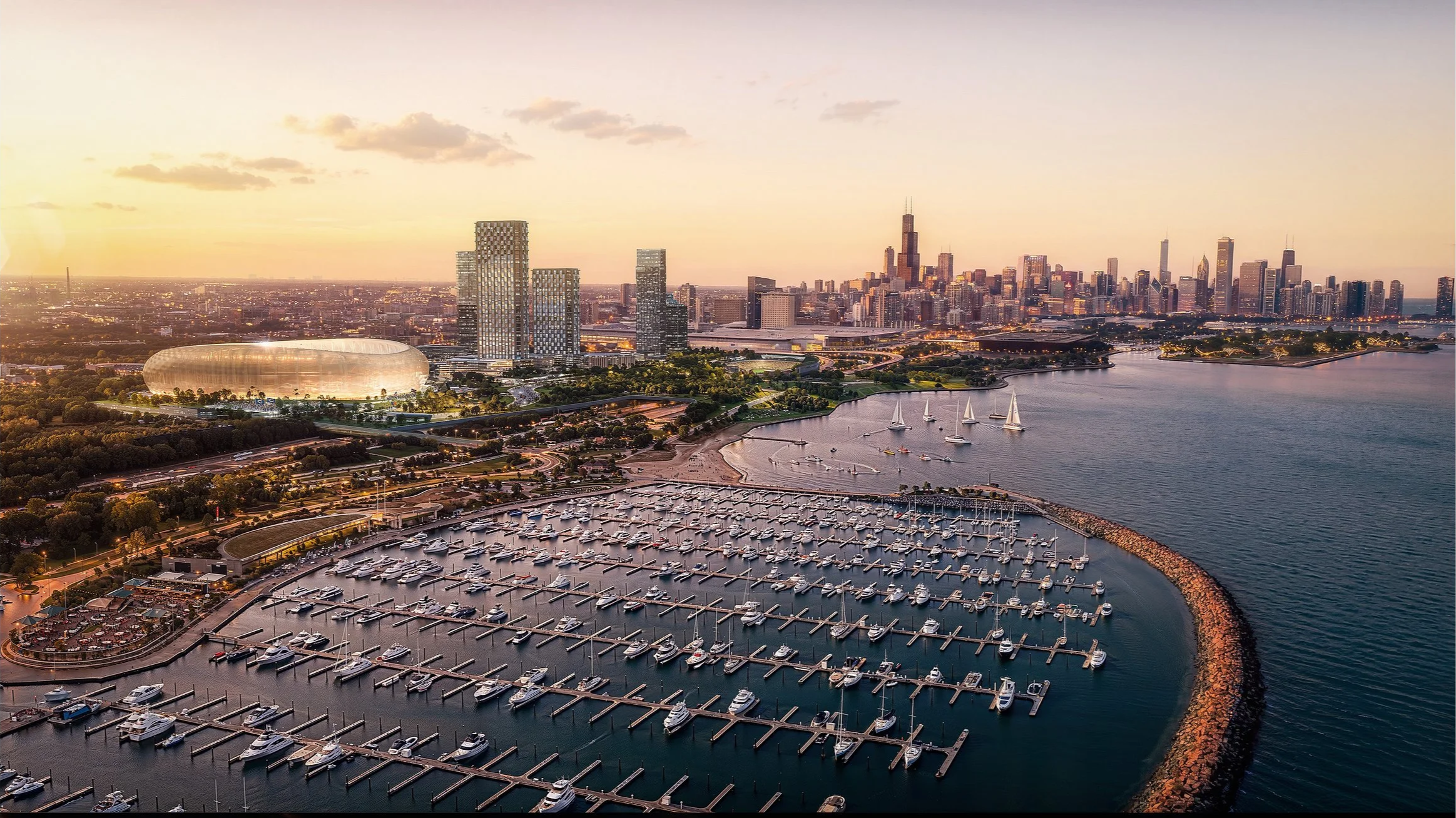
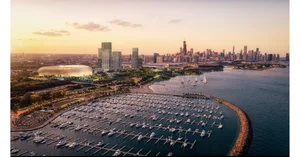
Concept rendering of the proposed Bronzeville Lakefront district. Studio Inference, via Capri Investment Group and GRIT Chicago.
BRONZEVILLE, CHICAGO: Could the Chicago Bears end up playing in a massive new stadium surrounded by housing, hotels, restaurants and parks on the South Side?
A group of developers unveiled a $10 billion proposal on November 12, 2026, that would transform approximately 100 acres surrounding the former Michael Reese Hospital site into a new sports, entertainment and residential district.
At the center of the vision is a 75,000-seat domed stadium intended to bring the Chicago Bears to Bronzeville, just south of McCormick Place and a short distance from Downtown Chicago.
But the proposal goes well beyond football. Developers envision thousands of homes, new hotels, public parks, retail space, sports facilities and transportation improvements.
There's one major catch: The Bears have not committed to the project, and several significant financing, land-use and community questions remain unanswered.
Here's what developers are proposing, what the renderings show and what this could mean for nearby Chicago neighborhoods.
What Is the New $10 Billion Bronzeville Stadium Proposal?
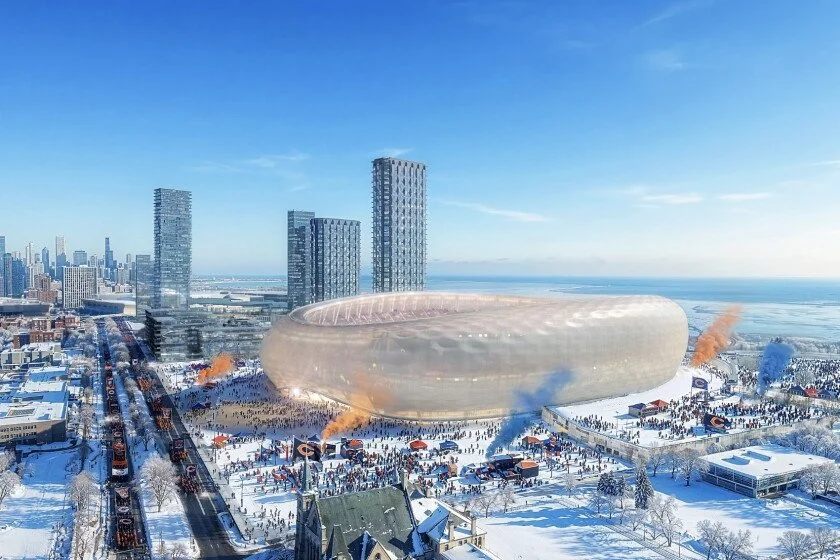
Winter concept rendering of the proposed domed stadium. Rendering by Inference, via the Chicago Sun-Times.
The proposal, called Bronzeville Lakefront, comes from Capri Investment Group and GRIT Chicago, a development consortium that includes Farpoint Development and other investment and community development partners.
Led by Capri founder Quintin E. Primo III, the group wants to create a year-round destination on the South Side, anchored by a stadium capable of hosting Bears games, major concerts and national sporting events.
The proposed stadium would accommodate approximately 75,000 spectators, making it significantly larger than Soldier Field's current football seating capacity.
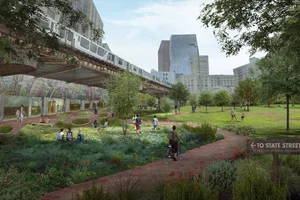
Renderings prepared by Chicago-based design firm Studio Inference show a large enclosed stadium surrounded by residential buildings, landscaped public spaces, pedestrian areas and entertainment destinations.
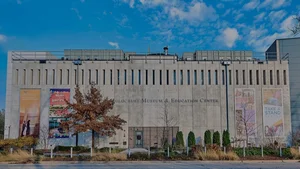
The location is centered on the former Michael Reese Hospital property near 29th Street and Ellis Avenue, within the Douglas community area and the broader Bronzeville neighborhood.
The former hospital closed in 2008, and its redevelopment has been discussed for years.
This isn't the first time the site has been considered for a Bears stadium. Developers introduced an earlier concept in March 2025, but the latest version expands the development area substantially.
Instead of relying only on the approximately 48.6-acre former hospital site, the revised plan would incorporate nearby Prairie Shores property and proposed development rights over the McCormick Place marshaling yard.
That expansion is intended to address concerns about whether a stadium could fit safely on the original site.
The proposal remains conceptual, with no announced construction start date or agreement with the football team.
What's Planned Beyond the Stadium? Housing, Hotels, Parks and More
The most significant feature of Bronzeville Lakefront may be what surrounds the stadium.
According to the developers' November 12 announcement, the project would create more than 11 million square feet of proposed development across the expanded district.
The preliminary plan includes:
More than 5,000 residential units, located within the district and on nearby properties, including affordable, senior and student housing.
Approximately 2,000 hotel rooms to accommodate visitors attending games, conventions and other events.
300,000 square feet of retail and restaurants, creating space for shopping and dining.
400,000 square feet of office space for businesses and employment.
A 500,000-square-foot youth sports complex and a separate 400,000-square-foot health and wellness center.
More than 28 acres of proposed public parkland, along with a landscaped connection toward Lake Michigan.
New transportation connections, including a proposed Metra station near 29th Street and a new CTA Green Line station roughly half a mile from the development.
The vision also calls for expanded convention facilities at McCormick Place, with approximately 300,000 additional square feet of meeting and event space.
Developers want the district to remain active throughout the year, even when the Bears aren't playing.
If completed as proposed, residents could have restaurants, recreation facilities, parks and other amenities within walking distance of new housing.
However, these are development targets, not approved construction commitments. The project would require further planning, engineering, financing and approvals before individual components could move forward.
What Would Happen to Prairie Shores Residents?
One of the most important questions involves Prairie Shores, the existing five-building residential complex along Martin Luther King Drive between 26th and 31st streets.
The expanded plan incorporates the property and could involve major changes to its existing housing.
According to the November 12 Chicago Sun-Times report, the developers are considering the demolition of up to 1,000 apartments during the first phase, alongside construction of approximately 1,500 replacement apartments.
The development group says it intends to provide 1.5 new apartments for every existing unit affected.
The proposed community benefits agreement would include relocation assistance, housing preferences for affected residents, five-year rent protections and oversight through a resident committee and independent monitor.
Those protections have not yet been finalized as binding agreements.
Fourth Ward Alderman Lamont Robinson has also stressed that replacement housing should be built before existing residents are displaced.
The issue is especially important because Prairie Shores is an established residential community, not an empty development parcel.
For nearby residents, the future of the plan will depend partly on how developers address housing affordability, displacement, construction impacts and community participation.
A project of this size could change the surrounding neighborhood significantly, making those questions central to the development process.
Will the Chicago Bears Actually Move to Bronzeville?
Despite the scale of the proposal, there is no agreement bringing the Bears to Bronzeville.
The team previously expressed concerns about the original Michael Reese site, including its narrow shape and the presence of active railroad tracks.
Developers believe the larger 100-acre footprint could address those concerns, but the Bears have not publicly endorsed the new design.
The team continues to consider other stadium possibilities, including property it owns in Arlington Heights, along with options in Northwest Indiana and elsewhere in Chicago.
To make Bronzeville more attractive, Capri Investment Group and its partners have even offered to purchase the Bears' Arlington Heights property if that would help the team reconsider staying within Chicago city limits.
However, that offer does not mean the Bears have accepted the proposal.
How Would the $10 Billion Project Be Funded?
Financing presents another major challenge.
The developers envision a publicly owned stadium with financial participation from the Bears, along with private investment and potential local, state and federal funding sources.
Possible financing mechanisms include stadium naming rights, personal seat licenses, NFL financing programs, bonds and public infrastructure investments.
Those arrangements would require further negotiations and potentially legislative action.
The proposal also involves land and facilities connected to McCormick Place.
The Metropolitan Pier and Exposition Authority, which oversees McCormick Place, has said the concept remains in its early stages and that it has not made commitments to the project.
Developers also need to submit an updated infrastructure plan to the City of Chicago by December 14, 2026, under the existing Bronzeville Lakefront redevelopment process.
That deadline is for the planning process, not the start of stadium construction.
Until financing, land arrangements, transportation plans and approvals are settled, the project remains an ambitious proposal rather than a confirmed development.
What Could a Bronzeville Stadium Mean for South Loop and Nearby Homeowners?
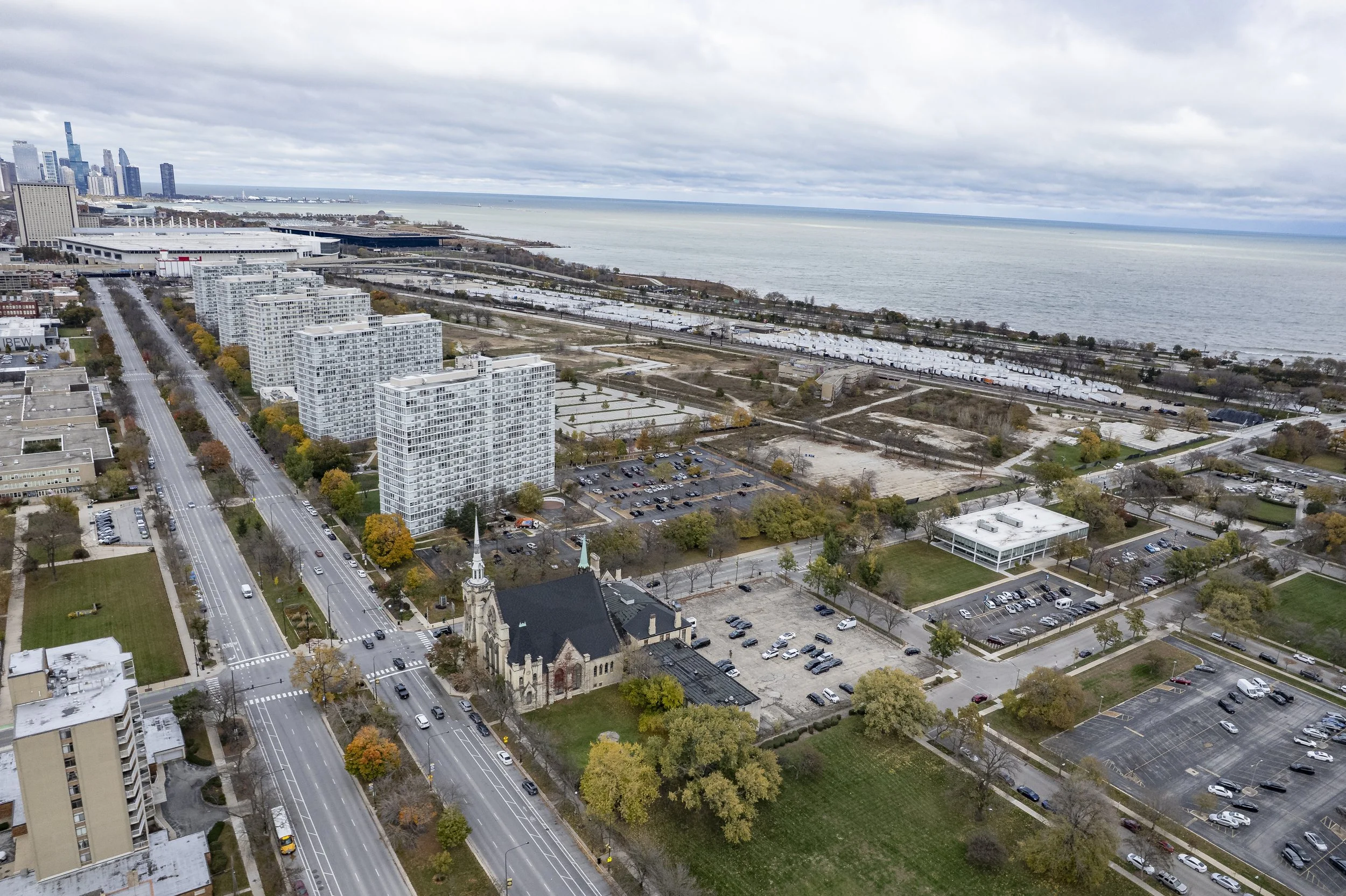
For residents of Bronzeville, the Near South Side and South Loop, the proposal raises questions that go beyond whether the Bears remain in Chicago.
A stadium district of this scale could introduce new housing, commercial activity, entertainment venues and public amenities to a part of the South Side that has experienced major redevelopment discussions for years.
Its proximity to McCormick Place, Illinois Institute of Technology and the lakefront would create opportunities to connect existing institutions with new businesses and public spaces.
However, a large sports venue would also introduce practical concerns.
Residents would need to consider event-day traffic, parking, pedestrian safety, public transportation capacity, construction disruption and potential changes to the surrounding residential environment.
Homeowners and buyers should also distinguish the proposed development from improvements that have already been approved or built.
There is currently no reliable basis to say the Bronzeville stadium proposal will increase nearby home values or rental prices.
For buyers looking at Bronzeville, Prairie Shores, the Near South Side or South Loop, the proposal is worth monitoring, but current housing decisions should still be based on existing market conditions and confirmed neighborhood amenities.
The development would have to clear multiple major hurdles before its effects could be evaluated with greater confidence.
What Happens Next for Bronzeville Lakefront?
The next steps involve discussions with the Bears and NFL, city and state officials, landowners and neighborhood residents.
Developers are also preparing the updated infrastructure submission for the city while continuing to refine the proposed master plan.
If the team ultimately chooses another location, that wouldn't necessarily end discussions about redeveloping the former Michael Reese property.
The site could still be considered for different combinations of housing, commercial space, parks and other uses, although any such plan would need its own approvals and financing.
For now, the November 12 announcement represents a new vision for Bronzeville's future, not a confirmed Chicago Bears relocation.
The renderings offer a look at what developers hope to create. Whether those plans become reality will depend on decisions that have yet to be made.
Explore Real Estate in Bronzeville, South Loop and the Near South Side
From the established residential streets of Bronzeville to the condominiums and high-rise buildings of the South Loop, Chicago's South Side and Downtown neighborhoods offer a range of housing options.
For buyers and relocation clients, understanding the difference between existing amenities, approved developments and early-stage proposals is important when evaluating a location.
The Cory Tanzer Group at Option Premier helps buyers, sellers and investors compare Chicago neighborhoods, understand local market conditions and navigate real estate decisions.
Considering a home in Bronzeville, South Loop or the Near South Side? Connect with our team to explore available properties and evaluate the neighborhood factors that matter to your next move.
Stay Connected
Ranked among the top 1% of real estate teams in the Chicagoland market, The Cory Tanzer Group at Option Premier is recognized for proven sales performance, neighborhood expertise, and consistent results across Chicago and the surrounding suburbs.
In the 2026 RealTrends Verified rankings, based on 2025 sales data, the team completed 181 transaction sides representing $79.28 million in sales volume. The Cory Tanzer Group ranked No. 13 in Illinois by transaction sides, No. 20 in Illinois by sales volume, No. 270 nationally by transaction sides, and No. 439 nationally by sales volume.
The team also earned The CARLY, the highest honor for Platinum Sales Dollars and Platinum Units Sold, at the Chicago Association of REALTORS® Sales Awards.
Led by Cory Tanzer, the team helps buyers, sellers, investors, landlords, and renters navigate real estate across Downtown Chicago, the North Shore, and the Western Suburbs, with local expertise in University Village, University Commons, South Loop, West Loop, Little Italy, Pilsen, and surrounding Chicagoland communities.
Connect with The Cory Tanzer Group at Option Premier for trusted local market insight, personalized guidance, and a proven strategy for your next Chicago real estate move.