Chicago's State Street Could Get More Parks, Elevated Walkways and a New Underground Cultural Center
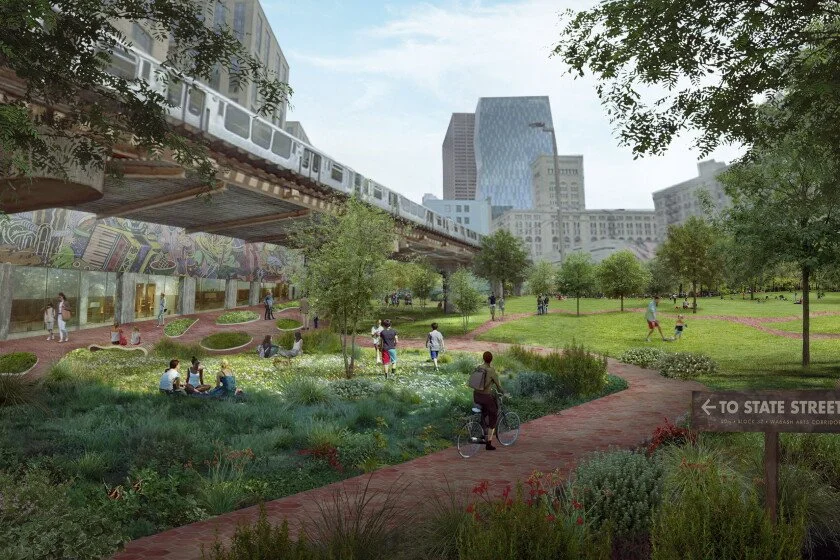
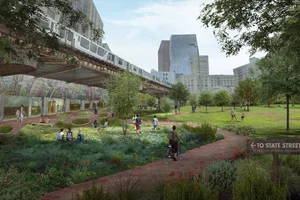
Proposed Wabash Avenue park. First-place rendering by Andrés Moroni Arquitecto. Via the Chicago Sun-Times.
LOOP, CHICAGO: What if one of Chicago's most recognizable streets became a place where people could explore new parks, walk along elevated pathways and attend performances inside an abandoned underground train station?
Three award-winning architecture proposals are imagining exactly that.
The 2026 Burnham Prize competition, called "The Future of State," announced three winning concepts in November, offering ambitious ideas for revitalizing State Street and the surrounding Downtown blocks.
The proposals range from replacing parking lots with green spaces to reusing vacant historic skyscrapers and creating interactive public gathering areas.
Organized by the Chicago Architectural Club with partners including World Business Chicago and the Chicago Architecture Center, the competition invited architects and designers to rethink State Street's future.
None of the winning designs has been approved for construction, but the competition offers a look at how Downtown Chicago could evolve as more residents, businesses and cultural attractions shape the Loop.
Three Winning Ideas That Could Change State Street
The competition awarded first, second and third place to proposals with different approaches to making State Street more inviting.
Some focus on major infrastructure changes, while others introduce smaller improvements intended to encourage people to spend more time Downtown.
1. First Place: Turn an Abandoned Underground Station Into a Cultural Center
Winning Concept: Thickness: From Corridor to Urban Field
Designer: Andrés Moroni Arquitecto, Argentina
The first-place proposal takes an ambitious approach to revitalizing State Street by connecting underused spaces above and below ground.
One of its most interesting ideas involves the unfinished transit superstation beneath Block 37, the shopping and entertainment complex along State Street.
Chicago spent approximately $400 million developing the underground station, which was intended to support express train service to O'Hare and Midway airports.
The proposed airport express service never materialized, leaving the station space unused.
Rather than allowing the infrastructure to remain dormant, the winning concept imagines converting it into a cultural and performance venue.
The proposal also envisions:
Transforming an existing parking lot along Wabash Avenue between Harrison Street and Balbo Drive into a landscaped public park.
Adding trees, pedestrian pathways and rolling green spaces.
Creating elevated pedestrian connections to improve movement between Downtown blocks.
Introducing rooftop greenery and transforming overlooked plazas and underground spaces into places where people can gather.
One rendering shows the parking lot replaced by an expansive green space, with walking paths and landscaped areas beneath the elevated train tracks.
The concept looks beyond State Street itself, exploring how Wabash Avenue, Dearborn Street and surrounding public spaces could work together.
For Downtown residents, the most interesting part is the possibility of introducing new green spaces and cultural destinations in an area dominated by commercial buildings and transportation infrastructure.
View the concept: 2026 Burnham Prize first-place rendering in the Chicago Sun-Times
2. Second Place: Save Two Vacant Skyscrapers and Add a Bold New Tower
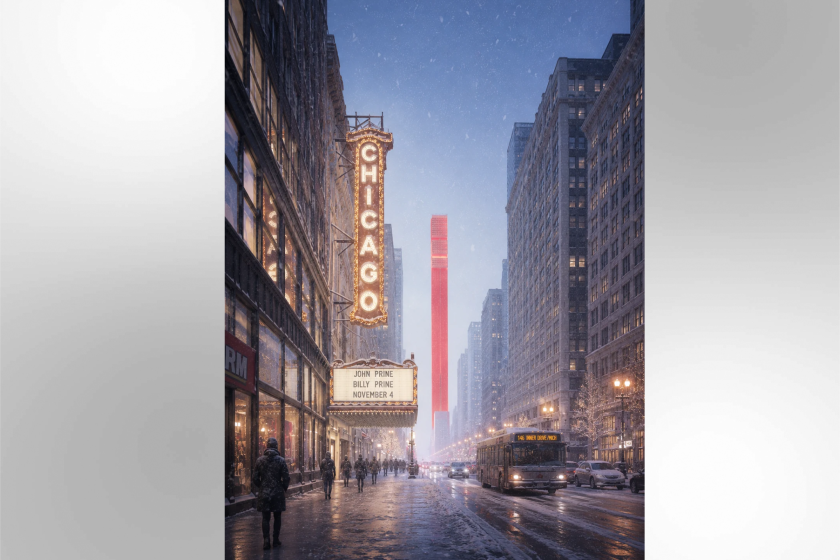
Proposed tower between the Century and Consumers buildings. Second-place rendering by Norbert Schlotter Architecture. Via the Chicago Sun-Times.
Winning Concept: Unlocking State Street
Designer: Norbert Schlotter Architecture, Chicago
The second-place design focuses on one of the Loop's longstanding architectural challenges: the vacant Century and Consumers buildings at 202 and 220 S. State Street.
The historic towers have stood largely unused for years after the federal government acquired them in 2005.
Their location near the Dirksen Federal Courthouse has complicated redevelopment because of federal security concerns.
The winning concept suggests a different approach.
Instead of demolishing the buildings to create a larger security buffer, the designer proposes preserving and reusing them while introducing a striking, slender red mixed-use tower between the structures.
Another major element involves moving certain security barriers underground, potentially opening portions of the surrounding federal plaza and streetscape to pedestrians.
The resulting design would bring new activity to a section of State Street that has remained underused for decades.
Its broader message is that historic preservation and new development could work together, rather than treating older buildings as obstacles to progress.
However, implementing this vision would require cooperation from federal authorities, along with extensive engineering, financing and security review.
View the concept: 2026 Burnham Prize second-place rendering in the Chicago Sun-Times
3. Third Place: Bring Public Art, Pop-Up Shops and Playful Spaces to the Loop
Winning Concept: Instructions for Civic Mischief
Designer: Gluten, Virginia
Not every idea for improving Downtown Chicago involves a major construction project.
The third-place proposal focuses on transforming existing public spaces through creative installations, community activities and temporary interventions.
The concept imagines adding public art, pop-up businesses and flexible gathering areas along and around State Street.
Instead of treating sidewalks, plazas and overlooked spaces as places people simply pass through, it asks how they could become destinations.
The proposal includes playful installations and ideas for reusing existing infrastructure in unexpected ways.
It offers a different perspective from the first two designs, emphasizing smaller-scale experiences that could make State Street more interesting for residents, workers and visitors.
Temporary markets, art installations and public gathering areas could also provide opportunities to test new ideas before committing to larger investments.
As with the other winning concepts, these installations are not currently approved or scheduled.
Explore the concept: 2026 Burnham Prize winners and proposal videos via Axios Chicago
Why Is Chicago Trying to Reimagine State Street?
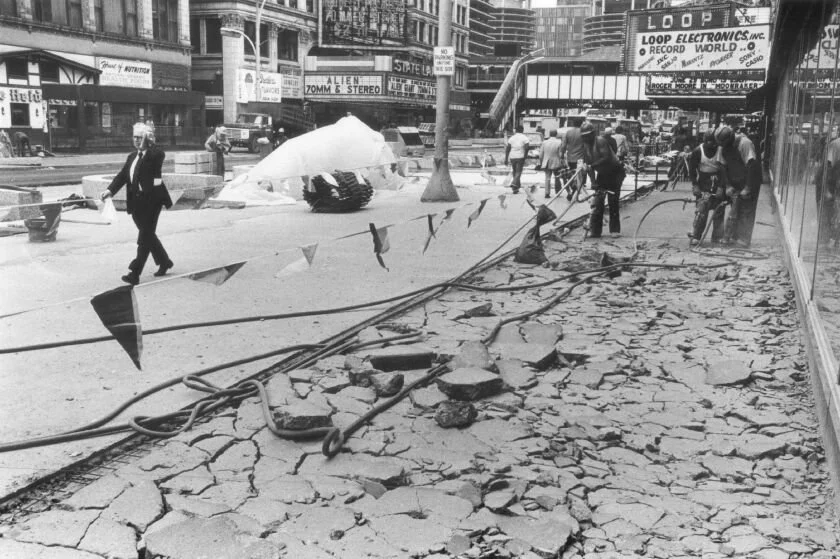
Construction of the State Street pedestrian mall in June 1979. Photo by Perry C. Riddle. Via the Chicago Sun-Times.
State Street has been one of Chicago's most important commercial and cultural corridors for more than a century.
Historic department stores, theaters, restaurants and landmark buildings helped establish its reputation as a major Downtown destination.
But the street's role has changed considerably.
The rise of suburban shopping malls, changing retail habits and more recently the effects of remote work have influenced how people use Downtown Chicago.
Some commercial buildings have experienced vacancies, while other parts of the Loop are increasingly being considered for residential conversions and mixed-use redevelopment.
State Street has also undergone major changes before.
In 1979, the city converted the corridor into a pedestrian and bus-oriented mall. That configuration was removed in 1996, when general vehicle traffic returned and the street received other improvements.
The latest design competition reflects a familiar challenge: how can State Street remain relevant as Chicago's Downtown economy and population continue changing?
Rather than relying exclusively on shopping and office commuters, the winning concepts imagine new reasons for people to visit, including parks, cultural spaces, public art and neighborhood activities.
The competition also comes as the Chicago Loop Alliance continues pursuing broader ideas for State Street's future through its Elevate State initiative.
The Burnham Prize proposals are separate from that initiative, but both contribute to ongoing conversations about Downtown revitalization.
Where Can Chicago Residents See the Winning Designs?
Residents don't have to rely on renderings online to explore the ideas.
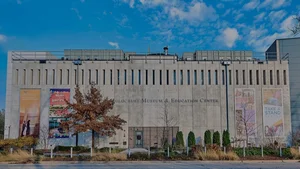
The Chicago Architecture Center is displaying the 2026 Burnham Prize submissions through December 8, 2026, giving visitors an opportunity to see the designs and provide feedback.
The exhibition includes the winning concepts and other entries responding to the competition's theme.
Exhibition: 2026 Burnham Prize: The Future of State
Location: Chicago Architecture Center, 111 E. Wacker Drive, Chicago, IL 60601
Exhibition Availability: Through December 8, 2026, as announced
Center Hours: Sunday–Thursday, 10 a.m.–5 p.m.; Friday–Saturday, 10 a.m.–7 p.m.
General Center Admission: $15 for adults, $10 for students with valid ID and free for children five and younger. Confirm exhibition access and applicable admission requirements before visiting.
Official Information: Chicago Architecture Center: The Future of State
The exhibition offers an opportunity for Chicago residents to see how architects and designers imagine a different future for one of the city's most familiar streets.
It also allows visitors to participate in the discussion before any of the proposals advances toward possible implementation.
What Would These Ideas Mean for Loop Residents and Homebuyers?
For people living in the Loop, the proposals raise questions about how Downtown Chicago could become a more complete residential neighborhood.
The Loop already offers access to public transportation, theaters, restaurants, cultural attractions and employment centers.
However, the availability of parks, everyday services, grocery stores and pedestrian-friendly spaces can vary significantly between different parts of Downtown.
New public gathering areas, expanded greenery and better pedestrian connections could make certain blocks more appealing for everyday use if implemented.
The concepts also reflect the growing conversation about adapting older commercial buildings rather than relying only on new construction.
For homebuyers considering the Loop, South Loop, Printer's Row or nearby Downtown neighborhoods, these kinds of discussions are worth following.
However, it is important to separate conceptual designs from confirmed neighborhood improvements.
The Burnham Prize winners do not establish that new parks, towers, walkways or cultural facilities will be built. Nor do they provide evidence that nearby condominium values or rental prices will increase.
Buyers should continue basing housing decisions on existing property conditions, market data, building finances, transportation access and confirmed amenities.
Will Any of These State Street Projects Actually Happen?
For now, there are no approved construction plans or announced start dates connected to the three winning submissions.
The Burnham Prize is a design competition intended to generate ideas and encourage public discussion.
According to the competition framework, one proposal could potentially move toward implementation if organizers and partners secure sufficient grant funding.
Even then, a project would likely require additional design work, approvals, financial commitments and cooperation from relevant property owners and public agencies.
The more ambitious concepts, particularly those involving underground transportation infrastructure or federal property, would face substantial practical challenges.
Smaller ideas involving public art or temporary installations may offer different implementation possibilities, although none is guaranteed.
For now, the competition's immediate value is showing what could be possible along State Street and giving Chicago residents a chance to weigh in.
The future of State Street hasn't been decided, but these three designs offer a glimpse of how the Loop could become greener, more creative and more connected.
Explore Downtown Chicago Living With Local Expertise
From State Street's historic architecture to the restaurants, theaters and public spaces surrounding Millennium Park, the Loop continues to be an important part of Chicago's residential and cultural landscape.
For buyers and relocation clients, understanding what's already available and which projects remain proposals can help make neighborhood comparisons more informed.
The Cory Tanzer Group at Option Premier helps buyers, sellers and renters navigate real estate throughout Downtown Chicago, including the Loop, South Loop, Printer's Row and surrounding neighborhoods.
Considering a condo or investment property in Downtown Chicago? Connect with our team to explore available properties, compare buildings and understand current neighborhood market conditions.
Stay Connected
Ranked among the top 1% of real estate teams in the Chicagoland market, The Cory Tanzer Group at Option Premier is recognized for proven sales performance, neighborhood expertise, and consistent results across Chicago and the surrounding suburbs.
In the 2026 RealTrends Verified rankings, based on 2025 sales data, the team completed 181 transaction sides representing $79.28 million in sales volume. The Cory Tanzer Group ranked No. 13 in Illinois by transaction sides, No. 20 in Illinois by sales volume, No. 270 nationally by transaction sides, and No. 439 nationally by sales volume.
The team also earned The CARLY, the highest honor for Platinum Sales Dollars and Platinum Units Sold, at the Chicago Association of REALTORS® Sales Awards.
Led by Cory Tanzer, the team helps buyers, sellers, investors, landlords, and renters navigate real estate across Downtown Chicago, the North Shore, and the Western Suburbs, with local expertise in University Village, University Commons, South Loop, West Loop, Little Italy, Pilsen, and surrounding Chicagoland communities.
Connect with The Cory Tanzer Group at Option Premier for trusted local market insight, personalized guidance, and a proven strategy for your next Chicago real estate move.