Pink and Green Line Service Changes Start Today: What West Loop and Pilsen Residents Need to Know
CHICAGO— If the Pink or Green Line is part of your normal commute, your trip may look different starting today.
Beginning Tuesday, October 13 at 4 a.m., CTA is temporarily changing both lines while the Chicago Department of Transportation replaces a major portion of the Lake Street Bridge over the Chicago River. The changes are scheduled to remain in effect around the clock through Sunday, October 25, with regular service expected to resume around 4 a.m. Monday, October 26.
For residents in Pilsen, University Village, West Loop and Downtown, the most important thing to know is that the trains are still running. But some familiar one-seat trips now require a transfer.
Pink Line Riders: Downtown Trips Now Connect Through the Blue Line
The biggest adjustment is on the Pink Line.
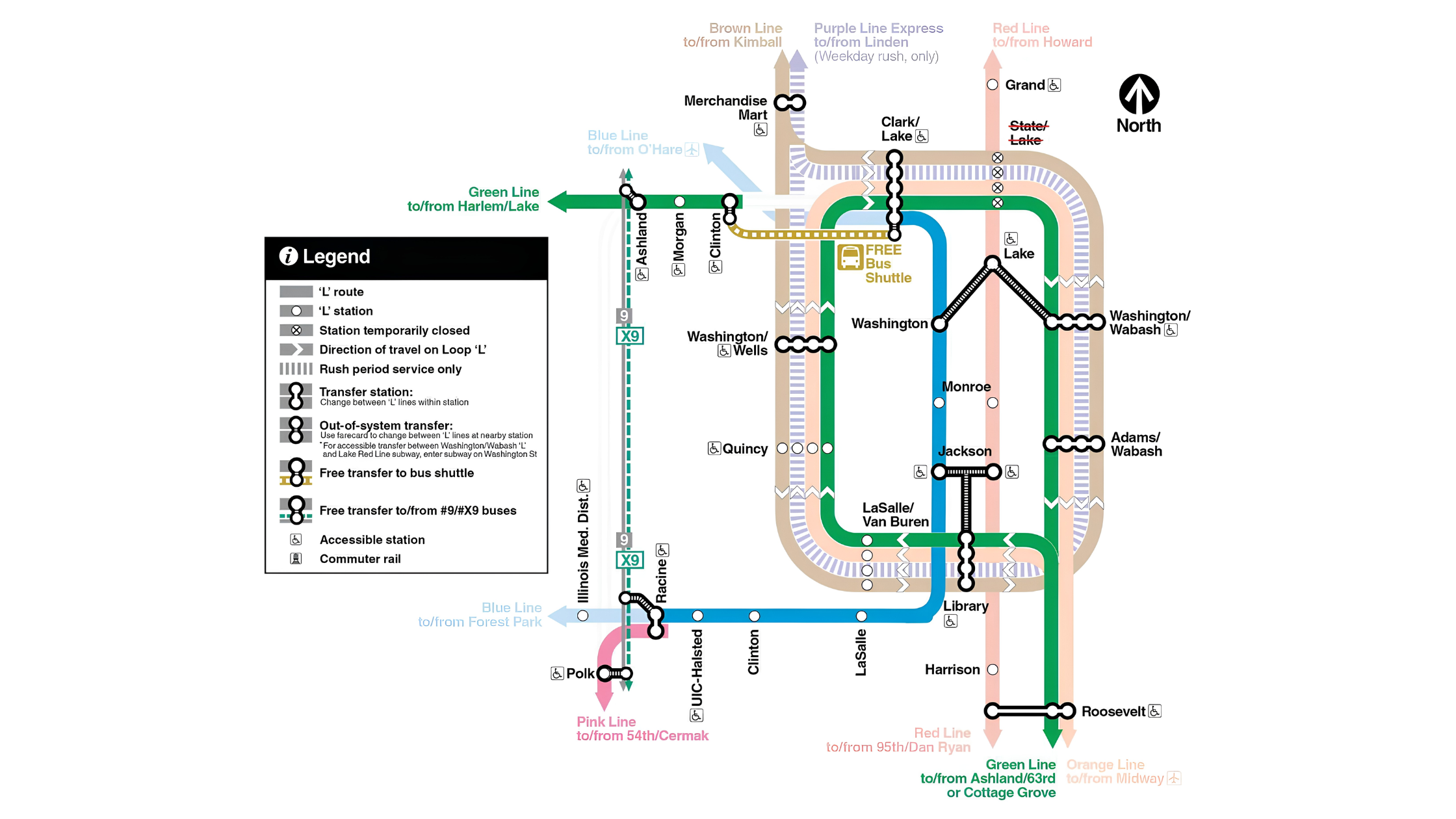
Trains continue making their normal stops from 54th/Cermak through Polk, including stations serving Pilsen such as 18th Street, but they will no longer continue through the West Loop and around the Loop.
Instead, Pink Line trains connect with the Racine Blue Line station, where riders can make a free, same-platform transfer to the Blue Line for continuing service into Downtown.
That means someone traveling from Pilsen or University Village into the Loop should allow extra time for the transfer at Racine.
The change is particularly relevant around Polk, which serves the UIC and University Village area. Riders can still use the Pink Line there, but Downtown is no longer a direct Pink Line ride during the construction period.
For passengers trying to reach Ashland, Morgan, Clinton or other parts of the West Loop, CTA recommends using the #9 or #X9 Ashland buses near Polk or Racine, along with other north-south bus connections. CTA says the transfer is free when riders tap their fare card as directed.
Green Line Riders: Clinton and Clark/Lake Become the Key Transfer Points
Green Line service is being divided into two separate sections.
On the western Lake branch, trains continue running between Harlem/Lake and Clinton, serving stations including Ashland and Morgan. But those trains cannot cross the Lake Street Bridge into the Loop.
CTA is providing a free shuttle bus between Clinton and Clark/Lake to bridge that gap. Riders coming from the West Side or Oak Park toward Downtown will need to leave the Green Line at Clinton, take the shuttle and reconnect at Clark/Lake.
Green Line trains from the South Side will continue between Ashland/63rd or Cottage Grove and the Loop. Those trains will make all Loop stops, traveling around the elevated tracks in the same direction used by Orange Line trains before heading back south.
For West Loop residents near Morgan or Clinton, the stations are not simply closing. The important change is where the train can take you. Direct Green Line travel from those stations across the river and around the Loop is interrupted until the bridge work is finished.
The Neighborhood Impact Depends on Where You’re Starting
For Pilsen, the Pink Line remains available at stations such as 18th, Damen, Western and California. The biggest inconvenience is losing the usual direct ride into Downtown.
For University Village and the UIC area, Polk remains in service, but riders heading Downtown should expect the Racine Blue Line transfer.
For the West Loop, Morgan and Clinton remain accessible through Green Line service from the west, but the Lake Street crossing into Downtown is interrupted. Pink Line riders who normally use those stations will need to change their route entirely.
And for Downtown commuters, expect additional passengers on the Blue Line and around Clark/Lake, where Green Line shuttle transfers will concentrate during the closure.
CTA is placing information specialists at Polk, Clinton, Clark/Lake and Racine on October 13 and 14 to help riders navigate the new routes.
Why Is CTA Making Such a Big Change?
This is not routine track maintenance.
CDOT is replacing the west leaf of the movable Lake Street Bridge, which carries both street traffic and the elevated CTA tracks across the Chicago River.
Crews have to remove the existing bridge section, position the replacement using barges and cranes, then reconstruct CTA rails, ties, guard systems, walkways and related bridge hardware. Power and signal systems must also be reconnected and tested before normal rail service can return.
That is why the disruption lasts nearly two weeks rather than a single weekend.
The work was intentionally scheduled to begin after the October 11 Chicago Marathon, allowing normal Pink and Green Line operations during one of the city's busiest transportation weekends.
The Simplest Way to Plan Your Trip
For the next two weeks, think about your trip based on where you are going rather than simply which train you normally take.
Pilsen or University Village to Downtown: Pink Line to Racine, then transfer to the Blue Line.
Pink Line to West Loop: Consider #9/#X9 Ashland or another north-south bus connection from Polk or Racine.
Green Line from the West Side to Downtown: Ride to Clinton, then use the free shuttle to Clark/Lake.
Green Line from the South Side to Downtown: Trains continue into the Loop, making all Loop stops before returning south.
CTA is advising passengers to allow additional travel time and check current alerts before leaving, especially during the first several days while commuters adjust to the temporary pattern. The agency’s Lake Street Bridge service page has the latest routing information and maps.
For residents who depend on the 'L', this is an inconvenience. But it is also temporary: the current service plan runs through October 25, with normal operations scheduled to return early October 26.
Living Near Transit? The Route Matters as Much as the Station
Temporary disruptions like this are also a reminder that “near the train” can mean very different things depending on the neighborhood.
Buyers and renters comparing Pilsen, University Village, West Loop and other CTA-connected neighborhoods should look at more than the distance to the nearest platform. Where the line goes, transfer options, bus connections and alternative routes can make a noticeable difference in an everyday commute.
The Cory Tanzer Group at Option Premier helps buyers and renters evaluate Chicago neighborhoods based on both housing options and the practical details of living there, including transit, walkability, parking and commute patterns.
Stay Connected
Ranked among the top 1% of real estate teams in the Chicagoland market, The Cory Tanzer Group at Option Premier is recognized for proven sales performance, neighborhood expertise, and consistent results across Chicago and the surrounding suburbs.
In the 2026 RealTrends Verified rankings, based on 2025 sales data, the team completed 181 transaction sides representing $79.28 million in sales volume. The Cory Tanzer Group ranked No. 13 in Illinois by transaction sides, No. 20 in Illinois by sales volume, No. 270 nationally by transaction sides, and No. 439 nationally by sales volume.
The team also earned The CARLY, the highest honor for Platinum Sales Dollars and Platinum Units Sold, at the Chicago Association of REALTORS® Sales Awards.
Led by Cory Tanzer, the team helps buyers, sellers, investors, landlords, and renters navigate real estate across Downtown Chicago, the North Shore, and the Western Suburbs, with local expertise in University Village, University Commons, South Loop, West Loop, Little Italy, Pilsen, and surrounding Chicagoland communities.
Connect with The Cory Tanzer Group at Option Premier for trusted local market insight, personalized guidance, and a proven strategy for your next Chicago real estate move.