What Defines a Luxury Home in Chicago: Price Thresholds, Finishes, and Building Amenities That Actually Matter
A luxury home in Chicago is generally defined by a combination of price point (typically starting at $1 million and climbing well above $3 million in premium neighborhoods), high-end finishes, and a curated set of building or property amenities that set it apart from the standard market. Understanding what separates a luxury listing from a premium one is critical whether you're buying, selling, or simply tracking where the Chicago market is heading.
Key Takeaways
Luxury homes in Chicago typically start at $1 million, with true ultra-luxury properties listed above $3 million in neighborhoods like Lincoln Park, Gold Coast, and the West Loop.
Finishes matter as much as price: Sub-Zero appliances, Calacatta marble, wide-plank hardwood, and custom millwork are baseline expectations in this segment.
Building amenities like 24/7 concierge service, private terraces, heated parking, and spa facilities are often what push a property from "nice" to "luxury."
Location and views carry enormous weight, with lakefront access and skyline-facing units commanding significant premiums.
Chicago's luxury market is outperforming many peer cities, so timing and local expertise are more important than ever.
Working with a brokerage that knows the luxury segment inside out can mean the difference between landing the right property and overpaying for the wrong one.
What the Price Threshold for Chicago Luxury Really Looks Like
When buyers and agents talk about what defines a luxury home in Chicago, price is the first filter, but it's far from the only one. The generally accepted entry point for the luxury segment in the city sits around $1 million. However, that number tells only part of the story.
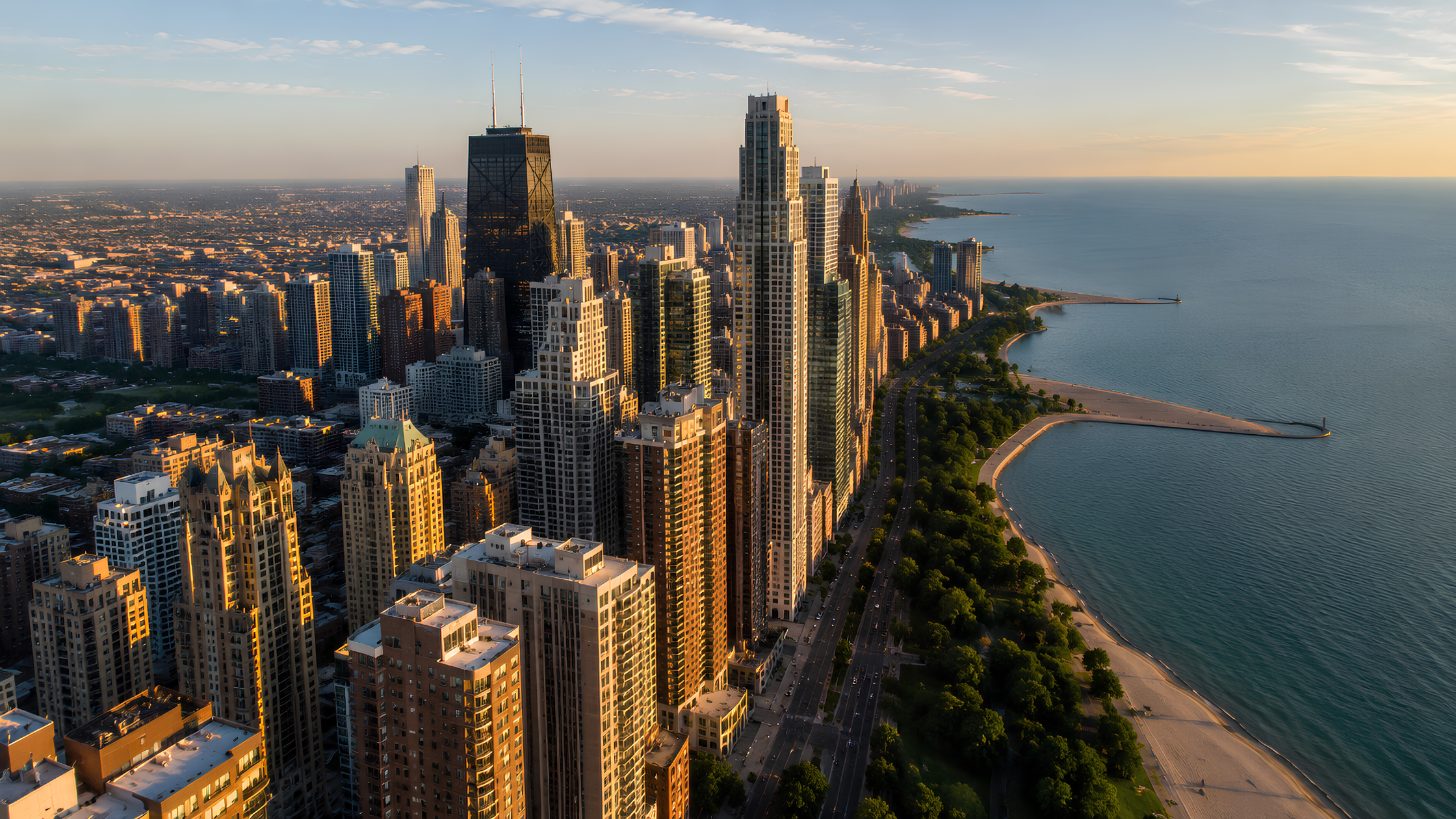
In neighborhoods like the Gold Coast, Lincoln Park, and Streeterville, $1 million might get you a well-appointed two-bedroom condo with solid finishes but without the full suite of amenities that most luxury buyers expect. To access properties with panoramic lake views, private elevator access, or a full-floor penthouse layout, you're looking at $2.5 million to $5 million or more.
Ultra-luxury, which is a separate tier that most real estate professionals track independently, generally starts at $3 million in Chicago and extends into the $10 million-plus range for one-of-a-kind lakefront estates or architecturally significant homes in Old Town and Lincoln Park.
Here's a quick breakdown of how price tiers typically map to property types across the city:
| Price Range | Typical Property Type | Common Neighborhoods |
|---|---|---|
| $1M - $1.75M | High-floor condos, renovated greystones | West Loop, River North, Wicker Park |
| $1.75M - $3M | Luxury condos, newer townhomes, single-family | Lincoln Park, Gold Coast, Streeterville |
| $3M - $5M | Full-floor condos, premium penthouses, landmark homes | Gold Coast, Lake Shore Drive, Old Town |
| $5M+ | Ultra-luxury penthouses, lakefront estates | East Lincoln Park, Astor Street, Lakeview |
It's worth paying attention to what Chicago's broader market is doing right now, too. If you haven't checked out " Chicago home prices are leading the nation again: what buyers and sellers must know in 2026”, that piece gives essential context on why the luxury segment here is tightening faster than many buyers anticipate.
The Finishes That Separate Luxury From Premium
Price gets you in the door, but finishes are what make a property feel genuinely luxurious. In the Chicago market, certain materials and design features have become baseline expectations for buyers shopping in the $1 million-plus range.
Kitchen and Appliances
The luxury kitchen benchmark in Chicago typically includes Sub-Zero refrigeration, Wolf or Miele cooking equipment, and custom cabinetry with integrated hardware. Waterfall-edge islands in quartz or Calacatta marble are common. Buyers at this level also expect pot fillers, wine refrigeration, and under-cabinet lighting as standard.
Flooring and Surfaces
Wide-plank white oak or walnut hardwood floors, typically 5 inches or wider, are the norm. Imported stone, particularly honed marble and book-matched slabs in bathrooms, signals the kind of material investment that distinguishes luxury from simply renovated.
Primary Bath Expectations
Radiant heated floors, freestanding soaking tubs (often from brands like Kohler's Artifacts collection or Waterworks), curbless steam showers with body sprays, and dual vanities with custom millwork are what buyers in the $1.5 million-plus range expect to see. Anything less reads as "updated" rather than luxury.
Smart Home Integration
Lutron lighting control, Sonos-integrated audio, motorized window treatments, and whole-home automation through systems like Crestron or Control4 have become near-universal in properties above $2 million. The National Association of Realtors has noted that smart home technology is now among the top features luxury buyers actively seek.
Custom Millwork and Details
Coffered ceilings, built-in bookshelves, paneled walls, and architectural molding details signal craftsmanship that distinguishes a truly luxurious space. These elements take significantly longer and cost significantly more than standard construction, which is part of why they carry so much weight in the luxury conversation.
Building Amenities: What Luxury Buyers in Chicago Actually Expect
In a city where a significant portion of the luxury market lives in high-rise or mid-rise buildings, amenities are often what justify the home valuation premium between two comparable units.
A unit with spectacular finishes in a building with a single elevator and no doorman will be priced very differently than a comparable unit in a full-service building.
Here's what the Chicago luxury buyer checklist for building amenities typically includes:
24/7 door staff or concierge service
Heated, attached garage parking (often with EV charging)
Private storage units
Fitness center with equipment comparable to a professional gym
Spa facilities including sauna, steam room, and treatment rooms
Rooftop terrace or sky lounge with outdoor entertaining space
Dog run or pet-grooming station
Package and dry-cleaning handling
On-site property management
Guest suites for visitor overflow
Buildings on or near Lake Shore Drive often add private beach access or boat slip rights, which can add $200,000 to $500,000 to a unit's value on their own. According to Zillow's luxury market research, properties with verified concierge service and private parking consistently trade at a premium compared to comparable units in non-amenitized buildings.

Neighborhoods Where Luxury Is Defined Differently
Location is inseparable from the luxury conversation in Chicago. The same square footage and finish level will carry a very different price tag depending on the neighborhood, and in some cases, the same block.
Gold Coast and Streeterville: These remain Chicago's most consistently elite addresses. Proximity to Michigan Avenue, Oak Street Beach, and the cultural institutions of the Near North Side anchors values here. Single-family homes on Astor Street routinely trade above $3 million.
Lincoln Park: Large-format single-family homes with private yards in East Lincoln Park command serious premiums. The neighborhood's combination of green space, top-rated schools, and walkability creates demand that keeps luxury prices sticky even in slower markets.
West Loop: This neighborhood has rapidly built a luxury condo and penthouse market over the past decade. Restaurant Row proximity, access to Fulton Market's corporate headquarters cluster, and a younger, design-forward buyer profile have pushed new construction condos well past the $1 million mark. If you're comparing the buy-versus-rent calculus in this area, is buying better than renting in Chicago what south loop and west loop renters need to know is worth a careful read before committing.
River North: Luxury high-rises here appeal to buyers who want to be close to the action. Buildings like 65 W. Kinzie and One River Place have set the standard for what amenity-rich luxury looks like in a non-lakefront context.
For buyers weighing city luxury against suburban alternatives, the best Chicago suburbs for buyers who want more space near the city piece offers a useful comparison, especially for families trading square footage for commute.
Things to Know
Property taxes in Chicago can significantly affect your all-in monthly cost on a luxury home. On a $2.5 million property, effective tax rates often push annual bills to $35,000 or more, so factor that into your budget carefully.
HOA fees in full-amenity luxury buildings in Chicago commonly run $1,500 to $4,000 per month, which can affect your mortgage qualification.
New construction luxury often carries a developer premium of 10-15% compared to resale in the same building or neighborhood.
Views are priced individually in Chicago high-rises. A lake-facing unit can be 20-30% more expensive than a city-facing unit on the same floor.
The U.S. Census Bureau tracks that Chicago consistently ranks in the top five U.S. cities for luxury housing inventory, giving buyers more options than comparable gateway cities.
Parking in Chicago luxury buildings is frequently sold separately, and a deeded heated garage spot can add significant value to the total purchase price.
How Option Premier Approaches the Luxury Segment
At Option Premier, our team works with buyers and sellers across Chicago's luxury price spectrum, from $1 million entry-level luxury condos in the West Loop to multi-million-dollar estates in Lincoln Park and Gold Coast. The Cory Tanzer Group at Option Premier brings hyper-local neighborhood knowledge to the table alongside a structured, data-driven approach to pricing and offer strategy.
What sets luxury transactions apart from standard deals is not just the dollar amount. It's the complexity of negotiations, the due diligence required on building financials and reserves, and the nuanced understanding of what a specific unit's view, floor height, and renovation pedigree are actually worth. Our blogs cover market conditions across all Chicago neighborhoods on an ongoing basis, giving our clients a continuous information advantage.
If you're considering selling a luxury property, getting an accurate valuation is the critical first step. Our home valuation tool gives you a data-backed starting point before you ever sit down with an agent. You can also reach us directly at (312) 500-5808 or at our office at 1021 W Adams St, Suite 200, Chicago, IL 60607.
Ready to Identify Your Luxury Benchmark in Chicago?
The single most actionable step you can take right now is to get a precise valuation of what you currently own or of the property you're targeting. Chicago's luxury market is moving fast, and what defined "luxury" even two years ago has shifted. Call our team at (312) 500-5808 or use the home valuation tool at optionpremier.com to get a clear, current picture of where a property actually sits in today's luxury segment. From there, we can walk you through neighborhood comparables, building amenity scores, and finish-level analysis so you're never guessing.
Frequently Asked Questions
-
Most Chicago real estate professionals place the luxury threshold at $1 million, though true luxury with full amenities and premium finishes typically starts closer to $1.5 to $2 million.
The entry point varies by neighborhood. A $1 million condo in River North might be considered lower luxury, while the same price in Lincoln Park might be considered a solid mid-market purchase depending on square footage and condition.
-
No. Single-family homes, greystones, and row houses in neighborhoods like Lincoln Park, Gold Coast, and Old Town absolutely qualify as luxury based on finishes, lot size, and price.
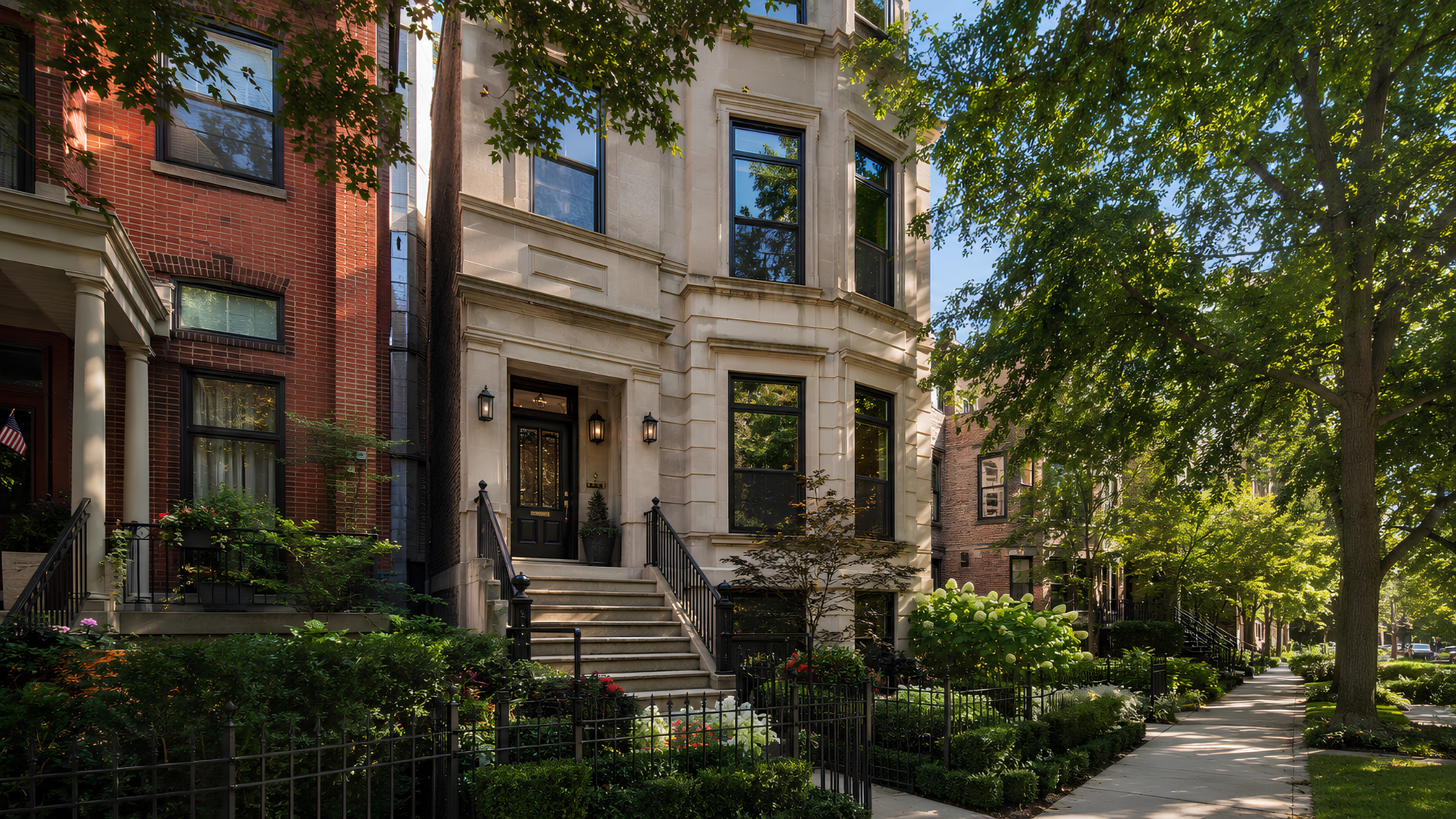
In fact, some of the most sought-after luxury properties in Chicago are wide, three- or four-story greystones with private outdoor space, which is genuinely rare in a dense urban market.
-
Building amenities can account for 15 to 25% of a luxury condo's value compared to a similar unit in a non-amenitized building, according to appraisal professionals familiar with the Chicago high-rise market.
Concierge service, heated parking, spa facilities, and rooftop spaces are not just lifestyle perks. They directly affect resale value and time-on-market when you eventually sell.
-
Buyers in the Chicago luxury segment consistently expect integrated appliance suites from brands like Sub-Zero and Wolf, natural stone surfaces, wide-plank hardwood flooring, and smart home control systems.
Anything short of these in a $1.5 million-plus listing is generally considered a negotiating point or a signal that renovation will be required, which affects offer strategy significantly.
-
Yes, based on current data. Chicago's luxury segment has shown stronger price appreciation than many comparable U.S. metros over the past 18 months, with low luxury inventory keeping upward pressure on values.
The Federal Reserve's published housing data supports the narrative that markets with constrained supply and strong employment bases, which Chicago has, tend to sustain luxury values better through economic cycles.
The Bottom Line on What Defines a Luxury Home in Chicago
What defines a luxury home in Chicago comes down to three intersecting factors: price point, finish quality, and amenity access. None of these three elements works in isolation. A beautifully finished condo in a building without concierge service or parking isn't playing in the same tier as a comparable unit in a full-amenity tower, even if the asking prices are close.
The Chicago luxury market rewards buyers who do the homework and sellers who price with precision. If you're ready to engage with this segment, whether as a buyer looking for the right building or a seller trying to position a property correctly, the team at Option Premier is the right starting point.
Reach out by submitting a form to connect with a local real estate agent and take the first step toward your next move!