
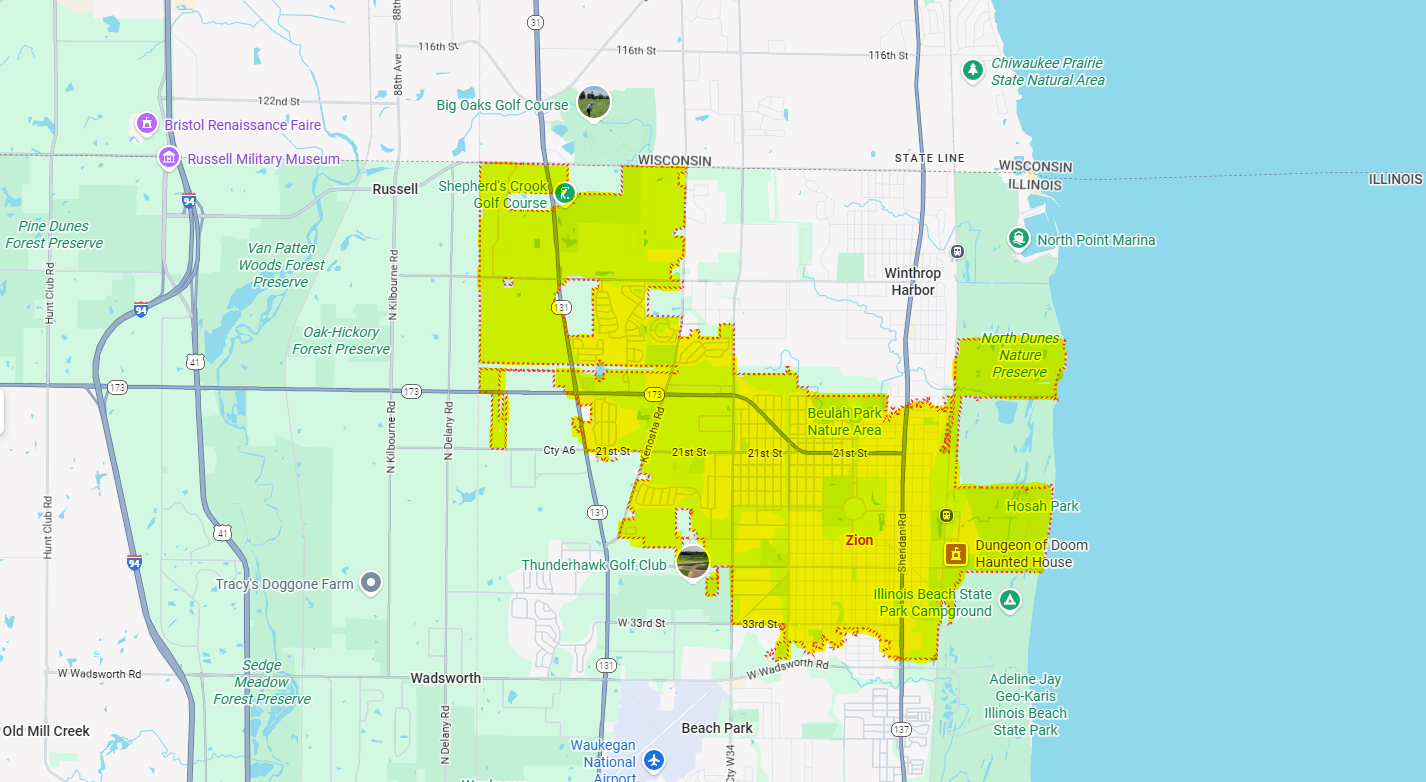
Welcome to Zion, Illinois: Where Lakefront Access, Affordable Living, and Community Resilience Meet
Tucked along the western shore of Lake Michigan, just 50 miles north of downtown Chicago, Zion is a small but determined city that blends natural beauty, affordability, and quiet transformation. With a population of around 24,000, this Lake County community sits at the southern edge of Wisconsin, offering residents rare access to Illinois Beach State Park, affordable homeownership, and a strong sense of identity.
Founded in 1927 by religious leader Wilbur Glenn Voliva as a theocratic settlement, Zion has evolved into a modern, diverse city focused on renewal, opportunity, and lakeside living — where families find value, nature lovers find trails, and neighbors look out for one another.
🌊 A Legacy of Water & Open Space
Zion’s greatest asset? Its direct access to Lake Michigan and one of the most beautiful natural areas in northern Illinois:
Illinois Beach State Park — over 4,600 acres of dunes, wetlands, forests, and pristine shoreline, perfect for hiking, birdwatching, swimming, fishing, and camping
Miles of scenic walking and biking trails through protected habitats
The North Shore Channel Trail nearby for long-distance biking and jogging
Proximity to Chain O’Lakes region for boating, kayaking, and seasonal recreation
It’s outdoor living at its finest — where you can swim in Lake Michigan in the morning and be downtown by noon.
🏡 Affordable Homes with Opportunity
One of Zion’s biggest advantages? Affordable lakefront-adjacent living. Compared to North Shore suburbs like Highland Park or Lake Forest, Zion offers some of the most attainable single-family homes in northeastern Illinois, featuring:
Ranch-style houses, split-levels, and two-flats on spacious lots
Many properties with driveways, garages, and room for expansion
Renovation-friendly neighborhoods with city-assisted programs for first-time buyers
With lower property taxes than many Chicagoland suburbs, it’s an ideal choice for:
✅ First-time buyers
✅ Growing families
✅ Investors seeking long-term appreciation in a transitioning market
This is a neighborhood where homeownership is within reach — and pride in property runs deep.
👨👩👧👦 Schools & Family Life
Zion is investing in its future through education and youth development:
Served by Zion-Benton Township High School District 126 and Benton Elementary School District 52
Partnerships with College of Lake County, vocational programs, and workforce training initiatives
Emphasis on student support, extracurriculars, and college readiness
The Zion Park District runs year-round programming:
Youth sports leagues, swim lessons, summer camps
Fitness centers, playgrounds, and seasonal events
Signature gatherings like Concerts in the Park, Fall Fest, and Holiday Light Display
It’s a community built for families who want safety, stability, and connection.
🚗 Connected Without the Chaos
Despite its serene feel, Zion is surprisingly well-connected:
Served by Pace Bus route #570 (Northwest Highway)
Easy access to I-94 (Tri-State Tollway) and US Route 12
Just 60 minutes from downtown Chicago and 30 minutes from O’Hare Airport
Only 20 minutes from Kenosha, WI — great for shopping, dining, and weekend getaways
Whether you're commuting to work, school, or weekend adventures, getting around is fast and efficient.
💼 Economic Strength & Strategic Location
Zion sits at a regional crossroads:
Close to major employment hubs in Gurnee, Libertyville, and Waukegan
Proximity to I-94 makes it attractive for logistics, healthcare, manufacturing, and remote workers
Business-friendly environment supporting local entrepreneurs and startups
Ongoing redevelopment efforts are revitalizing commercial corridors along Green Bay Road and 21st Street, bringing new investment and services to the area.
❤️ A Diverse, Inclusive Community
Zion is proudly culturally diverse, with growing African American, Latino, Eastern European, Asian, and immigrant families contributing to its inclusive atmosphere. This diversity is celebrated through multicultural festivals, inclusive park programming, and civic engagement.
Block clubs, faith-based groups, and civic associations help maintain safety, beautification, and connection — reinforcing a deep sense of belonging and pride.
Neigborhood Experts


