5 Fall Home Maintenance Tasks Chicago Homeowners Should Do Before Winter
Chicago winters are unforgiving, and the best defense against frozen pipes, ice dams, and sky-high heating bills is a solid fall prep routine. A thorough Chicago fall home maintenance checklist gives you a structured way to catch problems before temperatures drop below freezing and repairs become exponentially more expensive.
Key Takeaways
Clean and inspect your gutters before the first hard freeze to prevent ice dams from forming along your roofline.
Schedule furnace service in September or early October, before HVAC companies get slammed with emergency calls.
Seal drafty windows and doors with fresh weatherstripping to cut heating costs through the coldest months.
Disconnect and drain all outdoor hoses and faucets before the first freeze to protect your plumbing.
Have your chimney inspected annually if you use a fireplace or wood-burning stove, since creosote buildup is a real fire hazard.
Completing these tasks in fall, not December, gives you the time and contractor availability to do them right.
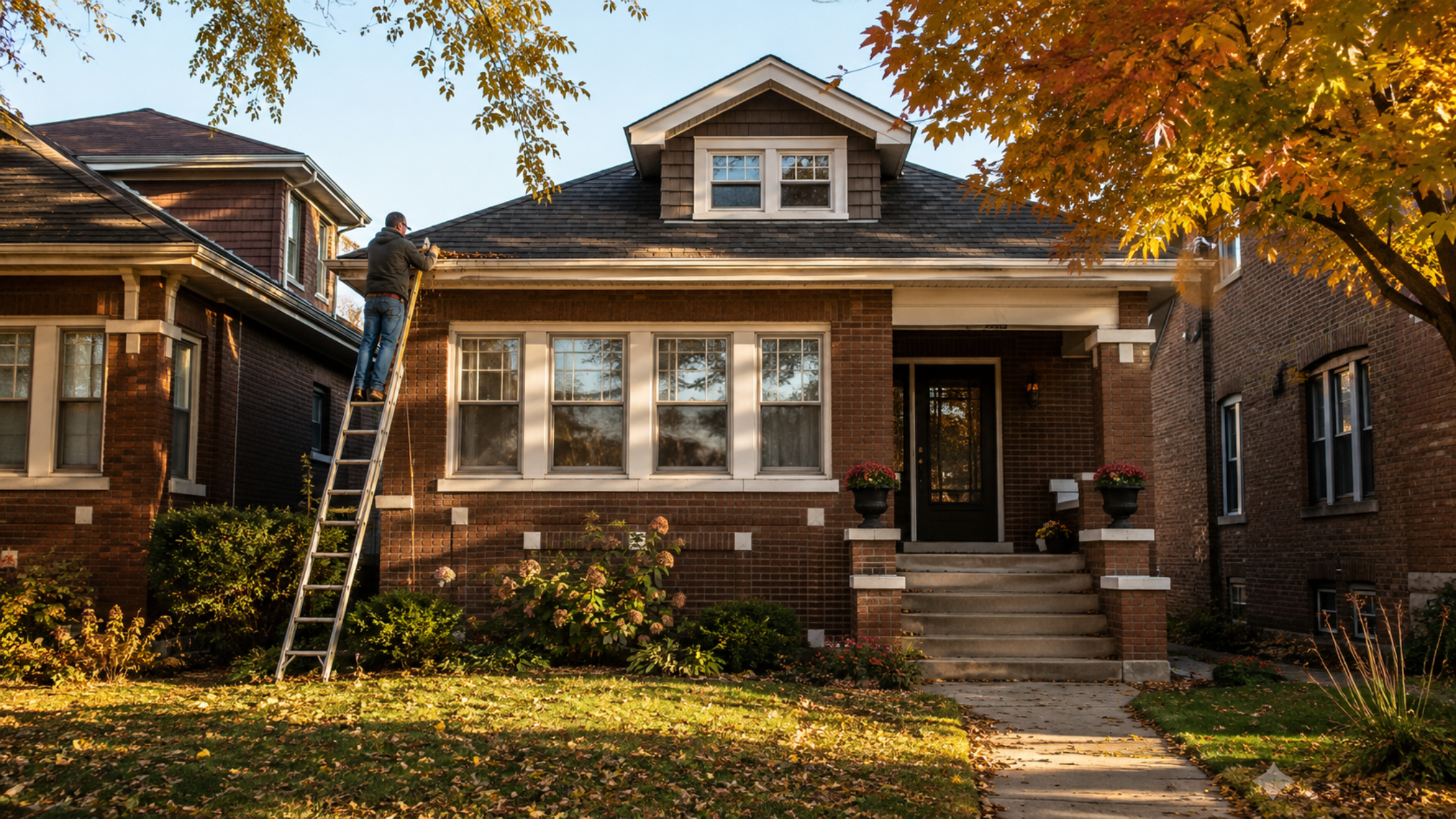
Why Fall Maintenance Hits Different in Chicago
Most general home maintenance advice is written for a mild climate. Chicago is not a mild climate. The city regularly experiences freeze-thaw cycles throughout late fall and early winter, where temperatures swing above and below 32°F within the same week. That cycle is what causes ice dams, cracks in exterior caulk, and burst outdoor pipes, not simply cold temperatures on their own.
The Chicagoland Homes fall maintenance resource makes this point clearly: preparation in September and October is far more effective than scrambling in November when the first serious cold front arrives. Contractors are booked, hardware stores run low on weatherstripping, and any moisture that has crept into your walls or foundation has already had time to do damage.
If you own a condo or recently bought in the city, the chicago condo special assessments blog from Option Premier is worth reading alongside this checklist, since deferred building maintenance often shows up as an unexpected cost for unit owners.
Task 1: Clean and Inspect Your Gutters
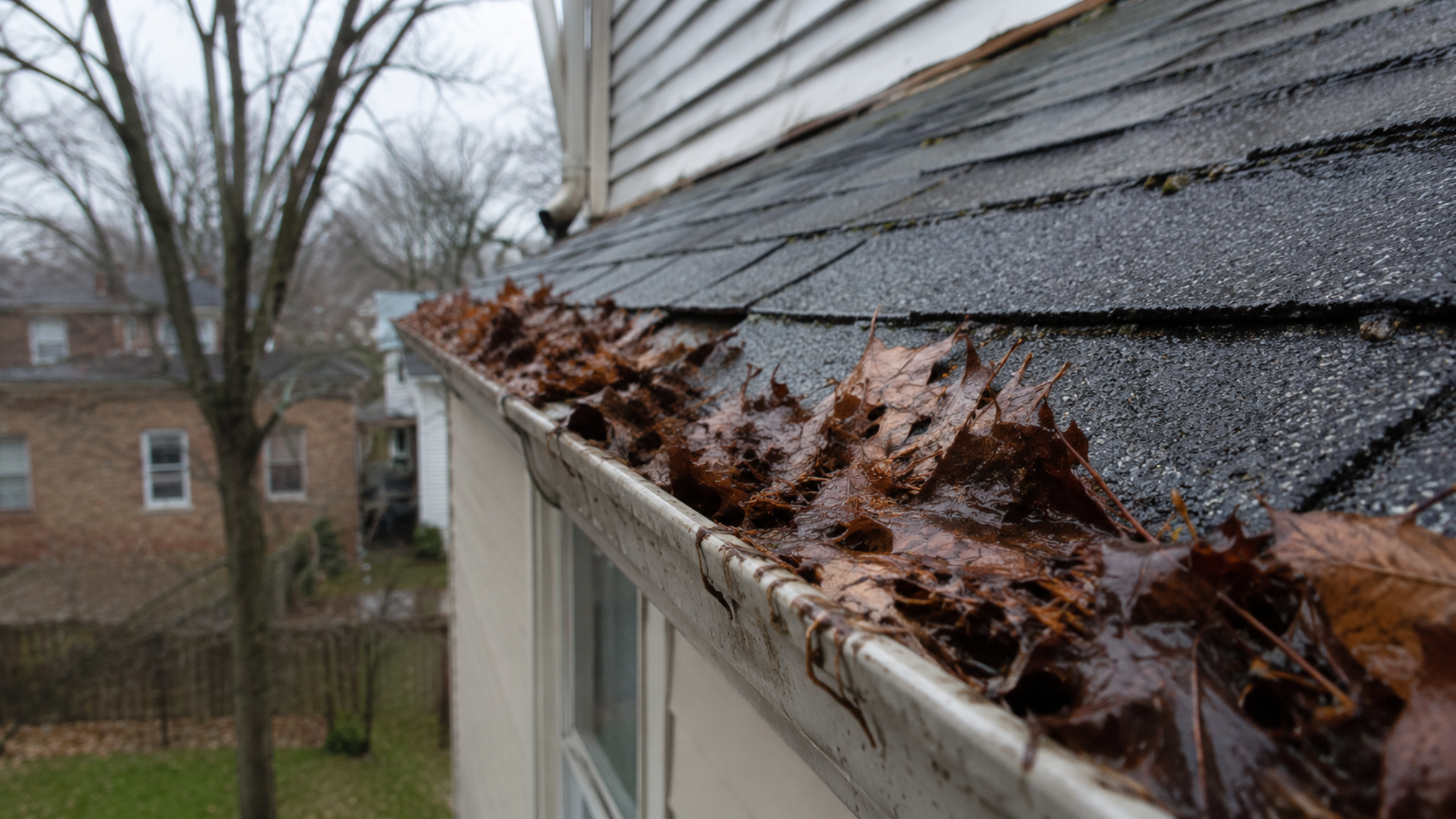
Gutters are the first item on any serious Chicago fall home maintenance checklist for a straightforward reason: clogged gutters during a Chicago winter lead to ice dams. When water cannot drain and instead pools along your roofline, it freezes, expands, and can eventually force its way under shingles or damage your fascia boards.
Here is what to do before November:
Remove all leaf debris, seed pods, and granule buildup from gutter channels.
Check downspouts for blockages and make sure they extend at least four feet away from your foundation.
Look for sagging sections or loose brackets that could allow standing water to pool.
Inspect the seal where gutters meet the fascia, since gaps allow moisture into the roof structure.
If your home is surrounded by mature trees, plan for at least two cleanings: one in October after most leaves have fallen, and a second check in early November. Skipping the second pass is one of the most common oversights Chicago homeowners make.
Task 2: Service Your Furnace Before the Rush
In Chicago, your furnace is not optional equipment. It runs hard from November through March and sometimes into April. If it fails in January when temperatures are in the single digits, you are looking at emergency service rates and a potentially lengthy wait.
The U.S. Department of Energy recommends annual furnace inspections as a baseline for any home heating system. In Chicago specifically, scheduling that inspection in September or early October is smart for two reasons: HVAC technicians are still available at normal rates, and you have time to address any issues before the cold actually arrives.
During a standard furnace tune-up, a technician will:
Replace the air filter (or confirm you are on a regular replacement schedule).
Check the heat exchanger for cracks, which can allow carbon monoxide to enter your living space.
Test the igniter, blower motor, and thermostat calibration.
Inspect the flue and venting for blockages or signs of corrosion.
If you have not replaced your thermostat in several years, fall is also a good time to upgrade to a programmable or smart model. A well-calibrated thermostat can noticeably reduce your heating bills across a Chicago winter.
Task 3: Seal Windows, Doors, and Exterior Gaps
Drafty windows are one of the most common complaints among Chicago homeowners, particularly in older building stock. Much of the city's housing was built before modern insulation standards, and gaps around windows and door frames can add significantly to your heating load every single month.
According to the U.S. Department of Energy's weatherization guidance, air leaks in a typical home can account for a meaningful share of heating and cooling costs. In a city as cold as Chicago, that figure becomes relevant fast.
Here is where to focus your attention in fall:
Run your hand along window frames and exterior door edges on a windy day to feel for drafts.
Replace any weatherstripping that is cracked, compressed, or no longer creates a firm seal.
Apply fresh exterior caulk around window frames, door casings, and any place where two different materials meet on the outside of your home.
Check for gaps around utility penetrations: where pipes, wires, or cables enter the house from outside.
For anyone comparing housing decisions in the region, the chicago vs new york condo costs article at Option Premier gives useful perspective on what older Chicago building stock means for long-term ownership costs, including maintenance.

Task 4: Inspect and Clean Your Chimney
If your Chicago home has a fireplace, wood-burning stove, or gas fireplace insert, a fall chimney inspection is not negotiable. The Chimney Safety Institute of America recommends annual inspections for any solid-fuel burning appliance, and most fire safety professionals extend that recommendation to gas appliances as well.
The main hazard in an uncleaned chimney is creosote, a byproduct of wood combustion that accumulates on the interior flue lining. At high concentrations, creosote is both flammable and difficult to extinguish. A chimney fire in the middle of a Chicago January is a worst-case scenario that a $200 to $300 annual cleaning makes entirely avoidable.
Beyond fire safety, fall chimney inspections also catch:
Damaged or missing chimney caps that allow water, birds, and debris to enter.
Cracked flue tiles that can allow heat and gases to transfer into adjacent walls.
Mortar deterioration at the chimney crown, which accelerates during freeze-thaw cycles.
Signs of prior water intrusion inside the firebox.
Book a certified chimney sweep in September or October. By November, their schedules fill quickly, especially after the first real cold snap when homeowners discover their fireplace is not ready to use.
Task 5: Disconnect Hoses and Winterize Outdoor Faucets
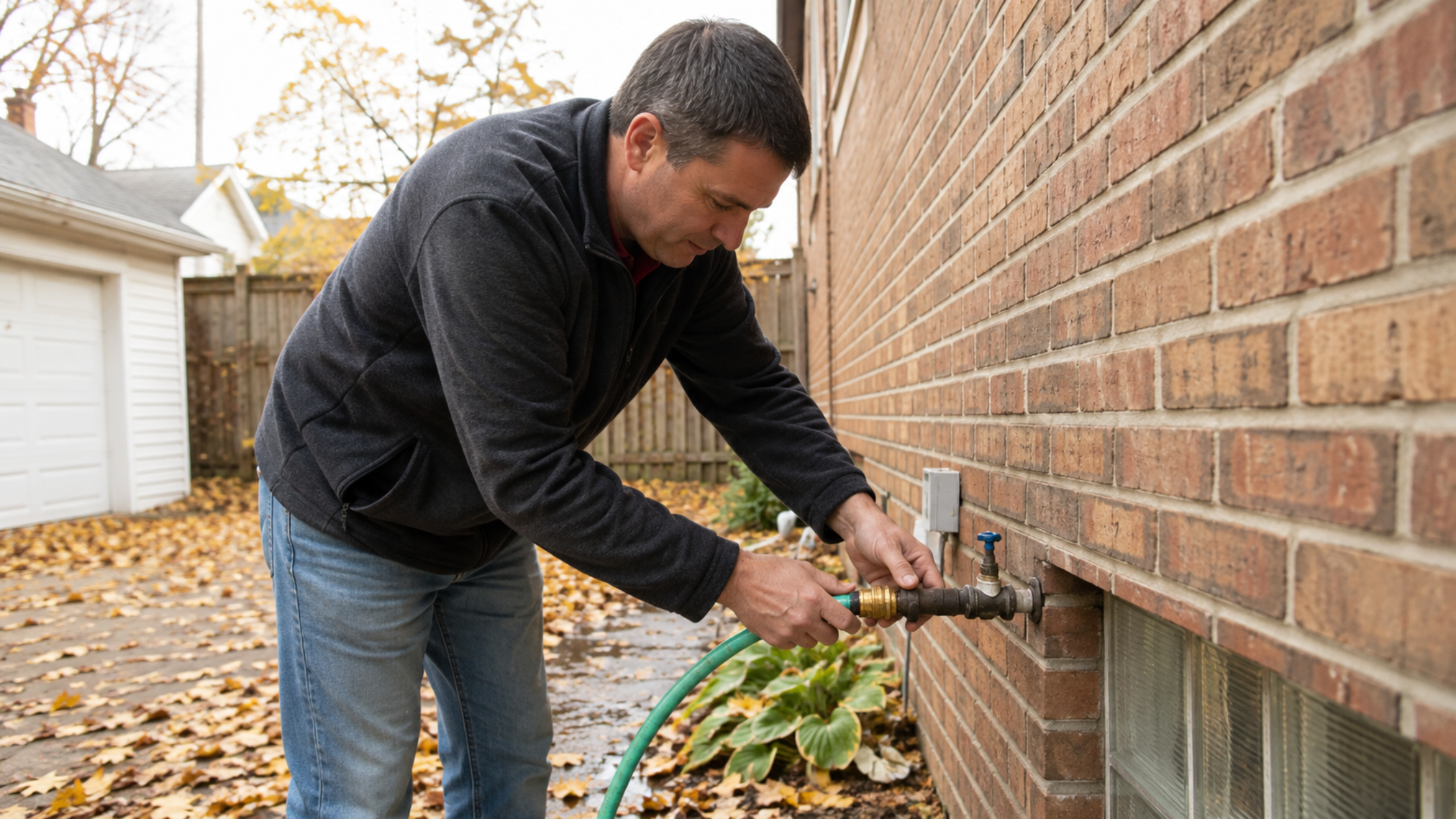
This is the most overlooked item on any fall checklist, partly because it seems minor and partly because people often forget until it is already freezing. According to Chicago Home Inspector, disconnecting and draining exterior hoses and faucets is one of the most important winterization steps specifically because trapped water in a garden hose or supply line can expand when it freezes and damage both the hose bib and the supply pipe behind the wall.
Here is the complete process:
Disconnect all garden hoses from exterior spigots. Even frost-free hose bibs can freeze if a hose is left attached, since the hose holds water against the valve.
Turn off the interior shutoff valve that feeds outdoor faucets, if your home has one.
Open the exterior faucet to allow any remaining water to drain out.
Store hoses in a garage or basement to prevent rubber cracking from cold exposure.
If your home has an irrigation system, arrange for a professional blowout using compressed air before the first hard freeze.
The cost of a burst pipe repair in Chicago can run into the thousands of dollars once you factor in water damage, drywall repair, and plumber fees. A five-minute task in October eliminates that risk entirely.
Bonus: Check Your Roof, Attic, and Foundation Before Snow Arrives
The five tasks above are the core of a reliable checklist, but a few additional checks are worth adding while you are in full inspection mode.
Roof: Inspect accessible areas for missing or curling shingles, damaged flashing around vents and skylights, and any areas where the roof deck looks soft or sagging. A leaking roof in winter turns into an insulation and mold problem fast.
Attic: Check that your attic insulation is adequate and that attic vents are clear. Proper attic ventilation actually helps prevent ice dams by keeping the roof surface uniformly cold, so snow melts evenly rather than pooling at the eaves.
Foundation and grading: Walk your property perimeter and look for areas where soil has settled away from the foundation. Water that pools against your foundation in fall will freeze and expand in winter, which accelerates foundation cracking over time. Adding soil or adjusting grading to direct water away from the house is an inexpensive fix with long-term benefits.
If you are planning to sell in 2026 or evaluating what your home is worth after completing these improvements, the home valuation tool at Option Premier is a useful starting point for getting a current estimate.
Things to Know
Chicago's freeze-thaw cycles, not just sustained cold, are the primary driver of ice dams, cracked caulk, and burst pipes. Preparing before October gives you a buffer against the first unexpected swing below 32°F.
Frost-free hose bibs are not fully self-draining if a garden hose remains attached. The hose traps water against the valve, which negates the frost-free design entirely.
Furnace filters should be checked monthly during peak heating season, not just at the start of fall. A clogged filter makes your system work harder and can shorten the life of the heat exchanger.
Carbon monoxide detectors should be tested and have fresh batteries installed every fall. Chicago winters mean windows stay shut for months, which reduces natural ventilation and raises CO risk.
Many Chicago homeowners overlook the attic when winterizing. Poor attic insulation or blocked vents are a leading cause of ice dams, even after gutters have been cleaned.
If your home has a sump pump, test it before heavy fall rains arrive. A failed sump pump during a Chicago rainstorm can mean a flooded basement before temperatures even drop.
Start Your Winter Prep Now, Not in December
Waiting until the first snowfall to address these maintenance items means paying emergency rates, competing for contractor availability, and dealing with damage that could have been avoided entirely. Call the Cory Tanzer Group at Option Premier today at (312) 218-4483 and ask about connecting with trusted local contractors, understanding how fall maintenance affects your home's value, or getting guidance on your next move in the Chicago market. Take action before the cold arrives so you are not scrambling once it does.
Frequently Asked Questions
-
The ideal window is mid-September through mid-October, before the first hard freeze typically arrives.
Chicago's first freeze can occur as early as late October, and contractor schedules fill quickly once cold weather becomes a topic of conversation. Starting in September gives you time to book a furnace technician, schedule a chimney sweep, and address any window or gutter issues without rushing. Completing your checklist early also means you have time to follow up if a repair reveals a larger underlying problem.
-
If you see thick ridges of ice forming along the edge of your roofline after a snowfall, clogged or improperly draining gutters are a likely contributing factor.
Ice dams form when heat escapes through the roof, melts snow at the upper sections, and that meltwater refreezes when it reaches the cold eave area. Gutters packed with debris prevent drainage and accelerate this process. Proper gutter cleaning combined with adequate attic insulation and ventilation addresses the problem at its root rather than just treating the symptom.
-
Annual furnace inspections are the standard recommendation for Chicago homeowners, ideally scheduled in September or early October.
A yearly tune-up keeps your system running efficiently, extends equipment life, and catches issues like cracked heat exchangers before they become safety hazards. If your furnace is more than 15 years old, ask your technician about efficiency ratings for newer systems, since older equipment often runs at significantly lower efficiency during the months when you need it most.
-
Yes, even homes with modern frost-free hose bibs require proper winterization, including disconnecting garden hoses before freezing temperatures arrive.
Frost-free bibs are designed to drain automatically, but only when no hose is attached. A connected hose holds water in the line, which can freeze and damage both the bib and the supply pipe inside the wall. Turning off the interior shutoff valve and draining the line adds an extra layer of protection regardless of how new your plumbing fixtures are.
-
Condo owners share some responsibilities with their building association, but several individual tasks still apply directly to each unit.
In a condo building, the association typically handles roof, gutters, common area HVAC, and exterior maintenance. However, individual unit owners are generally responsible for their own in-unit HVAC filters, thermostat settings, window weatherstripping, and any appliances or fixtures inside their walls. Reviewing your condo association's maintenance schedule in fall is a smart move so you know exactly where your responsibilities begin and the building's end.
The Bottom Line on Your Chicago Fall Home Maintenance Checklist
A well-executed Chicago fall home maintenance checklist is not about checking boxes. It is about protecting a significant financial asset against one of the most demanding winter climates in the country. Gutters, furnaces, windows, chimneys, and outdoor faucets are the five areas that consistently separate homeowners who sail through winter from those who face costly emergency repairs in January. Address them in September and October, hire licensed professionals for the work that carries real risk, and document what you have done for your own records and for any future buyer.
If you are thinking about what your home is worth after completing these improvements, or if you are considering buying or selling in Chicago in 2026, reach out to the Cory Tanzer Group at Option Premier by calling (312) 218-4483 or visiting optionpremier.com. The team is based at 1021 W Adams St in Chicago and knows the local market well enough to help you connect maintenance decisions with real estate strategy.