How Much Do Homes Cost in Chicago? August 2026 Prices by Neighborhood
The Chicago housing market in August 2026 shows strong price growth across most community areas, with detached single-family homes in neighborhoods like Bridgeport and Lower West Side leading gains. If you're trying to figure out what your budget actually buys in this city, the answer depends heavily on which neighborhood you're targeting.
Key Takeaways
Bridgeport detached single-family homes are selling at a median of $597,500, up 10.6% year over year as of August 2026.
Lower West Side detached single-family homes hit $572,000, reflecting a 12.2% gain that signals rapid appreciation pressure.
The Near West Side and Loop are more accessible entry points, both hovering around $420,000 to $421,000.
The Near North Side sits at $464,000 across all property types, with a 4.3% year-over-year increase showing steady demand.
Your budget ceiling matters less than neighborhood selection — a $500,000 budget puts you in very different situations depending on where you look.
Working with a local brokerage that tracks community-area data gives buyers and sellers a measurable edge in a fast-moving market.

Why Chicago Home Prices Vary So Dramatically by Neighborhood
Chicago is not a single real estate market. It is a city of 77 officially recognized community areas, each with its own housing stock composition, school ratings, transit access, walkability, and buyer demand profile. A buyer shopping with a $450,000 budget in the Near North Side is competing in an entirely different pool than a buyer with the same number shopping in Bridgeport or Pilsen.
This variation is not random. It tracks closely with a few structural factors:
Property type composition. Some neighborhoods are dominated by attached units — condos, co-ops, and townhomes. Others have a higher share of detached single-family homes, which typically carry a premium.
Proximity to the Loop. Neighborhoods directly adjacent to the central business district tend to price higher for condos and smaller units, while areas slightly further out offer more square footage per dollar.
Renovation activity and buyer competition. Neighborhoods experiencing active investor interest and renovation tend to see faster price growth, sometimes well ahead of citywide averages.
School and transit access. Properties within walking distance of CTA rail stations or in high-rated school attendance areas typically carry a price premium that appraisers and experienced agents factor into comparative market analyses.
Understanding these structural drivers is what separates a confident offer from a guess.
August 2026 Median Sale Prices: Community Area Breakdown
The following table summarizes median sale prices across five Chicago community areas as of August 2026, based on InfoSparks data. Year-over-year change figures reflect the trailing period ending in August 2026.
| Community Area | Median Sale Price | Year-Over-Year Change | Property Type |
|---|---|---|---|
| Near West Side | $420,000 | 0.0% | Attached Single-Family |
| Lower West Side | $572,000 | +12.2% | Detached Single-Family |
| Loop | $421,000 | +5.3% | All Property Types |
| Near North Side | $464,000 | +4.3% | All Property Types |
| Bridgeport | $597,500 | +10.6% | Detached Single-Family |
A few observations worth highlighting before we go deeper into each area:
The flat year-over-year reading in the Near West Side reflects attached single-family product specifically — not the full neighborhood picture.
The two highest-appreciating areas, Lower West Side (which includes Pilsen) and Bridgeport, are both detached single-family markets where inventory has been consistently tight.
The Loop median of $421,000 across all property types reflects the condo-dominant nature of that market, where studio and one-bedroom units pull the average down even as larger units push it up.

A Closer Look: Near West Side and the Loop
The Near West Side median of $420,000 for attached single-family homes reflects a neighborhood that has undergone significant transformation over the past decade. The area sits immediately west of the Loop and includes submarkets around the United Center, University Village, and the Illinois Medical District. Attached product here — think rowhomes, townhomes, and newer construction attached units — has been a popular entry point for buyers who want walkable access to downtown without paying Near North Side prices.
The Loop, at $421,000 across all property types, is almost entirely a condo market. Buyers here are typically purchasing one- to three-bedroom condos in high-rise and mid-rise buildings, many of which include HOA fees that can meaningfully affect the true monthly cost of ownership. Anyone comparing the Loop median to a Bridgeport detached home median needs to account for that structural difference in carrying costs.
For detailed current data on Near West Side pricing trends, Zillow's Near West Side Chicago housing market page provides regularly updated median values and days-on-market information.
Bridgeport and Lower West Side: Where Price Growth Is Concentrated
Bridgeport at $597,500 and Lower West Side at $572,000 represent the two strongest appreciation stories in this data set. Both are detached single-family markets, and both have benefited from buyers being priced out of higher-cost North Side neighborhoods looking for comparable square footage at lower absolute prices.
Bridgeport, historically one of Chicago's most stable blue-collar neighborhoods on the South Side, has attracted significant buyer attention from families seeking detached homes with yards, garages, and proximity to the Dan Ryan and Stevenson expressways. The 10.6% year-over-year gain is a meaningful signal that demand is outpacing available inventory.
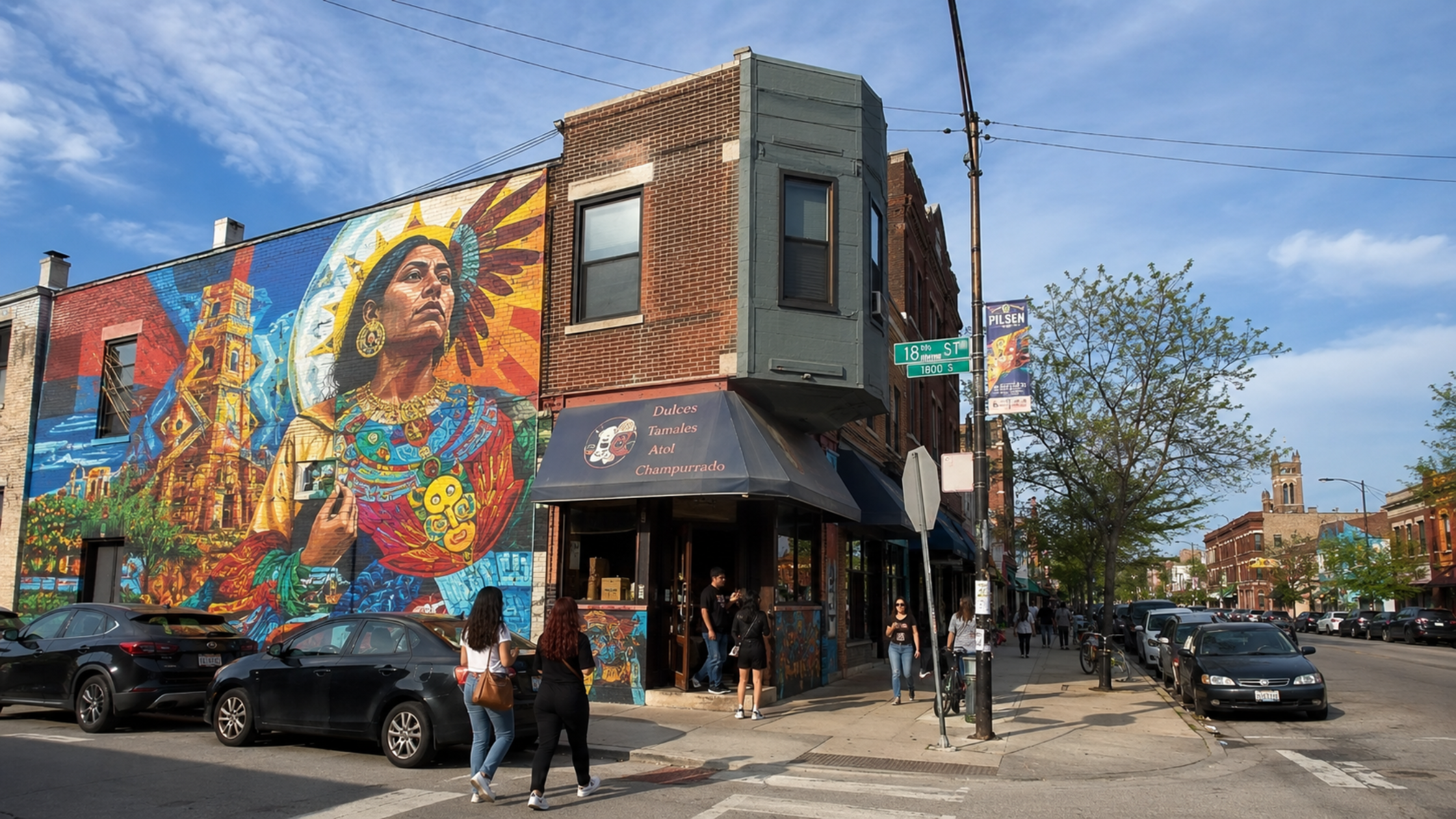
Lower West Side, which includes the Pilsen community, has been the subject of considerable real estate media coverage as one of Chicago's most watched neighborhoods for buyers seeking artistic character, walkability, and access to the 18th Street retail corridor. The 12.2% year-over-year gain on detached single-family homes is the strongest in this data set and reflects a market where move-in-ready detached homes receive competitive offers quickly.
Near North Side: The Most Consistent Performer
The Near North Side at $464,000 across all property types and a 4.3% year-over-year gain tells a different story than Bridgeport or Lower West Side. This is one of Chicago's most established, high-demand neighborhoods, home to River North, Streeterville, Gold Coast, and Lincoln Park adjacencies. The 4.3% gain is not explosive, but it reflects steady upward pressure in a market where supply is structurally constrained.
Near North Side buyers are often working with a broader mix of property types: high-rise condos, vintage courtyard buildings, newer attached townhomes, and the occasional detached single-family home that sells quickly and above asking. The all-property-types median of $464,000 is somewhat misleading as a single figure because the range within this community area is wide. A studio condo near Michigan Avenue and a four-bedroom townhome near Lincoln Park are both included in that figure.
For buyers considering this area, the Consumer Financial Protection Bureau's homebuying resources provide useful guidance on mortgage readiness and what to evaluate before entering a competitive urban market.
What a $500,000 Budget Realistically Buys in Chicago
Given the neighborhood-level data above, here is what a $500,000 budget position looks like across these five community areas:
Near West Side: At $420,000 median for attached single-family, a $500,000 budget puts you in a solid negotiating position for well-maintained attached product, with room for closing costs and potential improvements.
Lower West Side / Pilsen: At $572,000 median for detached single-family, a $500,000 budget is competitive for smaller detached homes or those needing cosmetic updates. Buyers at this price point in Pilsen are often competing with investors.
Loop: At $421,000 median, $500,000 covers a comfortable range of one- and two-bedroom condos. Monthly HOA fees typically run several hundred dollars and should be factored into affordability calculations.
Near North Side: At $464,000 median, $500,000 is workable for condos but leaves limited flexibility for negotiation in a market with steady demand.
Bridgeport: At $597,500 median, $500,000 buys into the lower end of detached inventory. Buyers who can stretch slightly above $500,000 will have more options here.
For financing context and current mortgage rate environments, Freddie Mac's Primary Mortgage Market Survey provides weekly updated national rate data that buyers can use alongside local pricing to calculate true affordability.

Ready to Buy, Sell, or Invest in Chicago? Talk to a Local Expert First.
The difference between a good offer and a winning offer in Chicago often comes down to who is advising you and how current their neighborhood-level data is. At Option Premier LLC, we work with buyers, sellers, investors, and relocation clients across Chicago and the surrounding suburbs — and we bring community-area pricing intelligence to every conversation, not just citywide averages. Whether you are targeting a detached bungalow in Bridgeport, a condo in the Loop, or an investment property in Pilsen, our team has the local knowledge to position you correctly from day one. Call Option Premier at (312) 500-5808, email us at info@optionpremier.com, or visit optionpremier.com to search active listings and get a free home valuation today.
Frequently Asked Questions
-
Median sale prices in Chicago vary significantly by neighborhood and property type, ranging from approximately $420,000 in the Near West Side to $597,500 in Bridgeport for detached single-family homes as of August 2026.
A single citywide median figure can be misleading because it blends high-rise condos, attached townhomes, and detached single-family homes across 77 community areas. Buyers should focus on the specific neighborhood and property type relevant to their search rather than relying on a broad average. Consulting a local brokerage with access to community-area data will give you a far more accurate picture of what comparable homes are actually closing for.
-
Lower West Side (including Pilsen) and Bridgeport have recorded the strongest year-over-year gains in this data set, at 12.2% and 10.6% respectively for detached single-family homes through August 2026.
Both neighborhoods have benefited from buyers seeking detached homes with more square footage than they can find on the North Side at similar price points. Tight inventory in both areas has kept upward pressure on prices, and move-in-ready detached homes in these neighborhoods tend to attract competitive offers. Buyers entering either market should be well prepared financially and work with an agent familiar with those specific community areas.
-
The Loop is primarily a condo market with a median sale price of $421,000 across all property types as of August 2026, making it accessible for buyers who want downtown living but are working within a moderate budget.
The trade-off in the Loop is that monthly HOA fees can add several hundred dollars or more to your true cost of ownership, which affects how far your mortgage pre-approval actually stretches. The area offers unmatched transit access, walkability, and proximity to employment centers, which supports long-term demand. Buyers should run a full monthly cost analysis, including HOA, property taxes, and mortgage, before comparing Loop pricing to neighborhoods where HOA fees are minimal or nonexistent.
-
The Near North Side has a median sale price of $464,000 across all property types with a 4.3% year-over-year gain as of August 2026, placing it in the mid-to-upper range of Chicago's community areas.
The Near North Side encompasses some of Chicago's most recognizable and consistently desirable neighborhoods, including River North, Streeterville, and areas bordering Lincoln Park and Gold Coast. Supply in this community area is structurally limited, which keeps prices steady even without the dramatic percentage swings seen in Bridgeport or Pilsen. Buyers at this price point are typically entering a competitive environment where preparation, speed, and strong representation matter considerably.
-
Matching your budget to the right neighborhood requires knowing not just the median price but also the product type, inventory levels, days on market, and typical offer dynamics in each community area.
A $500,000 budget puts you in meaningfully different positions depending on whether you target an attached condo in the Loop, a detached bungalow in Bridgeport, or a townhome in the Near West Side. Working with a brokerage like Option Premier LLC, which tracks community-area data at the neighborhood level, helps you avoid both overpaying in a market where you had negotiating room and underbidding in a market where competition is fierce. The right agent will walk you through current closed sales, active competition, and realistic expectations before you make your first offer.
The Bottom Line on the Chicago Housing Market
Pricing in Chicago is not a single story — it is dozens of neighborhood stories happening simultaneously, some accelerating rapidly and others holding steady. The August 2026 data shows a market where detached single-family homes in areas like Bridgeport and Lower West Side are appreciating at double-digit rates, while attached product in more centrally located neighborhoods offers a more stable but still healthy price environment. Understanding those distinctions is what turns a general interest in buying or selling into a well-timed, well-priced decision.
If you are ready to act in this market, your next step is a conversation with a team that knows these neighborhoods from the ground up. Reach out to Option Premier LLC at (312) 500-5808, visit optionpremier.com to explore current listings and neighborhood resources, or email info@optionpremier.com to connect with an agent who can match your goals to the right community area in Chicago.