Open House Chicago 2026 Adds 20 New Sites: What to Know About This Year’s Architecture Festival
CHICAGO— One of the best weekends of the year for seeing inside Chicago's most interesting buildings is getting even bigger.
Open House Chicago returns October 17-18, 2026, with more than 200 locations across 30 Chicago neighborhoods. The Chicago Architecture Center has now announced 20 sites making their Open House Chicago debut this year.
The annual festival is free and open to the public, giving visitors behind-the-scenes access to historic landmarks, private spaces, cultural institutions, workplaces, houses of worship and buildings that normally cannot be explored this way. General festival participation does not require advance registration, although individual locations can have their own schedules or access conditions.
For anyone interested in Chicago architecture, historic preservation, adaptive reuse or simply understanding neighborhoods beyond their housing listings, this is one of the city's most useful weekends for exploring.
20 New Sites Are Joining Open House Chicago
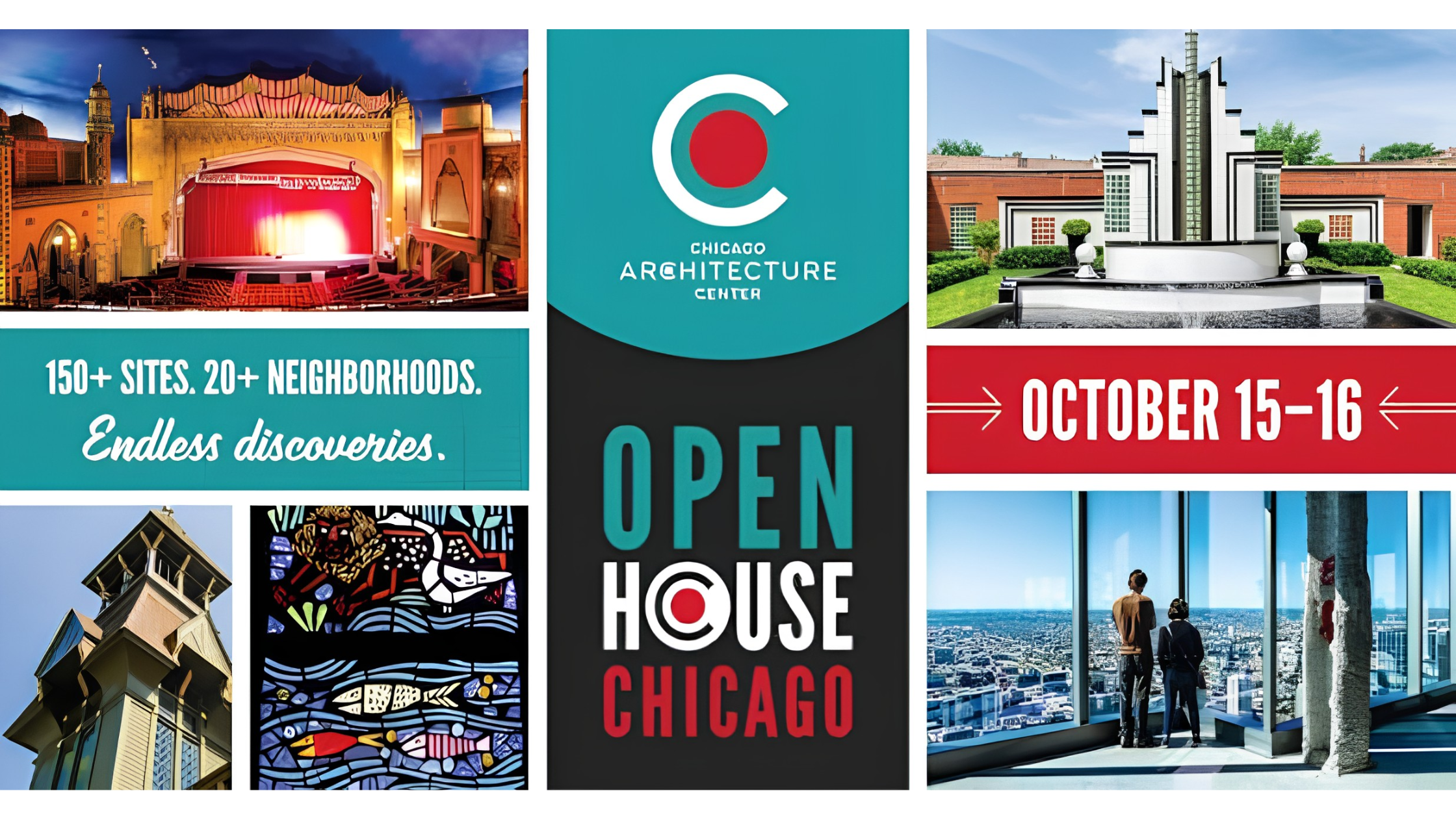
Several of the newly announced locations are places many Chicagoans have probably passed without ever getting the opportunity to see inside.
Among the notable 2026 additions are:
Muddy Waters MOJO Museum in Kenwood, celebrating the home and legacy of Chicago blues icon Muddy Waters.
Sears Sunken Garden in North Lawndale, offering another perspective on the historic former Sears complex and the architecture surrounding it.
TimeLine Theatre in Uptown, bringing visitors inside the theater company's new home.
Woman's Athletic Club of Chicago near the Magnificent Mile, providing access to a private club space rarely open to the general public.
Those additions are only part of a lineup exceeding 200 locations.
The current official site includes 32 Downtown locations, 13 in the Near North Side, 13 in the Near West Side, 10 across Bronzeville and Kenwood, and additional clusters throughout neighborhoods including Pilsen, Little Village, Bridgeport, Hyde Park, Uptown, Lincoln Park, Rogers Park, Pullman and West Town.
Returning locations include distinctive Chicago spaces such as the Chicago Board of Trade Building, Federal Reserve Bank of Chicago and Money Museum, Héctor Duarte Studio, Avalon Regal Theater and KOVAL Distillery.
This Year's Festival Looks Beyond Downtown Architecture
One of the reasons Open House Chicago works so well is that it is not simply a skyscraper tour.
The festival uses architecture to tell the stories of individual neighborhoods and the communities that built them.
A new 2026 theme called “Built on Belief” focuses on Woodlawn sites shaped by different faith communities. Featured locations include the Narrow Bridge Arts Club, First Presbyterian Church of Chicago and Oak Woods Cemetery.
That neighborhood approach means visitors can move from famous Loop architecture to smaller spaces that reveal another side of Chicago's built environment.
A former industrial property may now function as an arts space. A century-old religious building may still anchor its block. A historic commercial structure may have been adapted for an entirely different use.
Those transformations are especially relevant in Chicago right now as the city continues debating historic preservation, office-to-residential conversions, redevelopment and how older buildings fit into growing neighborhoods.
Why Open House Chicago Is Worth Exploring if You Care About Real Estate
Real estate is often discussed through prices, square footage and market statistics.
Open House Chicago offers a different way to understand it.
Walking through multiple properties in one neighborhood lets you see how architecture, preservation, public space and adaptive reuse influence the character of an area.
It can also make differences between neighborhoods much easier to understand.
Downtown's historic office towers feel completely different from the warehouse architecture of the Near West Side. Bronzeville's landmark buildings tell a different story from Lincoln Park's residential streets. Pilsen's artist spaces and historic structures reveal another layer of the city entirely.
For buyers considering where to live, those details can eventually matter just as much as bedroom count.
They help answer questions like:
Do I prefer historic architecture or new construction?
Do I want a dense Downtown environment or a lower-rise neighborhood?
How important are walkable commercial streets and public spaces?
Do I value living near preserved buildings and cultural institutions?
That is why Open House Chicago can function as more than an architecture festival. It is also one of the best opportunities to experience Chicago neighborhood character firsthand.
How to Plan for Open House Chicago 2026
Open House Chicago takes place Saturday, October 17 and Sunday, October 18, 2026.
The festival is free, but trying to visit dozens of buildings scattered across Chicago in one weekend can quickly become unrealistic.
The better strategy is to choose one or two neighborhood clusters and build an itinerary around them.
Visitors can use the official Open House Chicago site to browse participating locations and save sites to an itinerary. Some locations operate Saturday only or Sunday only, so checking individual site hours before leaving is important.
The Open House Chicago Photo Competition is also returning. Visitors can submit photographs taken during the festival, with six winning images scheduled to be displayed at the Chicago Architecture Center's Chicago Gallery.
For Chicago residents who normally experience these buildings only from the sidewalk, October 17-18 offers a rare chance to see what is behind the doors.
And for anyone considering a move, spending a day walking through a neighborhood can reveal things that a property search alone never will.
The Cory Tanzer Group at Option Premier helps buyers, sellers and renters compare Chicago neighborhoods not only by current housing options, but also by architecture, development, transportation, walkability and the everyday character of the surrounding community.
Stay Connected
Ranked among the top 1% of real estate teams in the Chicagoland market, The Cory Tanzer Group at Option Premier is recognized for proven sales performance, neighborhood expertise, and consistent results across Chicago and the surrounding suburbs.
In the 2026 RealTrends Verified rankings, based on 2025 sales data, the team completed 181 transaction sides representing $79.28 million in sales volume. The Cory Tanzer Group ranked No. 13 in Illinois by transaction sides, No. 20 in Illinois by sales volume, No. 270 nationally by transaction sides, and No. 439 nationally by sales volume.
The team also earned The CARLY, the highest honor for Platinum Sales Dollars and Platinum Units Sold, at the Chicago Association of REALTORS® Sales Awards.
Led by Cory Tanzer, the team helps buyers, sellers, investors, landlords, and renters navigate real estate across Downtown Chicago, the North Shore, and the Western Suburbs, with local expertise in University Village, University Commons, South Loop, West Loop, Little Italy, Pilsen, and surrounding Chicagoland communities.
Connect with The Cory Tanzer Group at Option Premier for trusted local market insight, personalized guidance, and a proven strategy for your next Chicago real estate move.