What Does a House Cost in Chicago’s Western Suburbs? August 2026 Home Prices
If you're shopping for a single-family home west of the city, Western Chicago suburbs home prices range from roughly $385,000 in more affordable communities like Villa Park all the way to $716,000 in Naperville. The western suburbs represent one of the most diverse and active corridors in the entire Chicagoland market right now, and knowing where each town lands on the price spectrum can save you weeks of wasted time.
Key Takeaways
Single-family home prices across the western suburbs span a wide band, from the mid-$300s to over $700K, giving buyers multiple entry points depending on budget and lifestyle.
Wheaton recorded the largest year-over-year price increase in this group, at approximately +13.0%, signaling strong buyer demand.
Naperville consistently anchors the high end of the market, while Villa Park and West Chicago offer more accessible price points for first-time and budget-conscious buyers.
Inventory remains limited across most western suburbs, which continues to put upward pressure on prices in well-located communities.
Working with a brokerage that understands suburb-by-suburb nuance matters more than ever when making an offer in a competitive pocket market.

Why the Western Suburbs Are Drawing So Much Buyer Attention in 2026
The western corridor stretching out along I-88 and I-290 has long been one of Chicagoland's most desirable residential zones, and in 2026 that appeal has only intensified. Buyers priced out of the city's near-north neighborhoods, or relocating from higher-cost metros on the coasts, are landing in towns like Elmhurst, Glen Ellyn, and Downers Grove and finding a compelling combination of walkable downtowns, excellent school districts, commuter rail access on the Union Pacific West and BNSF Metra lines, and comparatively reasonable price-per-square-foot ratios.
It's also worth noting that the western suburbs are not monolithic, and resources like the blogs at Option Premier exist to help buyers understand these distinctions at a granular level, covering everything from condo assessments to suburb-by-suburb market breakdowns so buyers can make genuinely informed decisions. A buyer with a $450,000 budget will have a completely different experience in Lombard versus Glen Ellyn.
Nationally, the National Association of Realtors tracks median existing-home sale prices across metro areas, and the Chicago metro has consistently demonstrated more affordability relative to coastal markets, even as local prices climb. That affordability story is especially vivid when you compare the western suburbs to comparable commuter zones outside New York or San Francisco.
August 2026 Price Snapshot: Suburb-by-Suburb Breakdown
The table below captures approximate August 2026 average sale prices for single-family homes across the nine core western suburbs covered in this update. These figures reflect closed sales data and give you a reliable baseline for setting budget expectations before you start scheduling showings.
| Community | Avg. Sale Price (Aug 2026) | Notes |
|---|---|---|
| Villa Park | ~$385,000 | Most accessible entry point in this group |
| West Chicago | ~$410,000 | Strong value relative to neighboring towns |
| Lombard | ~$440,000 | Solid mid-range with good Metra access |
| Westmont | ~$455,000 | Quiet, family-oriented, rising demand |
| Downers Grove | ~$490,000 | Popular with upsizers and move-up buyers |
| Glen Ellyn | ~$530,000 | Strong schools, competitive inventory |
| Wheaton | ~$560,000 | Largest YoY increase in this set (+13.0%) |
| Elmhurst | ~$610,000 | Close-in suburb with premium positioning |
| Naperville | ~$716,000 | Consistently the highest-priced community here |
Even within this table, patterns emerge quickly. The most affordable cluster, including Villa Park, West Chicago, and Lombard, sits in the $385,000 to $440,000 range and represents realistic territory for buyers working with conventional financing and moderate down payments. The premium cluster anchored by Elmhurst and Naperville pushes well past $600,000 and frequently sees multiple-offer situations on move-in-ready homes.

The Wheaton Story: Why a +13.0% Jump Matters
Of all the communities tracked here, Wheaton deserves special attention. A year-over-year increase of approximately +13.0% in average sale prices is not a rounding error. It reflects a market where demand has genuinely outpaced supply, and where buyers who waited on the sidelines in 2025 are now competing harder for a limited pool of available homes.
Wheaton's appeal is easy to understand: the downtown is walkable, the school district is consistently rated among the top in DuPage County, and the community has a distinct character that buyers tend to fall in love with quickly. When a market like Wheaton surges, it also tends to lift interest in adjacent communities like Glen Ellyn and Winfield, as buyers who get outbid look for the next-best option nearby.
For anyone trying to contextualize these price movements against a broader backdrop, the U.S. Census Bureau's housing data portal provides useful context on national housing supply trends that help explain why suburban markets across the country continue to face inventory pressure.
How Suburb Choice Affects What You Actually Get for Your Money
Price is only one part of the equation. A $490,000 home in Downers Grove will look and feel very different from a $490,000 home in Elmhurst, both in terms of the property itself and the surrounding neighborhood context.
In Downers Grove, that budget typically gets you a solid four-bedroom, two-bath home on a standard lot with a good school district and a downtown that has genuinely improved over the past decade. In Elmhurst, $490,000 is likely to mean something smaller or slightly dated, because Elmhurst carries a premium driven by its proximity to the city (it's less than 17 miles from downtown Chicago on I-290) and its well-established reputation as one of the most desirable close-in suburbs in the western corridor.
Buyers who want a deeper comparison of how Chicago-area pricing stacks up against other major metros should check out this breakdown of chicago vs new york condo costs, which puts the region's relative affordability into sharp perspective.
For buyers considering condos rather than single-family homes, it's also worth understanding how chicago condo special assessments can significantly affect your total cost of ownership, particularly in older buildings.

Villa Park and West Chicago: The Affordable Entry Points
Not every buyer arrives in the western suburbs with a $600,000 budget, and that's exactly why Villa Park and West Chicago deserve more attention than they typically get in real estate coverage.
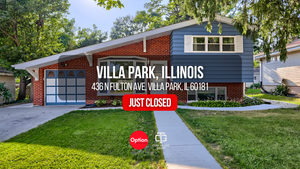
Villa Park's average sale price of approximately $385,000 makes it one of the most accessible communities in all of DuPage County for single-family homeownership. The town borders Elmhurst and Lombard, meaning buyers get proximity to more expensive markets at a meaningful discount. Inventory moves quickly here, so buyers need to be pre-approved and ready to act.
West Chicago sits a bit further out along the corridor but offers a similarly attractive entry point around $410,000. It's a town that has been appreciating steadily, and buyers who get in now are positioning themselves well relative to what the next few years may bring.
For buyers who are unsure where to start or want to understand their purchasing power before getting into the weeds of neighborhood comparisons, running a home valuation on a property you're considering is a smart first step, even in the early stages of your search.
Naperville: What $716,000 Buys and Why It Still Makes Sense
Naperville is the undisputed anchor of the high end in this group, and the $716,000 average is not an anomaly. It reflects a city that has built decades of reputation on excellent schools, a genuinely vibrant downtown with the Riverwalk, extensive park infrastructure, and an employment base that draws corporate headquarters and high-earning professionals.
At $716,000, buyers in Naperville are typically looking at four or five-bedroom homes in well-established neighborhoods, often with finished basements, updated kitchens, and significant lot sizes. The City of Naperville regularly appears on national best-places-to-live rankings, and that visibility keeps demand elevated even when broader market conditions soften elsewhere.
The trade-off is that Naperville is further from the city than close-in suburbs like Elmhurst, which matters for buyers who commute downtown. The BNSF Metra line serves Naperville with multiple stops, but the ride is longer. Buyers need to weigh that commute cost against the premium the market commands.
How City Condo Buyers Are Crossing Over to the Suburbs
One trend worth flagging in 2026: a meaningful number of buyers who started their search in city neighborhoods, particularly in areas like the West Loop, are crossing over to the western suburbs as their family situations evolve. For anyone curious about what upscale city condo living looks like before making that comparison, the breakdown of marielle on the park west loop condos is a useful reference point for understanding what urban luxury costs relative to suburban square footage.
The math often works out clearly: a West Loop condo at a similar price to a western suburb home will give you a fraction of the space and no yard. For families, that trade-off stops making sense at a certain life stage, and the western suburbs become the obvious next step.

Working With a Brokerage That Knows These Markets
Navigating price variation across nine different communities requires more than just a Zillow search. Each town has its own micro-inventory dynamics, its own typical days-on-market patterns, and its own negotiation norms that experienced local agents understand intuitively.
Option Premier LLC, based at 1021 W Adams St in Chicago's West Loop, serves buyers across both the city and the western suburbs, with a team that includes specialists covering the western suburb corridor alongside downtown and near-north neighborhoods, meaning clients get consistent service whether they end up in a West Loop condo or a four-bedroom home in Wheaton.
The Illinois Association of Realtors also publishes regular statewide and regional market reports that can supplement suburb-specific data for buyers who want additional context on broader price trends across the Chicagoland area.
Western Chicago suburbs home prices will continue shifting as inventory, interest rates, and buyer demand interact through the rest of 2026. The communities covered here each tell a different part of that story, and understanding where each one sits on the spectrum is the first step toward making a smart, well-timed purchase.
Things to Know
Wheaton's approximately +13.0% year-over-year price increase makes it the fastest-appreciating community in this western suburbs group, which means buyers waiting for prices to soften there may be working against themselves.
DuPage County, which covers most of the communities in this article, consistently ranks among the wealthiest counties in Illinois, and that underlying economic strength supports long-term home value stability across the corridor.
Many western suburb towns operate on well and septic systems rather than municipal water in older or more rural pockets, so home inspection due diligence matters more than buyers sometimes expect.
Pre-approval is not optional in markets like Glen Ellyn, Elmhurst, and Wheaton, where well-priced homes routinely receive multiple offers within days of listing.
Property tax rates vary meaningfully from town to town across the western suburbs, and that variation can shift your effective monthly payment by hundreds of dollars even when the purchase price is identical.
School district boundaries do not always align neatly with municipal boundaries in the western suburbs, so a home's address does not always tell you which district it falls into without a specific lookup.
Start Your Western Suburbs Home Search With the Right Team Behind You
The western suburb market moves fast, and the price gaps between communities mean that choosing the wrong town for your budget can cost you real money or leave you stuck on the sidelines. Call the Cory Tanzer Group at Option Premier today at (312) 218-4483, and get connected with agents who know these markets at the street level, not just the zip code level.
Frequently Asked Questions
-
Average single-family home prices across the western Chicago suburbs in August 2026 range from approximately $385,000 in Villa Park to $716,000 in Naperville.
The middle of the market sits roughly between $440,000 and $560,000, covering communities like Lombard, Westmont, Downers Grove, and Wheaton. Your specific budget will determine which towns make sense to focus on, and working with a local agent helps you avoid wasting time in markets where inventory at your price point is effectively nonexistent.
-
Naperville consistently records the highest average sale prices among western Chicago suburbs, with August 2026 data showing averages around $716,000 for single-family homes.
Naperville's premium reflects decades of investment in schools, parks, and downtown infrastructure, along with strong corporate employment in the area. Elmhurst runs a close second in the close-in category, averaging around $610,000, driven largely by its proximity to the city and its established neighborhood character.
-
Yes, western Chicago suburbs home prices have continued to rise in 2026, with Wheaton posting the sharpest increase in this group at approximately +13.0% year over year.
Limited inventory across most of the corridor is the primary driver of continued price appreciation. Buyers who have been watching and waiting for a market correction have largely found that prices in well-regarded communities continue to inch upward rather than retreat. Acting on a well-priced home quickly remains the more effective strategy in most of these towns right now.
-
The right western suburb depends on your budget, commute needs, school district priorities, and lifestyle preferences, all of which vary significantly from town to town.
Buyers who need a shorter commute to downtown Chicago tend to prioritize Elmhurst or Lombard, both of which offer strong Metra access and shorter ride times. Families who place the highest value on school ratings often focus on Wheaton, Glen Ellyn, or Naperville. Buyers working with a tighter budget but still wanting suburban space and stability tend to find the best balance in Villa Park, West Chicago, or Westmont. A local agent who covers the full corridor can walk you through the practical differences between towns in a way that generic online research simply cannot replicate.
-
The fastest way to get a sense of your home's current market value is to request a professional valuation from a local brokerage that tracks your specific neighborhood.
Option Premier offers a home valuation tool on its website, and the Cory Tanzer Group team can provide a full comparative market analysis using current MLS transaction data for your neighborhood.
The Bottom Line on Western Chicago Suburbs Home Prices
The western suburban corridor offers one of the widest price ranges of any comparable region in Chicagoland, and that variety is genuinely its greatest strength for buyers at different life stages and budget levels. Whether you are a first-time buyer targeting Villa Park at $385,000 or a move-up buyer eyeing a four-bedroom home in Naperville at $716,000, the data makes clear that this market rewards preparation, speed, and local knowledge in equal measure.
The worst position a buyer can be in is falling in love with a community, finding the right home, and then losing it because the groundwork was not laid in advance. Get your financing in order, connect with an agent who knows these specific towns, and use tools like a home valuation to anchor your expectations before your search begins. Call the Cory Tanzer Group at Option Premier at (312) 218-4483 to get your western suburbs search started with people who work this corridor every single day.