Chicago Condo or Suburban Townhome? What Buyers Gain and Give Up in 2026

Fall officially arrived in Chicago on September 22, and with only a little more than three months left in 2026, buyers who have spent most of the year debating their next move are reaching an interesting point.
For many move-up buyers, the question is no longer simply “Should I buy?”
It is increasingly:
Do I stay in the city and buy a condo, or trade some of that location for a townhome in the suburbs?
There is no universal winner. A Chicago condo may give you a shorter commute, stronger walkability and less exterior maintenance. A suburban townhome may offer an attached garage, additional bedrooms, more private outdoor space and a different pace of daily life.
The better question is what you are willing to gain, give up and pay for every month.
The Space Difference Is Real, but So Is the Location Tradeoff
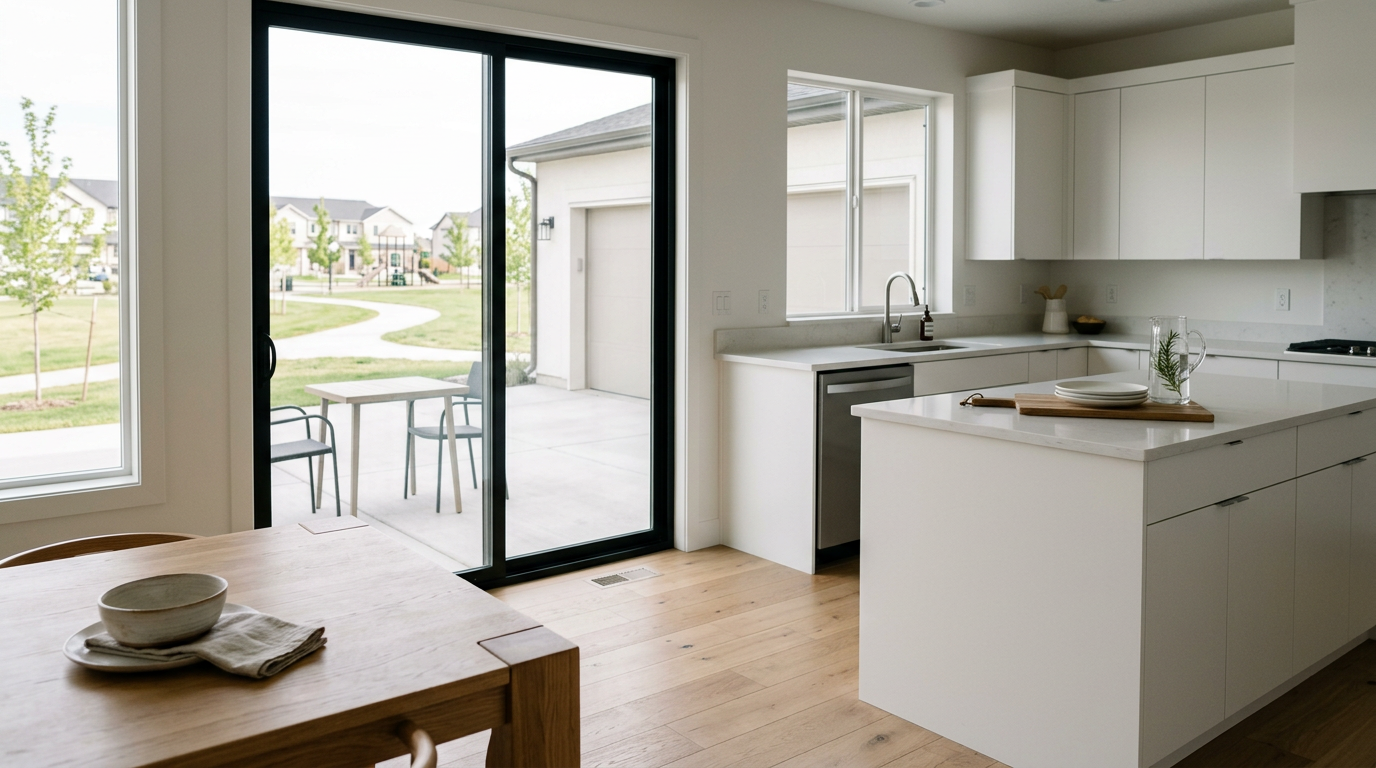
For a buyer moving out of a one- or two-bedroom city condo, suburban townhomes can make the additional space immediately obvious.
A typical search may add another bedroom, an attached garage, multiple levels, a patio or small yard and more separation between working, entertaining and sleeping areas. That can become increasingly appealing for buyers working from home, adding children, keeping two vehicles or simply wanting more storage.
New development is adding more of that product. Earlier this month, Naperville approved NorthGate of Naperville, a planned community at 2255 Monarch Drive with 171 attached townhomes across 32 buildings on a 25.2-acre site. Plans include about 10.6 acres of common open space plus a 3.24-acre public park expected to include walking paths, a playground, fitness stations and shelters.
But more space can change the geography of your daily life.
A Chicago condo may put the 'L', restaurants, groceries, parks, work and entertainment within walking distance. In a suburban townhome community, even one near Metra, more errands may involve getting in the car.
That trade can make perfect sense. It just needs to be intentional.
HOA Fees Are Not an Apples-to-Apples Comparison

One of the easiest mistakes is looking at a $700 condo assessment and a $250 townhome HOA and immediately assuming the townhome costs $450 less every month.
First ask what each fee actually covers.
A Chicago condo assessment might include some combination of exterior maintenance, common-area insurance, water, heat, door staff, elevators, landscaping, snow removal, fitness facilities and building reserves.
A suburban townhome association might cover landscaping, snow removal and certain exterior components, while leaving the owner responsible for more of the property.
Neither structure is automatically better.
Buyers should compare the total cost of ownership, including the assessment, property taxes, parking, utilities, insurance and the maintenance responsibilities that remain with the owner.
Building finances matter too. For a condo, review reserves, insurance, special assessments and upcoming capital work. For a townhome, determine exactly whether the association or homeowner is responsible for items such as the roof, windows, driveway, siding and other exterior components.
The lower monthly fee can look very different if it also means you are personally responsible for more.
Chicago Buyers Still Have a Very Different Inventory Choice

The decision also depends on what is actually available.
Our August 2026 Chicago condo market analysis found that active inventory remained tighter than a year earlier citywide, while individual condo markets behaved very differently. South Loop condos had a median around $349,250, compared with approximately $439,000 in River North, $475,000 in West Loop and $462,450 in Streeterville.
That means “buy a Chicago condo” is not one decision.
A buyer could be comparing a South Loop high-rise, a University Commons loft, a West Loop elevator building and a River North tower, each with different assessments, amenities, parking arrangements and resale dynamics.
And the suburbs are becoming more diverse too.
Wilmette's new Optima Lumina is a useful example. It is not a townhome project at all. It is a planned 133-residence luxury condominium development directly across from the Wilmette Metra station, with retail, terraces, extensive amenities and a public plaza. Sales began in late summer.
That project shows why the old choice of “urban condo versus suburban house” is becoming less useful.
Some suburban buyers still want low-maintenance, walkable condo living. Some Chicago buyers can find townhomes with garages and outdoor space without leaving the city.
The property type and location increasingly have to be evaluated separately.
Before 2026 Ends, Compare the Lifestyle as Closely as the Property

If you are trying to make this decision before the end of the year, compare two realistic properties rather than two abstract lifestyles.
Take the Chicago condo you would actually consider and the suburban townhome you would actually buy.
Then compare:
Monthly housing cost. Include mortgage, taxes, HOA, insurance, parking and realistic utilities.
Maintenance. Determine what the association handles and what becomes your responsibility.
Commute. Calculate the entire door-to-door trip, not just the Metra or CTA ride.
Parking. Is it included, deeded, attached, outdoors or an additional purchase?
Outdoor space. Compare a balcony or shared rooftop with a patio, park or small yard based on what you would genuinely use.
Walkability. Think about groceries, coffee, restaurants, parks and the places you visit every week.
Space. Ask whether the extra bedroom, garage or basement actually solves a problem you have now.
A suburban townhome can give a city buyer significantly more space without the maintenance burden of a detached home.
A Chicago condo can preserve a lifestyle that may be difficult to replicate once your commute and daily errands become more car-dependent.
Neither advantage is free. You are usually exchanging one convenience for another.
Making a Move Before the End of 2026? Compare Both Markets
With fall underway and only a few months remaining in the year, buyers who have been debating this move do not necessarily need to rush into a decision.
But this is a useful time to stop comparing “Chicago” with “the suburbs” in the abstract and begin comparing actual homes.
The Cory Tanzer Group at Option Premier helps buyers evaluate both sides of that decision, from Chicago condo buildings and HOA finances to townhomes, commuting and housing options across the North Shore and Western Suburbs.
The right move may give you more space.
Or it may let you keep the location you already love.
The important part is understanding what you are giving up to get it.
Stay Connected
Ranked among the top 1% of real estate teams in the Chicagoland market, The Cory Tanzer Group at Option Premier is recognized for proven sales performance, neighborhood expertise, and consistent results across Chicago and the surrounding suburbs.
In the 2026 RealTrends Verified rankings, based on 2025 sales data, the team completed 181 transaction sides representing $79.28 million in sales volume. The Cory Tanzer Group ranked No. 13 in Illinois by transaction sides, No. 20 in Illinois by sales volume, No. 270 nationally by transaction sides, and No. 439 nationally by sales volume.
The team also earned The CARLY, the highest honor for Platinum Sales Dollars and Platinum Units Sold, at the Chicago Association of REALTORS® Sales Awards.
Led by Cory Tanzer, the team helps buyers, sellers, investors, landlords, and renters navigate real estate across Downtown Chicago, the North Shore, and the Western Suburbs, with local expertise in University Village, University Commons, South Loop, West Loop, Little Italy, Pilsen, and surrounding Chicagoland communities.
Connect with The Cory Tanzer Group at Option Premier for trusted local market insight, personalized guidance, and a proven strategy for your next Chicago real estate move.