How Much Does a House Cost in Chicago’s Northwest Suburbs? September 2026 Prices
The Northwest Chicago suburbs housing market posted strong year-over-year price gains in September 2026, with single-family detached homes appreciating across every community tracked. Park Ridge led the region with a 20.1% increase, pushing the average sale price to $729,000, while even the most affordable suburbs recorded meaningful growth.
What the September 2026 Data Tells Us
The numbers from InfoSparks covering detached single-family homes across Chicago's north and northwest suburbs tell a consistent story: demand is outpacing supply, and prices are responding accordingly. This is not limited to one or two communities. Every suburb in this dataset recorded positive year-over-year growth, which signals broad market strength rather than isolated pockets of activity.
For buyers, this environment means acting on strong listings quickly and understanding how current financing conditions shape purchasing power. Our post on chicago buyers mortgage rates above 7 percent breaks down exactly how rate levels are affecting affordability decisions across the Chicago metro right now. For sellers, the data is a clear indicator that properly priced homes in this corridor are attracting real competition.
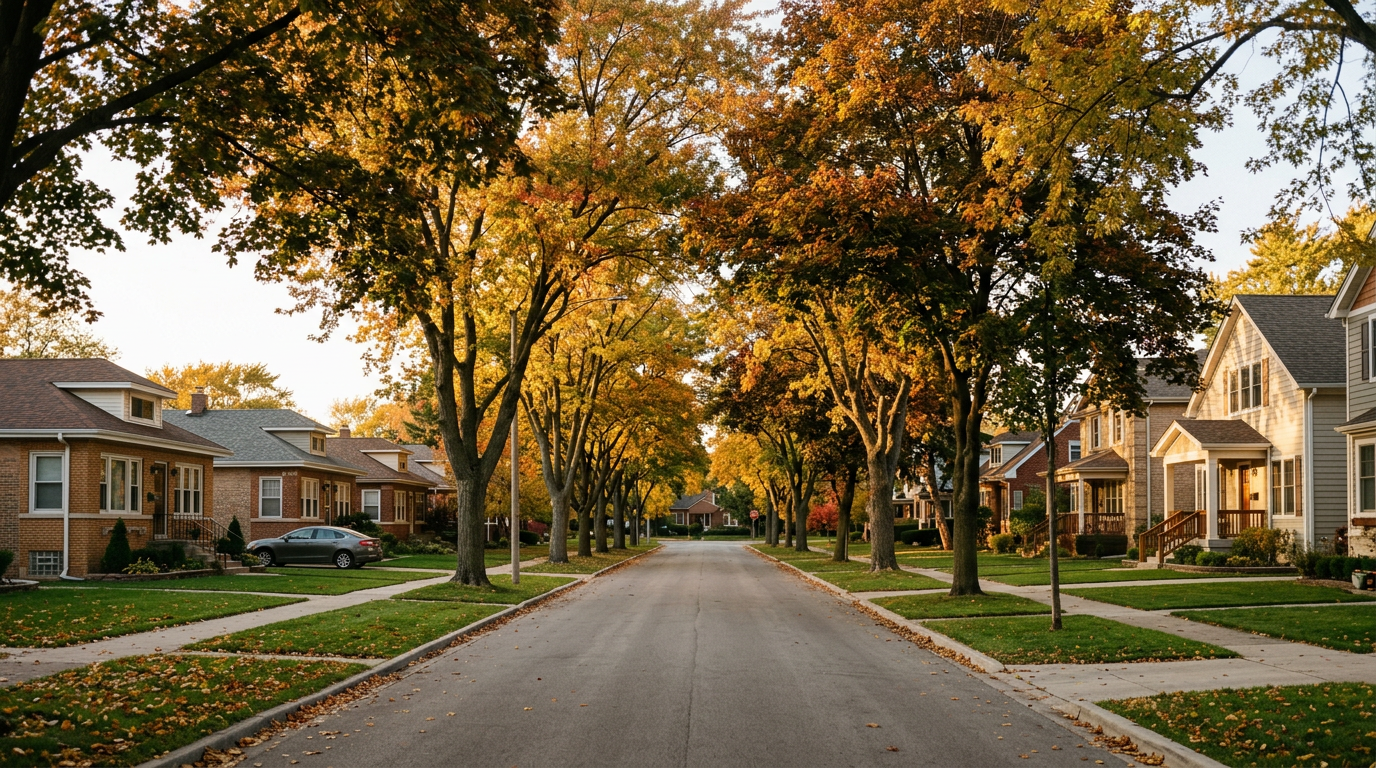
September 2026 Price Breakdown by Suburb
The table below summarizes average sale prices and year-over-year changes for detached single-family homes across the key northwest suburbs, based on InfoSparks data as of September 2026.
| Suburb | Average Sale Price | Year-Over-Year Change |
|---|---|---|
| Park Ridge | $729,000 | +20.1% |
| Skokie | $525,000 | +10.5% |
| Morton Grove | $510,000 | +13.6% |
| Niles | $475,000 | +8.0% |
| Des Plaines | $431,000 | +6.4% |
Park Ridge stands in a category of its own. A $729,000 average price with 20.1% growth reflects concentrated demand from buyers who prize the suburb's school district reputation, walkable downtown, and Metra access. The Park Ridge housing market has consistently attracted upsizing families relocating from within the city, and September 2026 data confirms that trend has not softened.
Skokie and Morton Grove sit close together in price but have slightly different buyer profiles. The Skokie housing market benefits from its proximity to Evanston and the Yellow Line CTA extension, which supports demand from remote-friendly professionals who still want transit options. Morton Grove, by contrast, attracts buyers who prioritize lot size and value, and its 13.6% gain suggests that word has spread among value-focused buyers in 2026.
For a broader regional comparison that includes the western corridor, our analysis of western chicago suburbs home prices september 2026 provides a useful side-by-side perspective on how different suburban corridors are performing this cycle.
Park Ridge and the Case for Early Action
The Park Ridge housing market deserves its own examination. A 20.1% year-over-year increase is not a rounding-error gain. It reflects sustained, compounding demand in a suburb where the housing stock is largely fixed. Park Ridge does not have large tracts of undeveloped land where builders can respond to demand with new inventory. The existing homes in the market are absorbed quickly, and replacement listings are often priced higher than the last comparable sale.
Buyers who delayed a purchase decision in Park Ridge over the past twelve months paid a significant price premium by waiting. That pattern is worth noting as buyers evaluate timing decisions going into late 2026 and early 2027.
According to the National Association of Realtors, inventory constraints in mature suburban communities near major metro areas continue to be one of the primary drivers of price appreciation, a dynamic that applies directly to the northwest suburban corridor.
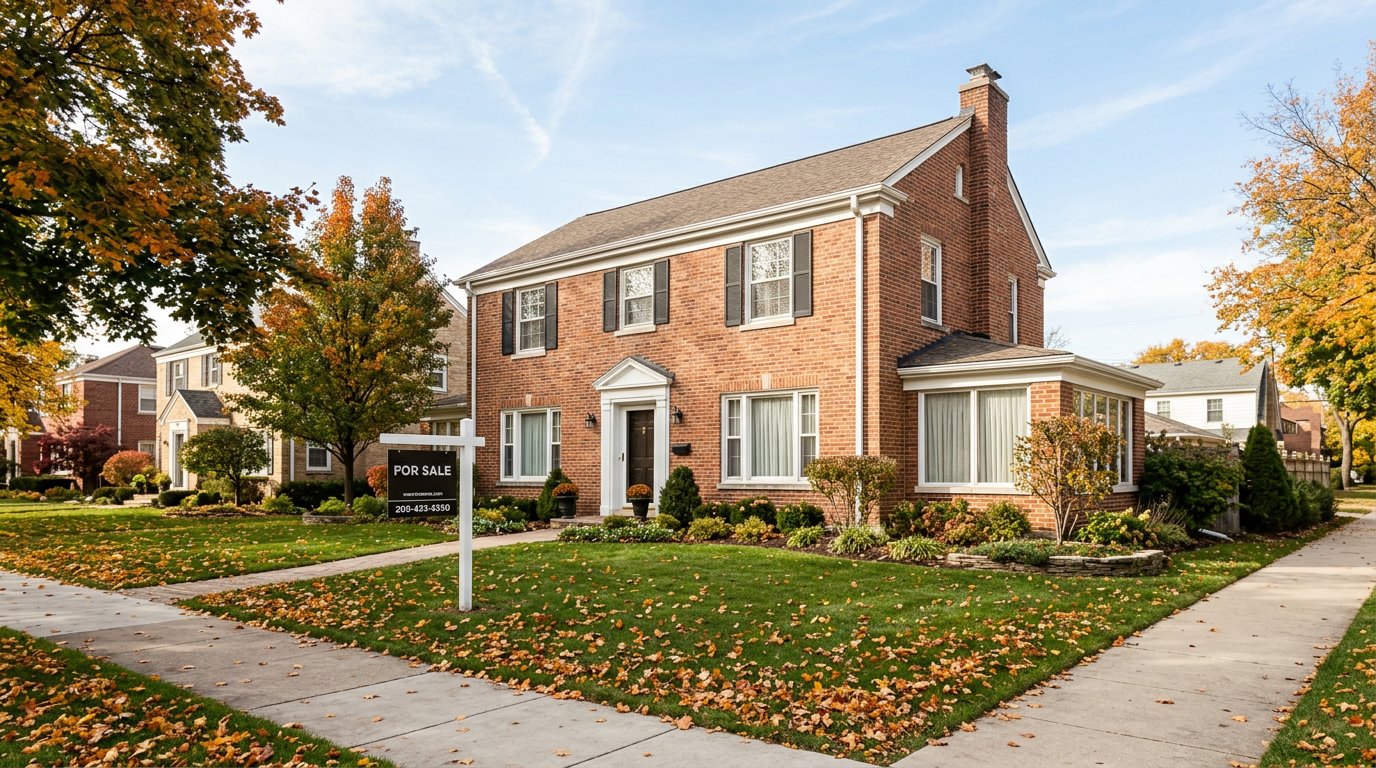
Niles and Des Plaines: The Accessible Entry Points
Not every buyer in this corridor has a $700,000 budget. The Niles housing market and the Des Plaines housing market serve a critical function in the northwest suburban ecosystem: they give first-time buyers and upsizing renters a realistic path into homeownership at price points that still make financial sense even with rates above 7%.
At $475,000 average in Niles and $431,000 in Des Plaines, buyers are still looking at meaningful monthly payments under current financing conditions. However, the +8.0% and +6.4% gains in these communities also mean that waiting is not free. The gap between renting and owning continues to narrow in practical terms as rents in the broader Chicago metro have also trended upward through 2026.
Des Plaines is particularly worth watching. Its connectivity via the Metra Union Pacific Northwest line makes it a practical daily commute option for buyers working in or near the Loop, and its housing stock tends to offer more square footage per dollar than closer-in suburbs. The Des Plaines housing market has historically been overlooked in favor of higher-profile neighbors, but the 2026 data suggests that chicago leads home price growth 2026 calculation is shifting.
The Illinois Realtors Association tracks inventory levels at the county and community level, and Cook County suburbs in this range have seen months-of-supply figures compress through 2026, reinforcing the upward price pressure across all price bands.

How This Market Compares to Broader Chicago Trends
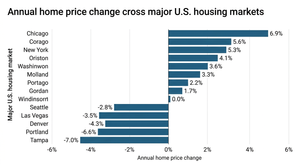
The northwest suburban corridor does not exist in isolation. Chicago's broader residential market has been one of the stronger performers among major U.S. metros through 2026, which provides important context for interpreting suburb-level gains. Our comprehensive analysis of regional performance shows that Chicago has outperformed coastal markets that once dominated national headlines in ways that benefit communities exactly like those tracked here.
The northwest suburbs benefit from several factors that the broader metro story reinforces. First, Chicago's job market has remained stable, supporting sustained household formation. Second, the cost of entry into northwest suburban communities remains meaningfully lower than comparable suburbs outside Boston, New York, or Los Angeles, attracting relocation buyers from higher-cost metros. Third, the quality of the public school systems in communities like Park Ridge and Skokie continues to act as a durable demand anchor that does not correlate with interest rate cycles in the same way speculative demand does.
According to Zillow's housing market research, suburban markets within commute range of large employment centers have outperformed urban cores on a price-growth basis through 2025 and into 2026, a national trend that the northwest Chicago corridor exemplifies.
The U.S. Census Bureau's housing data also confirms that homeownership demand in the 30-to-45-year-old demographic remains historically elevated, precisely the cohort most active in the northwest suburb price bands covered here.
What Buyers and Sellers Should Do With This Data
For sellers, the September 2026 numbers are an opportunity. Homes priced correctly for their community are moving, and the appreciation trajectory across this corridor means that equity positions have strengthened considerably for anyone who purchased in 2022 or earlier. Getting an accurate home valuation before listing is the logical first step, and it ensures pricing decisions are based on current comparables rather than anecdotal neighborhood conversation.
For buyers, the data frames the risk of waiting differently than it might have a few years ago. In a flat market, patience costs nothing. In a market where Park Ridge is gaining 20.1% annually and even Des Plaines is gaining 6.4%, every month of delay has a calculable cost in the form of a higher purchase price for the same property.
Understanding the specific dynamics of each community also matters. The Morton Grove housing market behaves differently from Park Ridge, and the right strategy in Skokie is not necessarily the right strategy in Niles. That kind of local knowledge is where working with an experienced brokerage pays off directly.

Talk to a Northwest Suburbs Expert Before Your Next Move
The September 2026 data makes one thing clear: this market rewards buyers and sellers who act with accurate information and local expertise on their side. Every month of hesitation in a corridor where Park Ridge is gaining over 20% annually is a month that compounds against you. Whether you are preparing to list, actively searching for a home, or trying to understand what your current property is worth in today's competitive suburban landscape, the right conversation starts now.
Call the Cory Tanzer Group at Option Premier today at (312) 218-4483 and speak directly with a team that knows the northwest suburbs block by block.
Frequently Asked Questions
-
Average prices across the northwest suburban corridor range from $431,000 in Des Plaines to $729,000 in Park Ridge, based on InfoSparks data for detached single-family homes as of September 2026.
The five communities tracked in this dataset reflect a wide spread of price points, giving buyers at different budget levels realistic options within the same general corridor. Skokie and Morton Grove cluster in the $510,000 to $525,000 range, while Niles sits at $475,000. Each community has its own inventory dynamics, school district profile, and commute characteristics that influence where that price lands relative to buyer demand.
-
Park Ridge leads the northwest suburban corridor with a 20.1% year-over-year increase in average sale price for detached single-family homes as of September 2026, reaching $729,000.
That level of appreciation in a single year is significant in any market context. Park Ridge benefits from a combination of factors that have proven durable: highly rated public schools, a walkable downtown district, Metra access to the Loop, and a housing stock that cannot expand rapidly through new construction. Those structural constraints on supply, combined with sustained buyer demand from city families relocating outward, have kept upward pressure on prices consistent through 2026.
-
Yes, for buyers with stable income and a long-term ownership horizon, the northwest suburbs still offer strong value relative to comparable suburban markets in other major U.S. metros, even at current rate levels.
Elevated rates do compress affordability and shift the monthly payment equation meaningfully. However, the price appreciation documented across this corridor means that waiting also carries a cost. A buyer who delays a purchase in a community gaining 8% to 20% annually is effectively paying a premium in future purchase price that may exceed any rate improvement they are waiting for. The decision depends heavily on individual financial circumstances, which is why working through the numbers with an experienced local brokerage before making any commitment is the most practical first step.
-
The northwest suburbs and western suburbs are both posting positive year-over-year gains in 2026, but the northwest corridor is showing stronger appreciation in its upper price tier, particularly in Park Ridge.
The western suburbs tend to offer more consistent mid-range pricing and a different set of employment and transit corridors that attract a somewhat distinct buyer profile. Communities like Naperville and Elmhurst in the west have their own demand drivers rooted in corporate campuses and established school districts. The northwest suburbs, anchored by Park Ridge and Skokie, draw more heavily from buyers relocating out of the city's north side neighborhoods. Both corridors are competitive, but the specific community you target should align with your commute needs, school priorities, and price range rather than corridor identity alone.
-
Des Plaines is currently the most accessible entry point among the tracked northwest suburbs, with an average sale price of $431,000 and a year-over-year gain of 6.4% as of September 2026.
For first-time buyers working within a tighter budget, Des Plaines offers meaningful advantages beyond its price point. Its location along the Metra Union Pacific Northwest line provides reliable downtown Chicago access, and its housing stock frequently includes larger lot sizes than closer-in suburbs at similar prices. Niles is the next most affordable at $475,000 with an 8.0% gain, and it offers its own set of practical advantages including proximity to big-box retail corridors and established community infrastructure. Both communities are worth serious consideration for buyers who want northwest suburban access without stretching to a $525,000 or higher baseline.
The Bottom Line on the Northwest Chicago Suburbs Housing Market
September 2026 data confirms that the Northwest Chicago suburbs housing market is in an active appreciation phase, with no community in the tracked dataset recording flat or negative movement. Park Ridge is the headline performer, but the breadth of gains across Des Plaines, Niles, Morton Grove, and Skokie tells a more important story: this is not a single-suburb anomaly. It is a corridor-wide dynamic driven by constrained inventory, stable regional employment, and sustained demand from buyers relocating from higher-cost areas both within Chicago and from out of state.
For buyers, the window to act at current prices is real and finite. For sellers, the equity position built over the past several years represents a genuine financial opportunity that a well-priced listing can capture quickly. The next step is simple: get accurate data on your specific situation, whether that means a current valuation on a property you own or a personalized buyer consultation that maps your budget to real inventory. Call the Cory Tanzer Group at Option Premier at (312) 218-4483, or reach the brokerage office directly at (312) 500-5808, and get the local expertise this market requires.