Are Home Prices Going To Fall? Here’s What Buyers Need To Know

One of the biggest questions buyers are asking right now is simple:
“What if I buy a home and prices go down?”
With constant headlines about interest rates, affordability, and market shifts, it’s understandable why some buyers feel hesitant. Purchasing a home is a major financial decision, and nobody wants to feel like they bought at the wrong time.
But when you step back from the short-term noise and look at the bigger picture, the data tells a much clearer story.
Historically, home prices tend to rise over time.
What the Housing Market Data Actually Shows
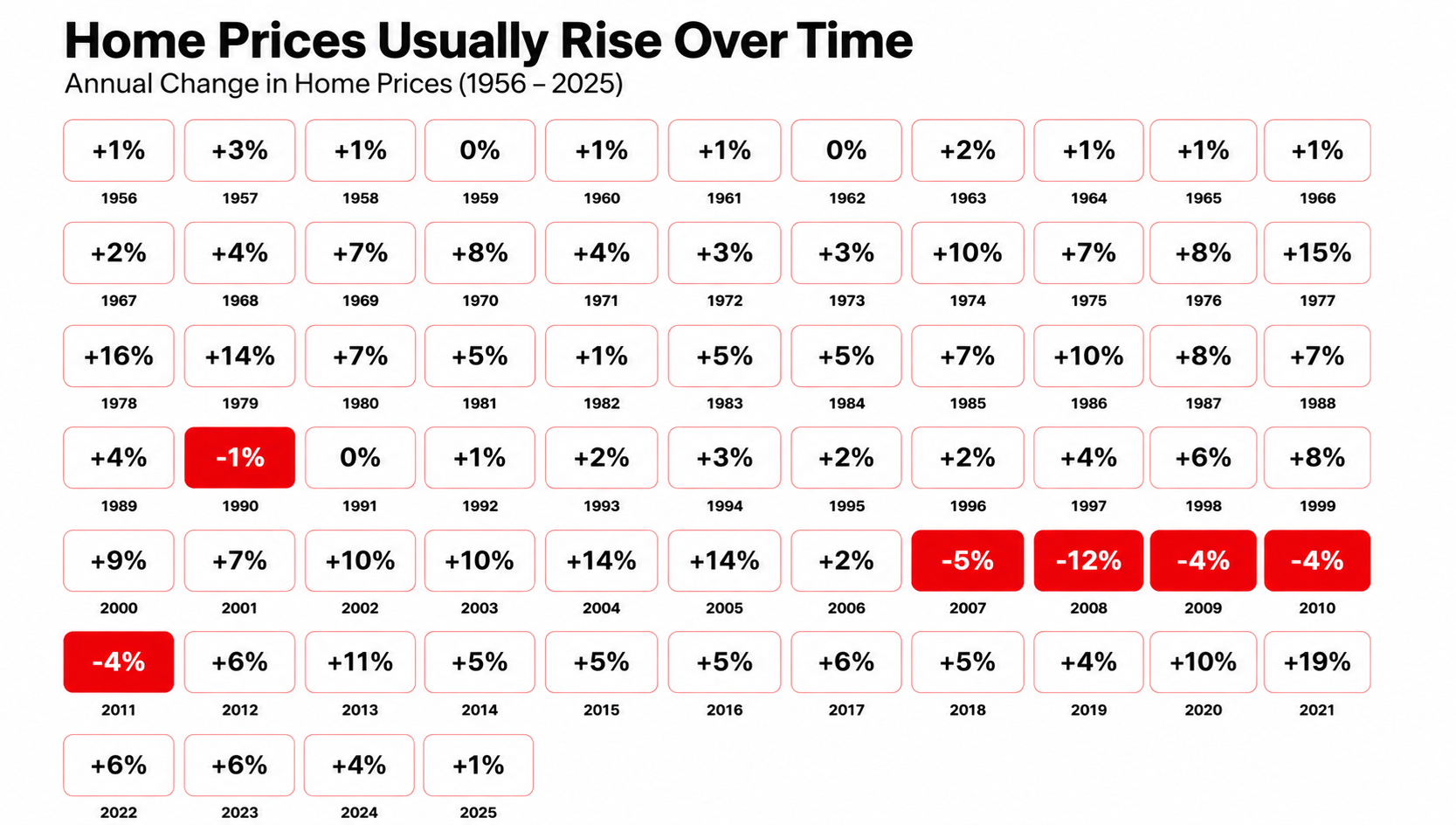
S&P CoreLogic Case-Shiller Index Data
According to long-term housing data from the S&P CoreLogic Case-Shiller Index and market analyst Charlie Bilello, U.S. home prices have shown remarkable consistency over the decades.
Outside of major economic disruptions like the 2008 housing crash, prices have generally either:
Increased year over year
Stayed relatively flat during slower periods
Recovered after temporary downturns
That’s an important distinction because headlines often focus on short-term fluctuations happening in select markets, while ignoring the long-term trend.
Real estate has never been a straight line upward every single year. Some cities experience corrections, slower growth, or temporary dips. But historically, broad declines across the housing market have been relatively rare and typically short-lived.
Why Home Prices Tend To Rise Over Time
There are a few core reasons housing values have historically appreciated over the long run.
1. People Always Need Housing
Life keeps moving regardless of market conditions.
People relocate for jobs, grow families, downsize, get married, divorce, retire, or move for schools and lifestyle changes. That constant movement creates ongoing housing demand.
Even during slower markets, buyers don’t disappear entirely.
2. Housing Supply Is Still Tight
Inventory has improved in many markets compared to the ultra-low supply levels of recent years, but nationally, the U.S. still faces a housing shortage.
According to multiple housing studies from organizations like the National Association of Realtors (NAR) and Freddie Mac, the country remains millions of homes short of what’s needed to meet long-term demand.
When supply remains limited and demand continues, prices generally stay supported.
3. Inflation Pushes Asset Values Higher
Housing is also influenced by inflation.
As construction costs, land prices, labor, insurance, and materials become more expensive over time, replacement costs rise. That naturally pushes home values upward over the long term.
It’s one reason real estate is often viewed as a hedge against inflation.
What This Means for Buyers Right Now
This doesn’t mean home prices will rise every single year in every neighborhood.
Real estate is local.
Some markets may soften temporarily, especially areas that saw unusually rapid appreciation during the
pandemic years. Others may continue seeing steady growth due to limited inventory and strong demand.
But historically, short-term market fluctuations have mattered far less than long-term ownership.
That’s why many financial experts recommend buying a home only if you plan to stay for several years, often at least five. That timeframe gives homeowners a better chance to ride out temporary market shifts while benefiting from longer-term appreciation.
Bottom Line
Home prices can fluctuate in the short term, but history shows they tend to rise over time.
That doesn’t mean everyone should buy immediately. The right time to buy is when it makes sense for your financial situation and long-term goals.
But if fear of falling prices is the main thing holding you back, it’s worth looking beyond the headlines and focusing on the bigger historical picture instead.
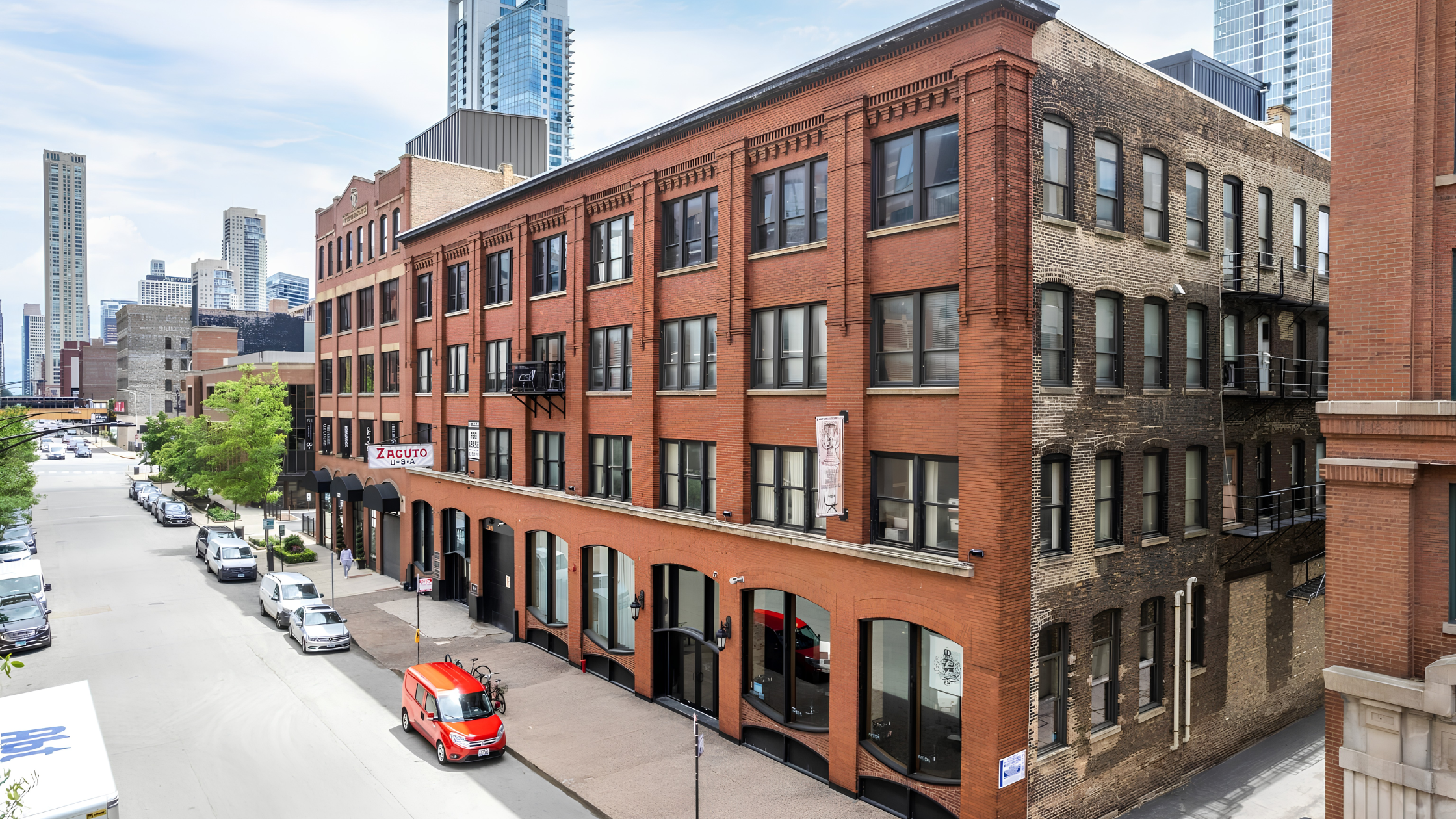
More to Explore: Construction Begins on Oxxford Lofts in the West Loop
Stay Connected
Ranked among the top 1% of real estate teams in the Chicagoland market, Cory Tanzer and the Cory Tanzer Group are experts in helping buyers and sellers navigate today’s market across Downtown Chicago, the North Shore, and the Western Suburbs. Recognized for their neighborhood expertise in areas such as University Village, University Commons, South Loop, and Pilsen, the team helps clients stay one step ahead by understanding where the Chicago market is headed next.
Related Articles