River North vs. West Loop: Which Chicago Condo Market Fits Your Lifestyle Best?

CHICAGO — Few Chicago neighborhood debates come up more often right now than River North vs. West Loop. Both areas offer luxury condos, walkable streets, strong restaurant scenes, and quick access to downtown, but once you start touring buildings and comparing day-to-day lifestyle, the differences become much more noticeable.
One neighborhood leans toward classic downtown high-rise living with nightlife and skyline energy. The other feels more industrial-chic, restaurant-driven, and centered around newer luxury developments and loft conversions. If you are trying to decide where your condo search should focus in 2026, here’s how the two neighborhoods actually compare from a buyer’s perspective.
Start With the Market Basics
At a glance, West Loop is currently the tighter and more competitive condo market, while River North offers buyers more inventory and more entry points across different price ranges.
According to recent market snapshots, River North posted a median sale price of around $427,000, while West Loop came in higher at approximately $499,000. River North also showed significantly more active inventory, giving buyers a broader selection of buildings, layouts, and pricing options.
In practical terms, that usually means:
West Loop feels faster-moving and more competitive
River North gives buyers more flexibility and variety
West Loop buyers often pay more overall for newer layouts and space
River North buyers tend to see more high-rise inventory and lower entry points
For many condo shoppers, that distinction alone immediately starts narrowing down which neighborhood feels more realistic.
River North Condo Market Overview
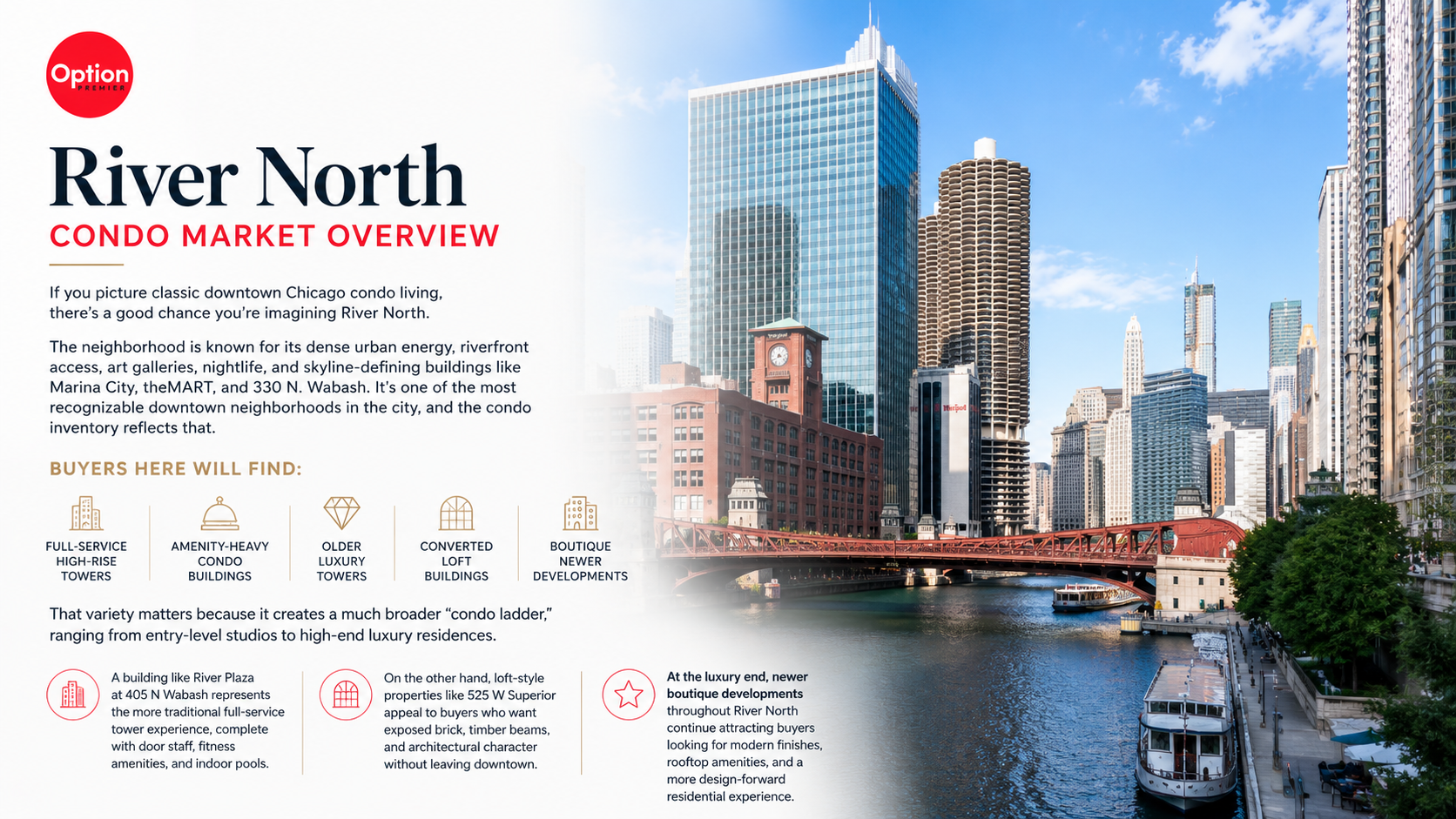
If you picture classic downtown Chicago condo living, there’s a good chance you’re imagining River North.
The neighborhood is known for its dense urban energy, riverfront access, art galleries, nightlife, and skyline-defining buildings like Marina City, theMART, and 330 N. Wabash. It’s one of the most recognizable downtown neighborhoods in the city, and the condo inventory reflects that.
Buyers here will find:
Full-service high-rise towers
Amenity-heavy condo buildings
Older luxury towers
Converted loft buildings
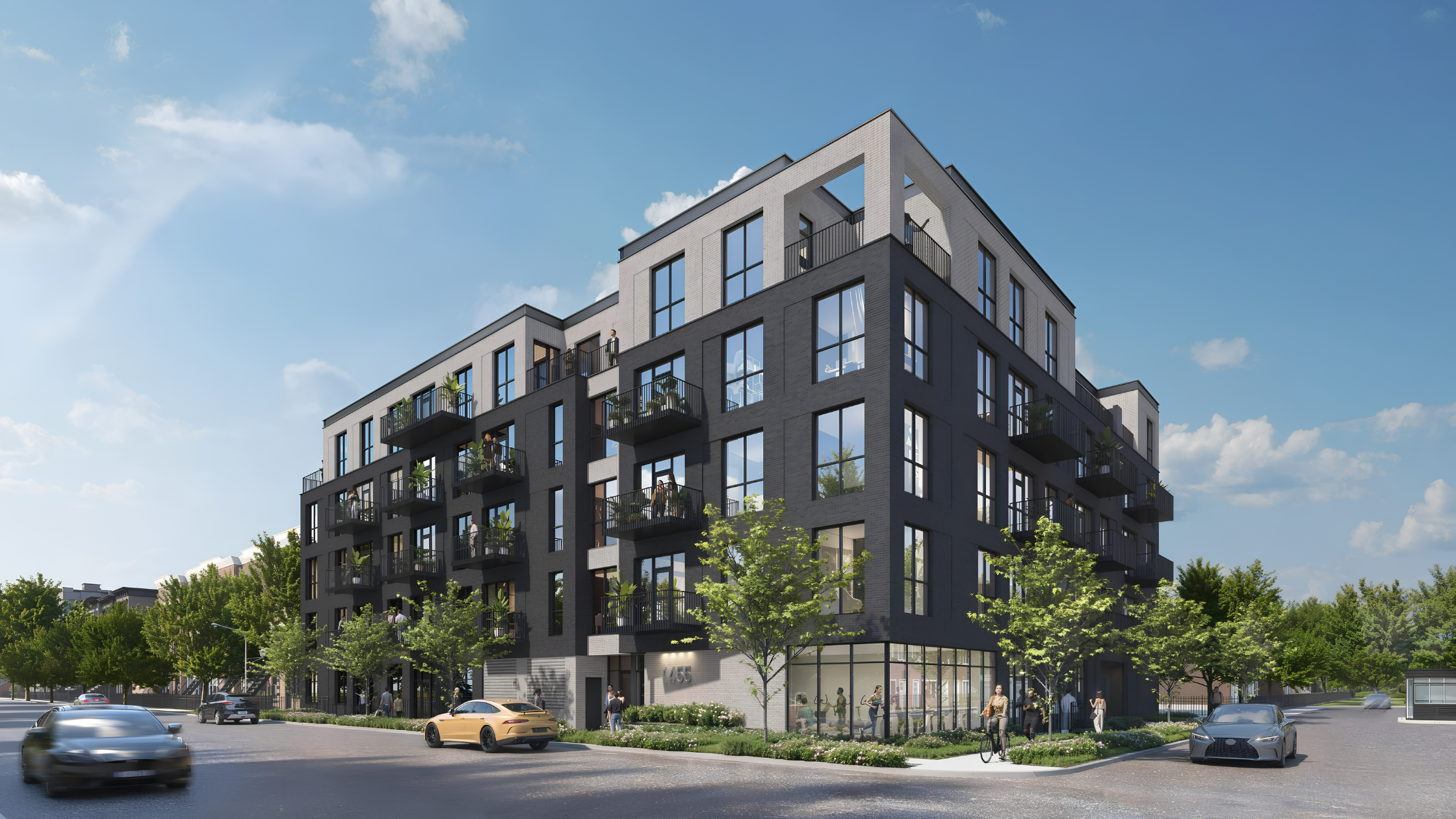
Boutique newer developments
That variety matters because it creates a much broader “condo ladder,” ranging from entry-level studios to high-end luxury residences.
West Loop Condo Market Overview

While River North feels polished and vertical, West Loop feels more industrial, adaptive, and neighborhood-driven.
Originally built around warehouses and industrial corridors, the neighborhood has transformed into one of Chicago’s most sought-after residential markets thanks to the explosive growth of Fulton Market and Restaurant Row along Randolph Street.
For condo buyers, West Loop typically means:
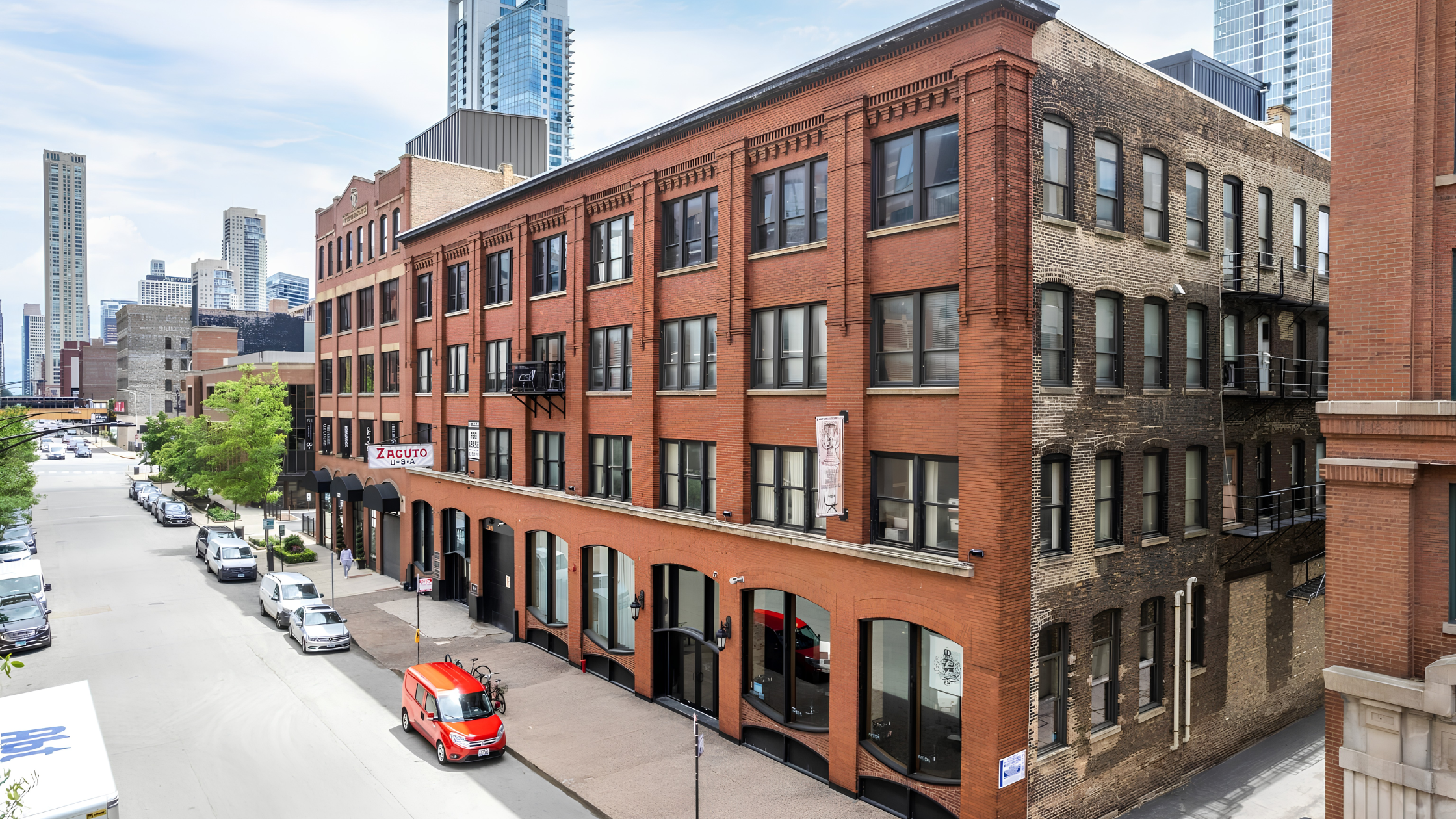
Industrial loft conversions
Adaptive-reuse buildings
Luxury low-rise and mid-rise developments
Larger floor plans
More private outdoor space at the luxury level
Buildings like No. Ten Lofts showcase the exposed brick and warehouse-style architecture many buyers specifically search for in West Loop. Meanwhile, newer luxury buildings such as The Hayden represent the neighborhood’s modern luxury side, often featuring private elevator access, oversized terraces, and more boutique-style living environments.
Compared to River North’s dense high-rise atmosphere, West Loop often feels more curated and residential despite its rapid growth.
Price vs. Value: What Actually Matters?
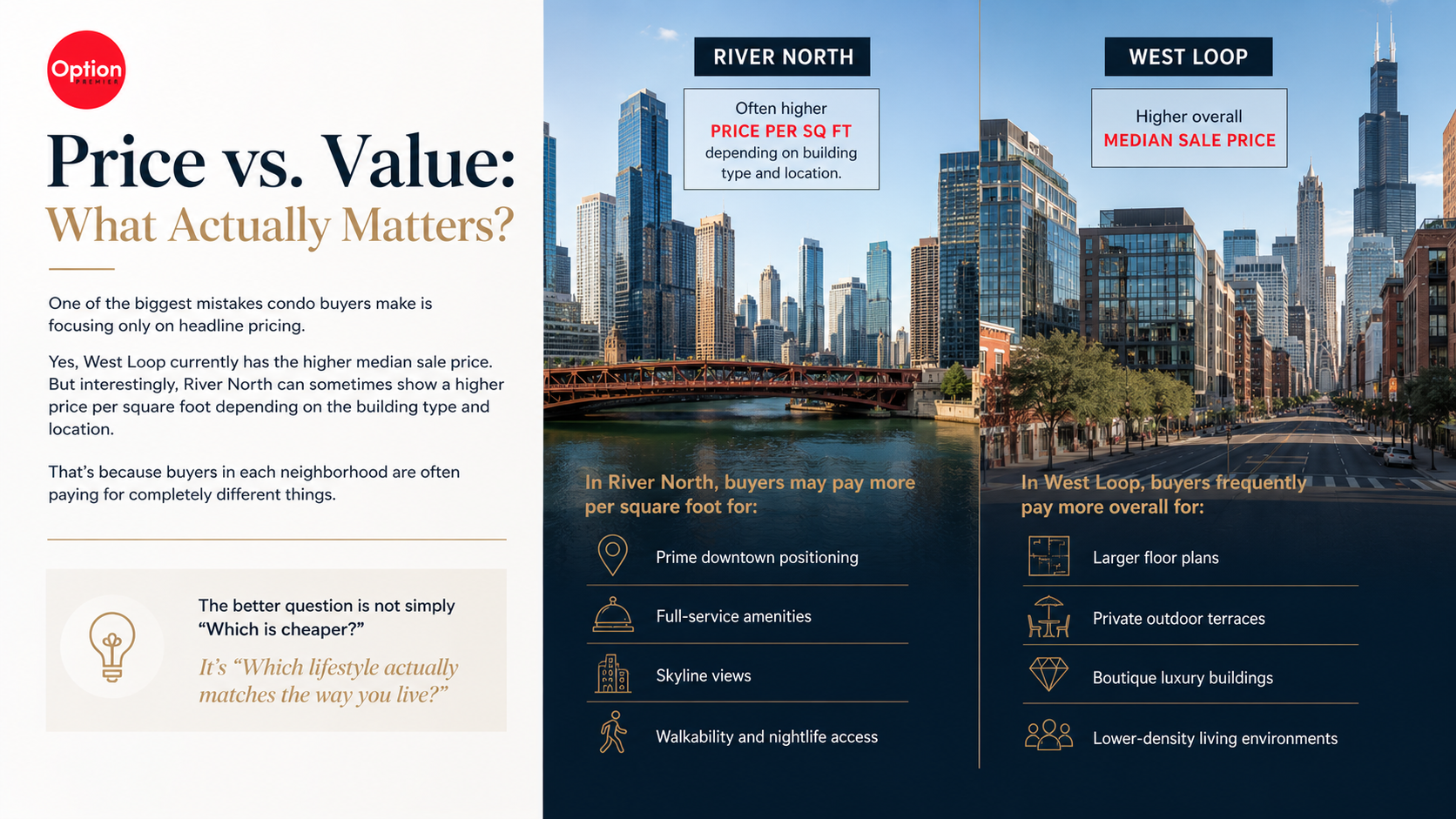
One of the biggest mistakes condo buyers make is focusing only on headline pricing.
Yes, West Loop currently has the higher median sale price. But interestingly, River North can sometimes show a higher price per square foot depending on the building type and location.
That’s because buyers in each neighborhood are often paying for completely different things.
In West Loop, buyers frequently pay more overall for:
Larger floor plans
Private outdoor terraces
Boutique luxury buildings
Lower-density living environments
In River North, buyers may pay more per square foot for:
Prime downtown positioning
Full-service amenities
Skyline views
Walkability and nightlife access
The better question is not simply “Which is cheaper?” It’s “Which lifestyle actually matches the way you live?”
Transit and Commuting Differences
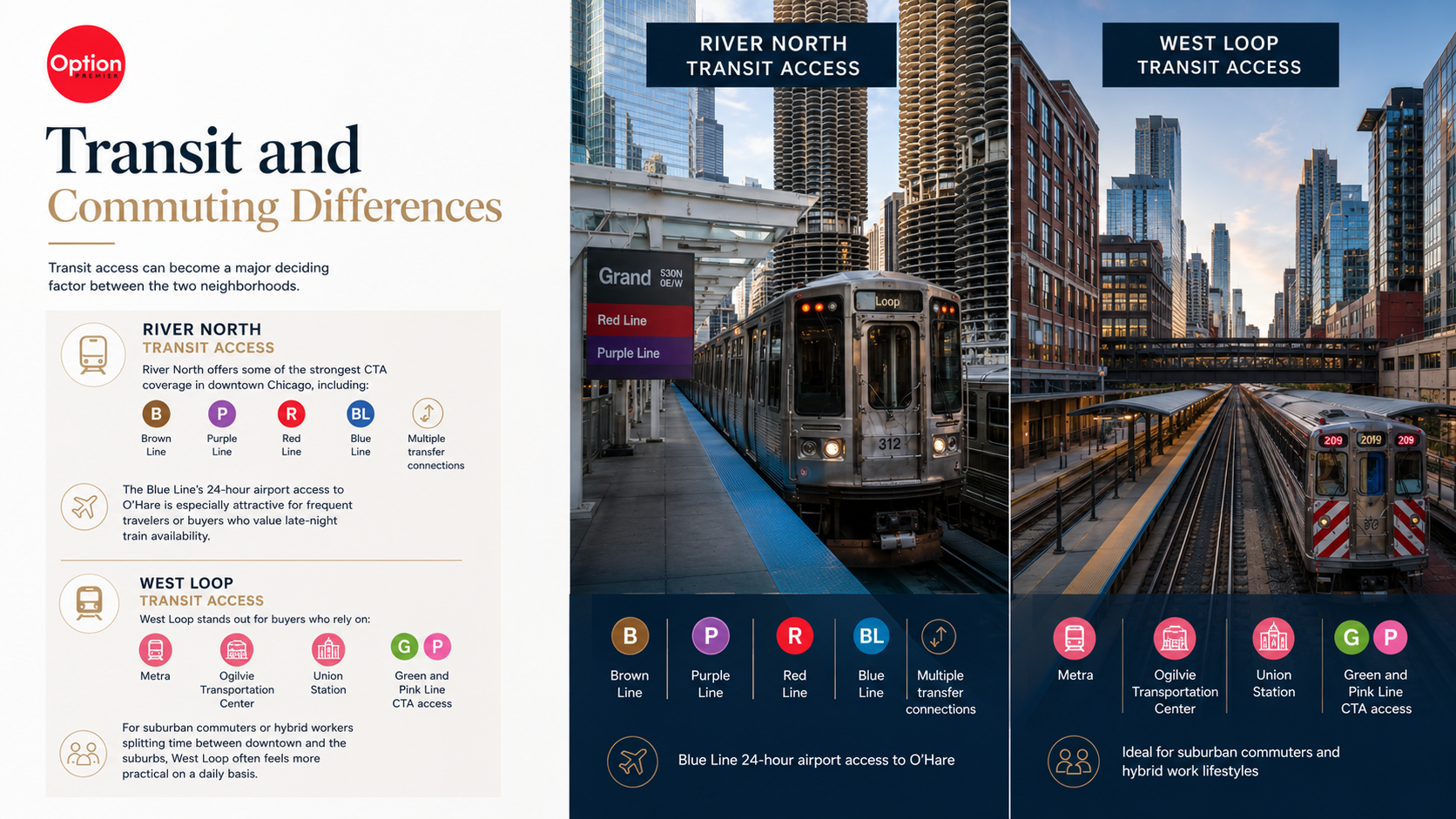
Transit access can become a major deciding factor between the two neighborhoods.
River North Transit Access
River North offers some of the strongest CTA coverage in downtown Chicago, including:
Brown Line
Purple Line
Red Line
Blue Line
Multiple transfer connections
The Blue Line’s 24-hour airport access to O’Hare is especially attractive for frequent travelers or buyers who value late-night train availability.
West Loop Transit Access
West Loop stands out for buyers who rely on:
Metra
Ogilvie Transportation Center
Union Station
Green and Pink Line CTA access
For suburban commuters or hybrid workers splitting time between downtown and the suburbs, West Loop often feels more practical on a daily basis.
The Real Question Buyers Should Ask
Instead of asking, “Which neighborhood is better?” the better question is:

Click to Download your FREE Checklist!
How do you want your week to feel?
If your ideal lifestyle includes skyline views, nightlife, riverfront activity, and classic downtown living, River North probably checks more boxes.
If your ideal routine revolves around restaurants, coffee shops, loft architecture, and a slightly more neighborhood-oriented feel, West Loop may end up feeling like the better long-term fit.
The best condo purchase usually happens when your lifestyle priorities, commute, and budget all align with the type of inventory that actually exists in the neighborhood.
Planning to Relocate in Chicago?
Browse available homes across Chicago, or connect with the Cory Tanzer Group at Option Premier for local expert guidance on living in Chicago.
More to Explore: Chicago Condo Buildings With Incredible Views of The Bean
Looking for homes, condos, or investment opportunities in Chicago?
Start Your Search With Option Premier
Visit Option PremierStay Connected
Ranked among the top 1% of real estate teams in the Chicagoland market, Cory Tanzer and the Cory Tanzer Group are experts in helping buyers and sellers navigate today’s market across Downtown Chicago, the North Shore, and the Western Suburbs. Recognized for their neighborhood expertise in areas such as University Village, University Commons, South Loop, and Pilsen, the team helps clients stay one step ahead by understanding where the Chicago market is headed next.
Related Articles