Chicagoland Real Estate Performance Report 2026: Mid-Year Market Trends and Sales Activity

CHICAGO—The Chicago housing market entered 2026 with many of the same forces that shaped the previous year: limited inventory, elevated mortgage rates, and resilient buyer demand. But by mid-year, the market has become increasingly segmented by neighborhood, property type and pricing strategy.
Across Chicagoland, home values continued to appreciate modestly, but the pace of activity varied significantly between the city, downtown condo markets, and high-demand suburban communities. Buyers remained active throughout the first half of the year, although affordability pressures and mortgage rates above 6% created a more selective environment than the ultra-competitive pandemic years.
The result is a market that remains fundamentally supply-constrained, but far more strategic.
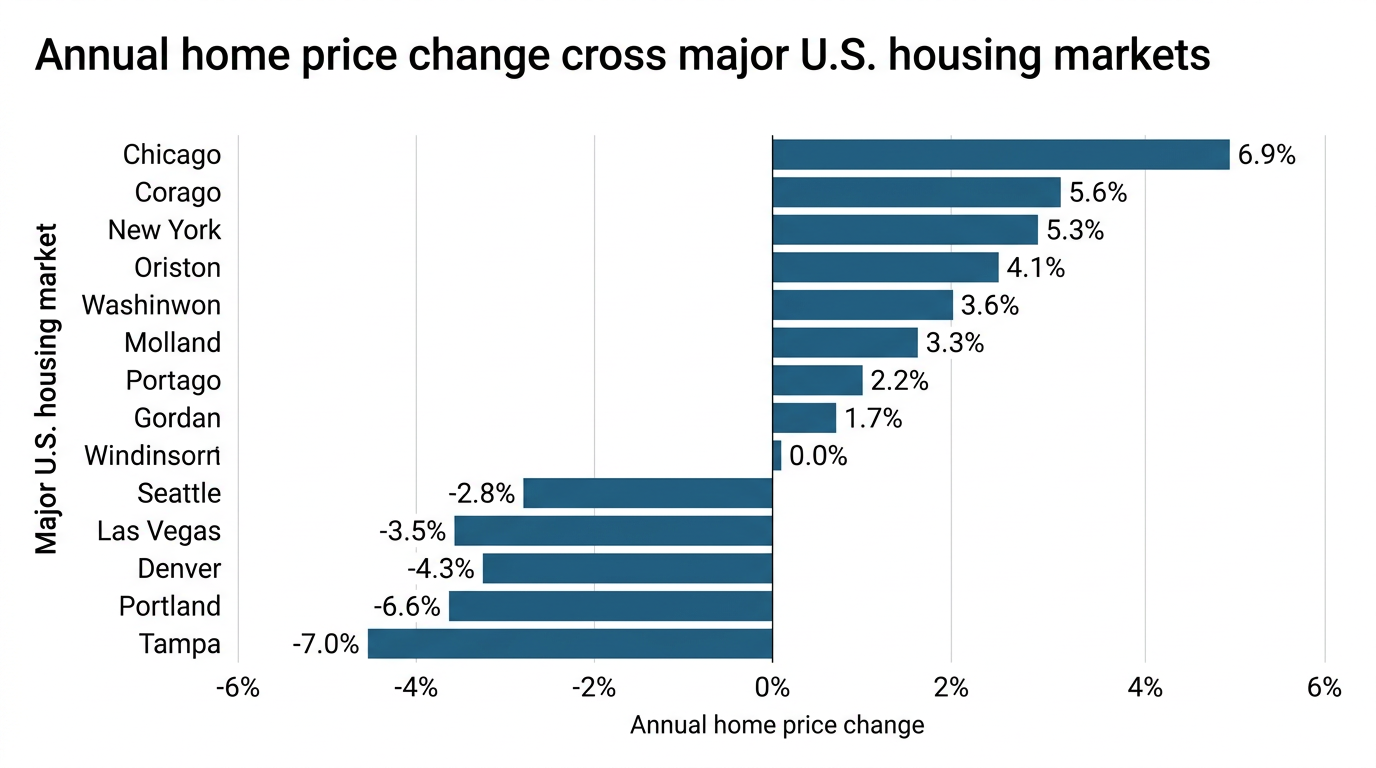
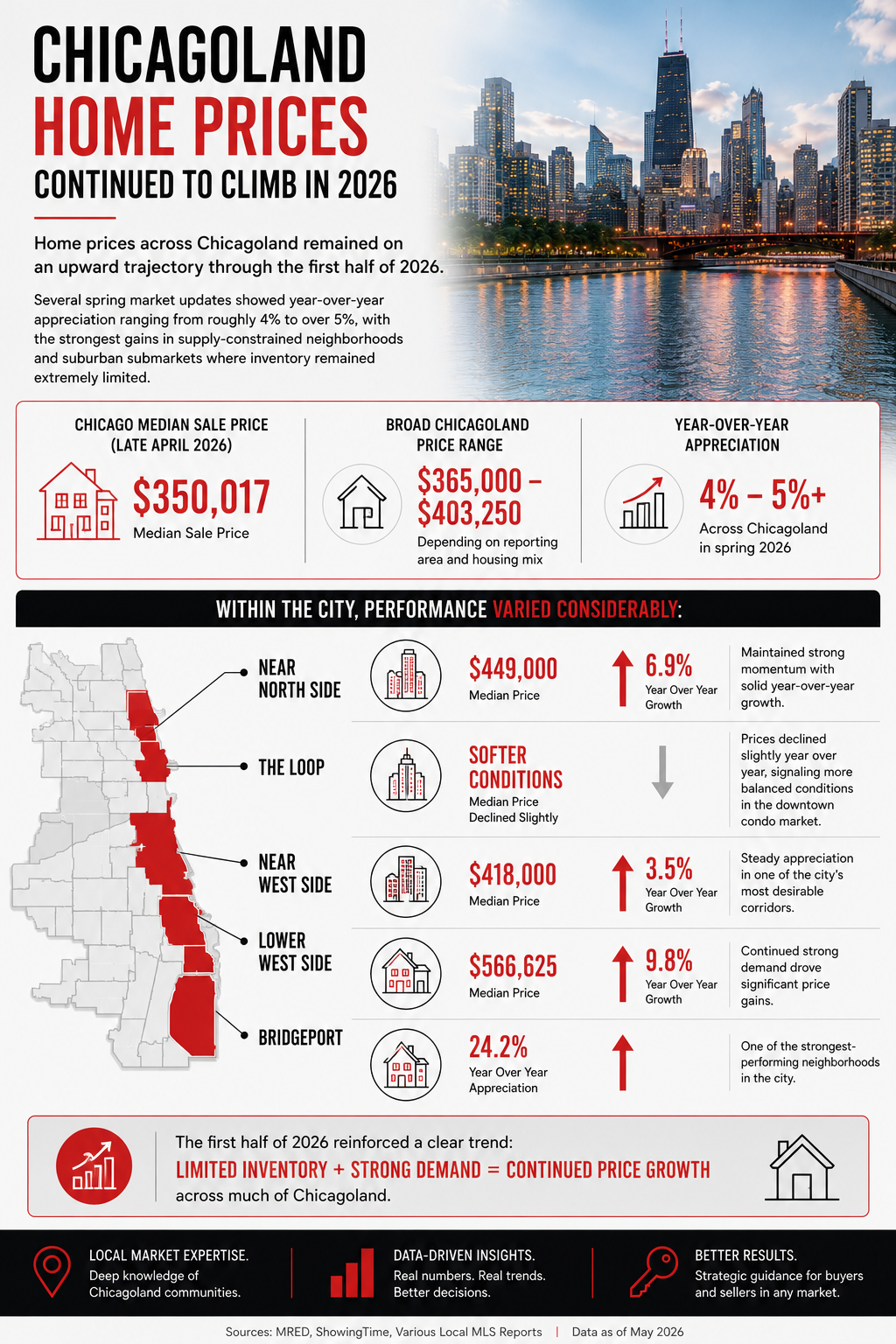
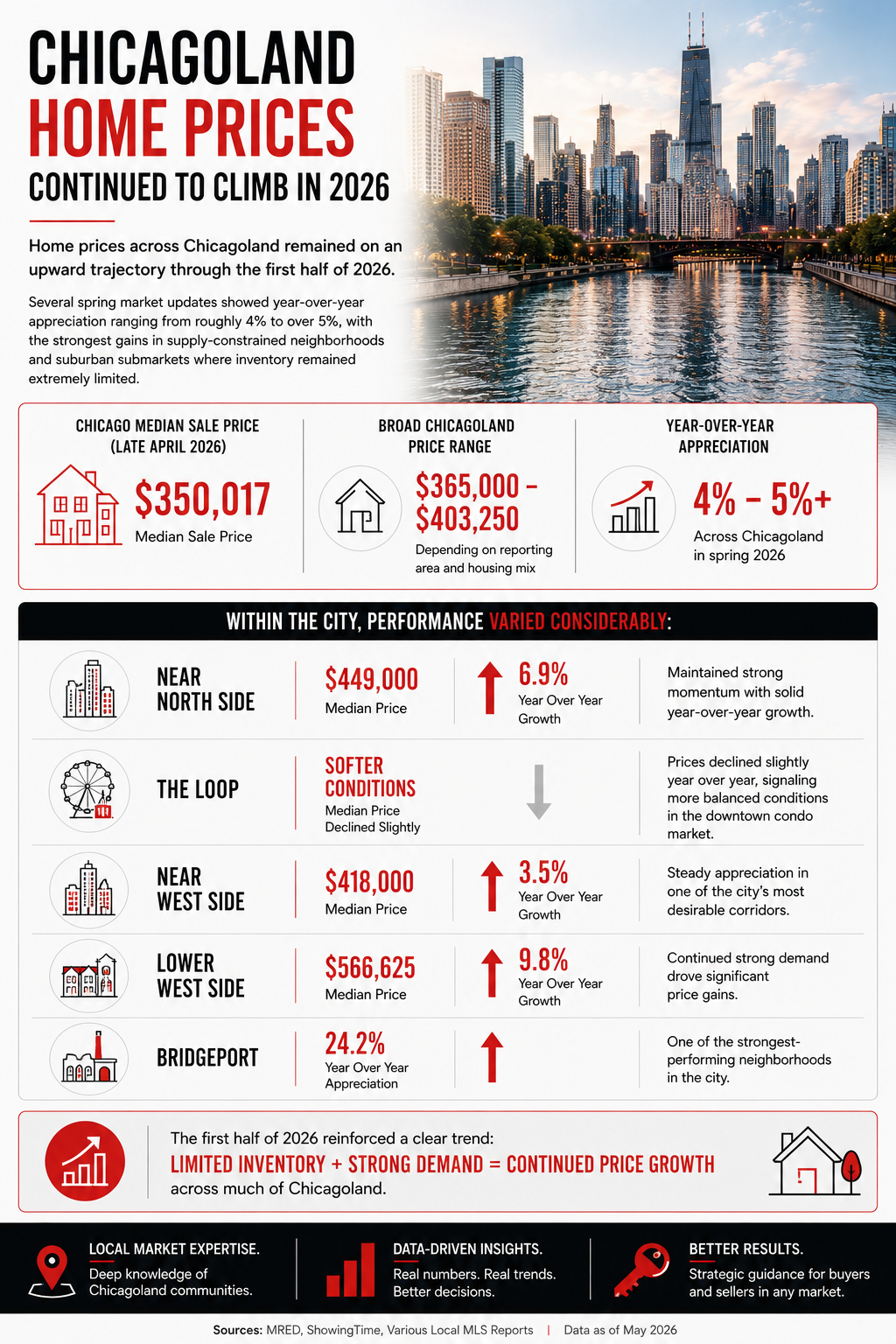
Chicagoland Home Prices Continued to Climb in 2026
Inventory Conditions Stayed Tight Across Chicagoland
Inventory remained one of the defining stories of the 2026 market.
Chicago itself had roughly 4,996 active listings in late April, while broader Chicagoland inventory levels stayed historically constrained. The Chicago metro area reported approximately 2.6 months of supply during the spring market, while suburban Chicagoland tightened even further to nearly 1.5 months of inventory.
Those figures remain well below the 4-to-6-month range generally associated with a balanced housing market.
The inventory shortage continued to support pricing, particularly for:
Move-in-ready homes
Updated properties
Single-family homes in suburban markets
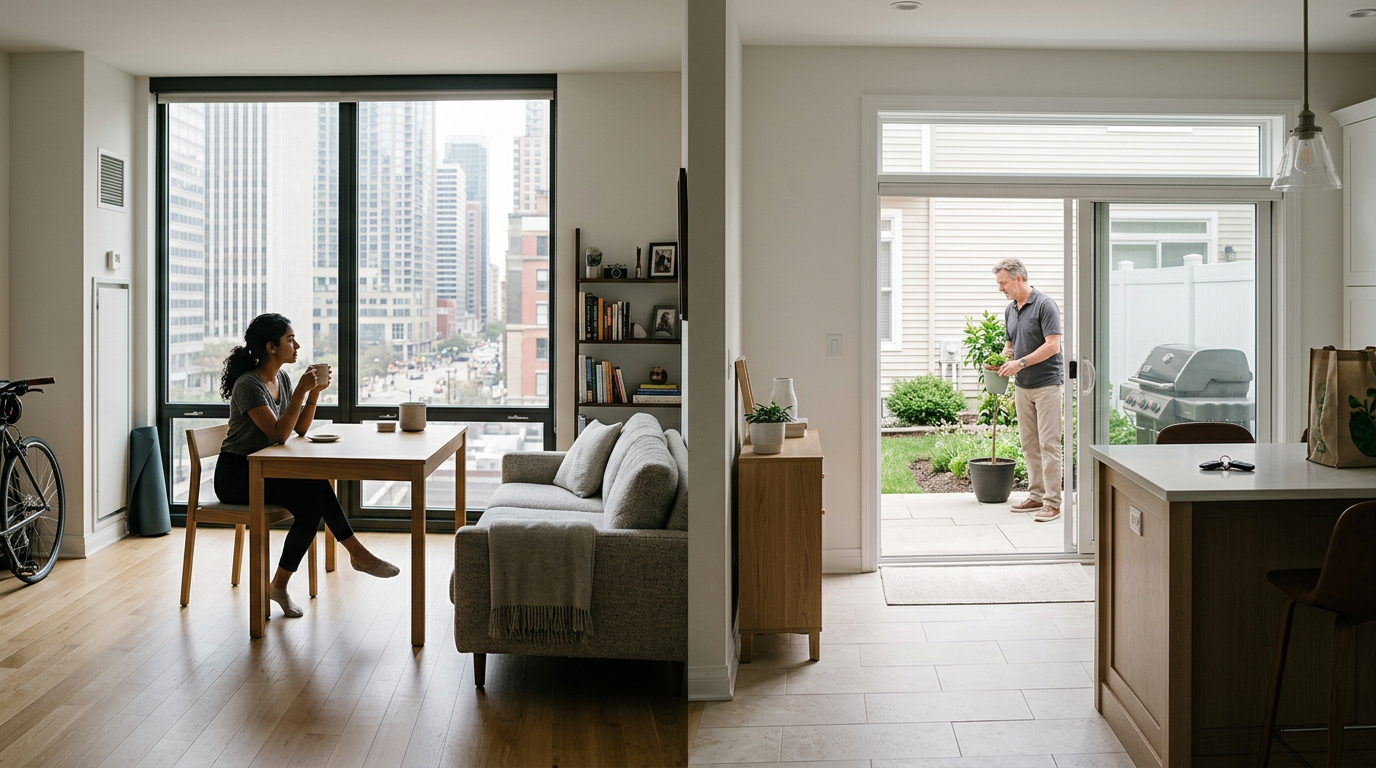
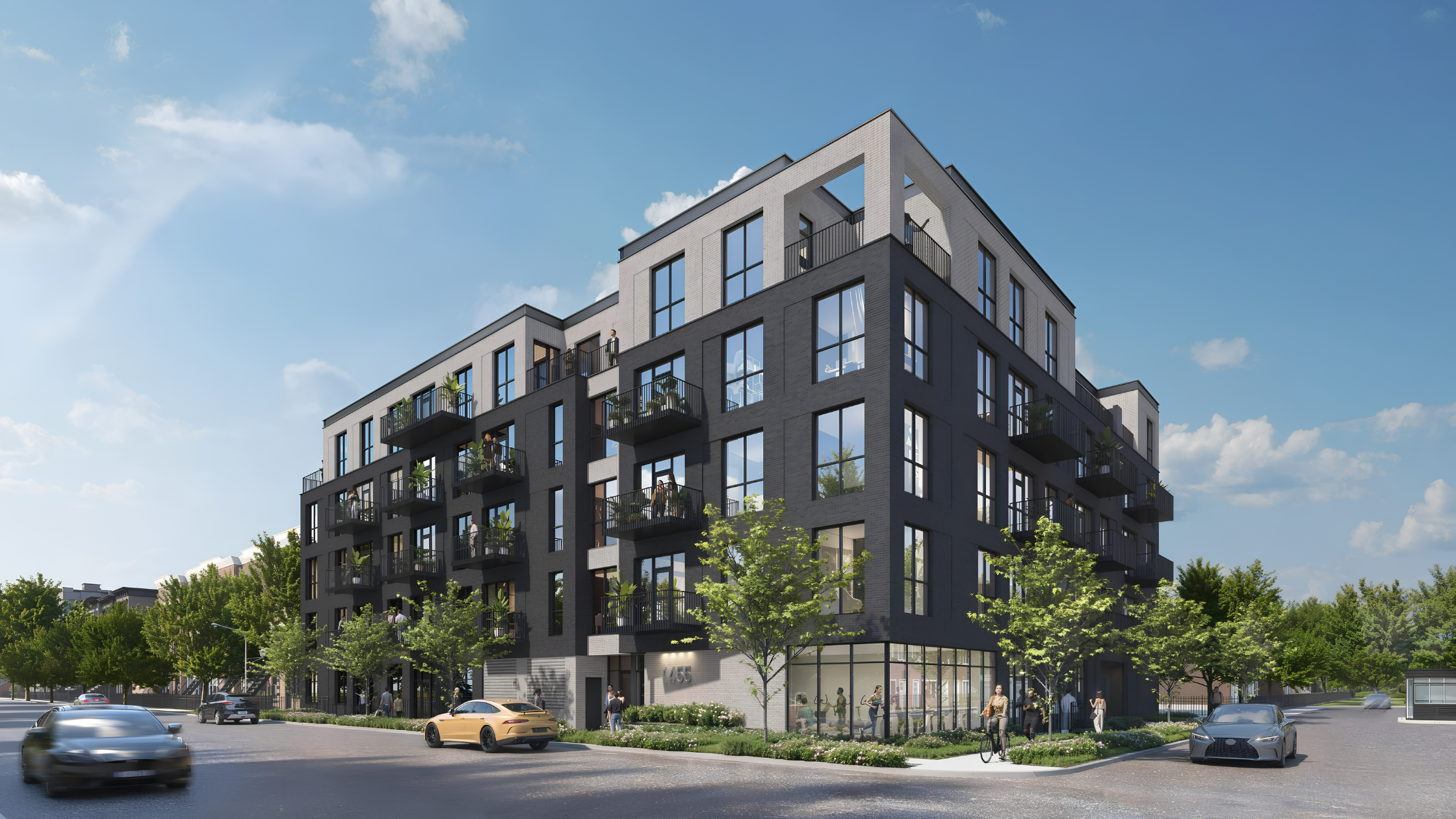
Well-located city condos
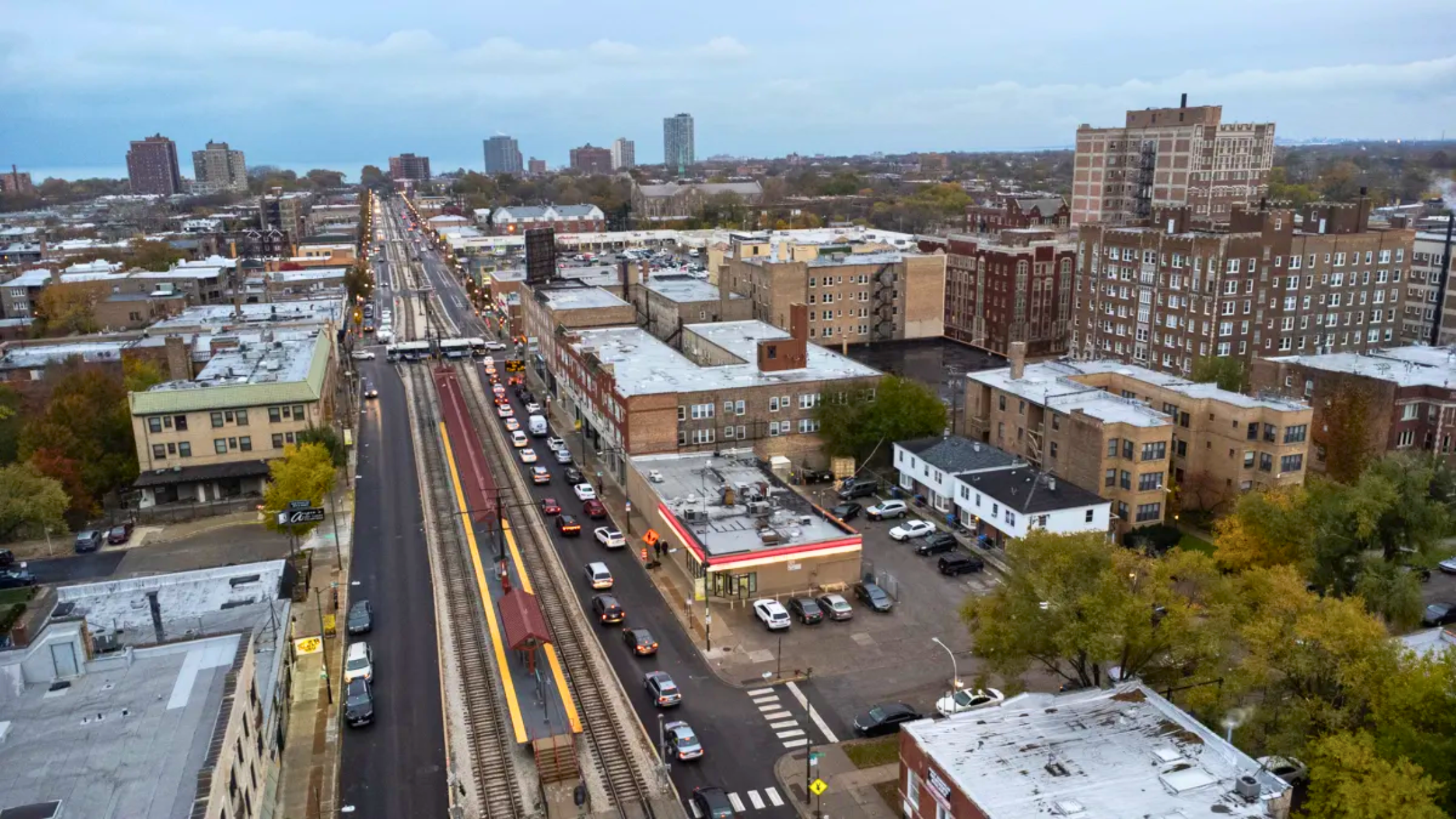
Properties near transit and walkable amenities
Suburban communities such as Naperville, Evanston and DuPage County continued to experience especially tight supply conditions as buyers prioritized space, schools and commuter convenience.
Buyer Demand Shifted Toward Value and Condition
Buyer demand remained healthy throughout the first half of 2026, but the nature of that demand changed noticeably.
Unlike the urgency-driven pandemic market, buyers in 2026 became increasingly selective and payment-conscious. Mortgage rates above 6% pushed many buyers to scrutinize pricing, condition and long-term affordability more carefully.
As a result:
Turnkey homes consistently outperformed
Updated listings attracted stronger competition
Well-priced homes moved quickly
Overpriced properties lingered longer
Negotiation activity increased
Chicago’s median time to pending sat around 10 days overall, but the median age of active listings was closer to 26 days. That split highlighted one of the clearest themes of the year: desirable listings continued to move rapidly, while stale or overpriced inventory struggled to maintain momentum.
Multiple-offer activity also became more selective. Roughly 25% of homes reportedly went pending within 7 days, and among those fast-moving properties, more than half sold above asking price.
The market no longer rewarded every listing equally. Instead, buyers concentrated aggressively on the best-positioned homes.
City vs. Suburbs: The Performance Gap Continued to Widen
North Side and North Shore Remained Resilient
Higher-end North Side and suburban luxury-adjacent markets continued to show stability through mid-year.
The North Shore remained one of Chicagoland’s most resilient premium corridors, with median pricing around $660,000 and annual appreciation near 5.6% in late-2025 reporting trends that carried into early 2026.
Although homes in these markets generally spent longer on market compared to the fastest-moving city listings, buyer demand for quality inventory remained steady.
This reinforced a broader theme throughout Chicagoland: premium, turnkey inventory continued to outperform regardless of price point.
Condo vs. Single-Family Performance
The performance gap between condos and single-family homes became more apparent during the first half of 2026.
Single-family homes, particularly in suburban communities, continued to face intense demand due to limited supply and buyer preference for additional space.
Condo activity remained healthy in many walkable and transit-oriented neighborhoods, but performance varied significantly by:
Building age
HOA structure
Location
Unit condition
Pricing
Well-located and updated condos remained marketable, while dated inventory or oversupplied submarkets often required price adjustments and longer marketing periods.
What to Watch During the Second Half of 2026
Heading into the second half of the year, several key themes are expected to continue shaping the Chicagoland market:
Constrained inventory levels
Elevated but stabilizing mortgage rates
Selective buyer demand
Stronger performance for turnkey inventory
Continued suburban competition
Increased pricing sensitivity among buyers
While conditions have become more balanced compared to prior years, the market still does not reflect a broad buyer’s market.
Instead, Chicagoland remains a market where strategy, pricing and location continue to drive performance.
Explore Homes Across Chicagoland
As the market continues evolving throughout 2026, buyers and sellers who stay informed will be positioned to make stronger real estate decisions.
Looking for homes, condos, or investment opportunities in Chicago?
Start Your Search With Option Premier
Visit Option PremierYou can also read more local market insights here:
Chicago Housing Market Mid-Year Update 2026: What Buyers and Sellers Need to Know
Current Mortgage Rates and What They Mean for Chicago Buyers and Sellers
Chicago Housing Market January 2026: Prices, Inventory, and Mortgage Rates
Stay Connected
Ranked among the top 1% of real estate teams in the Chicagoland market, Cory Tanzer and the Cory Tanzer Group are experts in helping buyers and sellers navigate today’s market across Downtown Chicago, the North Shore, and the Western Suburbs. Recognized for their neighborhood expertise in areas such as University Village, University Commons, South Loop, and Pilsen, the team helps clients stay one step ahead by understanding where the Chicago market is headed next.
Related Articles