Most Asked-About Neighborhoods in Chicago Right Now: 8 Areas Buyers Keep Comparing
Ask five Chicago buyers where they are looking and you probably will not get the same answer five times.
One wants West Loop because they can walk to Fulton Market. Another wants South Loop because they would rather have the lake and Grant Park nearby. Someone priced out of Logan Square starts asking about Humboldt Park. A downtown buyer suddenly realizes $400,000 can look very different in Uptown or Bronzeville.
That is what makes Chicago neighborhood searches interesting right now.
There is no official citywide database measuring which neighborhood gets asked about most, so this is not a fabricated ranking of buyer inquiries. Instead, we looked at the latest housing-market competition, pricing, buyer-search trends, and development activity to identify the Chicago neighborhoods generating some of the most compelling buyer conversations heading into fall.
And some of the answers are probably not the neighborhoods you would expect.
| Neighborhood | Recent Median Sale Price* | YoY Change | What Buyers Are Asking |
|---|---|---|---|
| West Loop | $460K | -11.9% | Is there finally an opening for buyers? |
| South Loop | $386K | -3.7% | Is this the best downtown value? |
| Logan Square | $715K | +8.1% | Is it still worth the premium? |
| Lake View | $601K | +9.2% | Can I get neighborhood life and the lake? |
| Lincoln Park | $930K | +22.3% | Why is competition still so intense? |
| Uptown | $443K | +14.4% | Is this the North Side neighborhood buyers overlooked? |
| Bronzeville | $336K | +13.5% | How much upside is left? |
| Humboldt Park | $550K | +8.3% | Is buyer attention shifting west? |
Median prices are based on Redfin's rolling three-month data ending July 2026 for all home types and should not be treated as the expected price of a specific condo, townhouse, or single-family home.
West Loop and Fulton Market: “Is It Finally Easier to Buy Here?”
West Loop still comes up constantly, but the question has changed.
For years, buyers primarily asked how much they would need to spend to get into the neighborhood. Now more are looking at whether slower price statistics and additional inventory are creating opportunities.
According to Redfin's current West Loop market data, the rolling median sale price was approximately $460,000, down 11.9% year over year. But price per square foot actually increased about 4.1%, which is an important reminder that a falling neighborhood median does not automatically mean individual West Loop condos became 12% cheaper. Changes in the mix of homes selling can move that number significantly.
Meanwhile, Fulton Market continues adding new development. The latest Fulton Market development pipeline includes a recently approved condo tower at 23 S Sangamon, planned with 70 residences, along with additional residential projects around Morgan, Racine, Kinzie, and Washington.
For buyers, West Loop remains less about finding the cheapest condo and more about choosing the right micro-location, building, HOA structure, parking arrangement, and exposure.
Our West Loop lifestyle guide goes deeper into how different parts of the neighborhood actually feel.
South Loop: “Why Does My Budget Go Further Here?”
South Loop continues to attract buyers who want downtown access but start questioning whether they need to pay West Loop or Near North Side pricing.
Current South Loop housing data show a median sale price around $386,000, down 3.7% year over year through July. Sales volume actually increased 4.8%, and about 56% of homes sold above asking, so this is not simply a neighborhood where sellers suddenly lost leverage.
What makes South Loop compelling is what that price can potentially put near your front door: Grant Park, Museum Campus, Lake Michigan, the Lakefront Trail, CTA service, Printer's Row, Prairie District high-rises, lofts, and larger condo inventory.
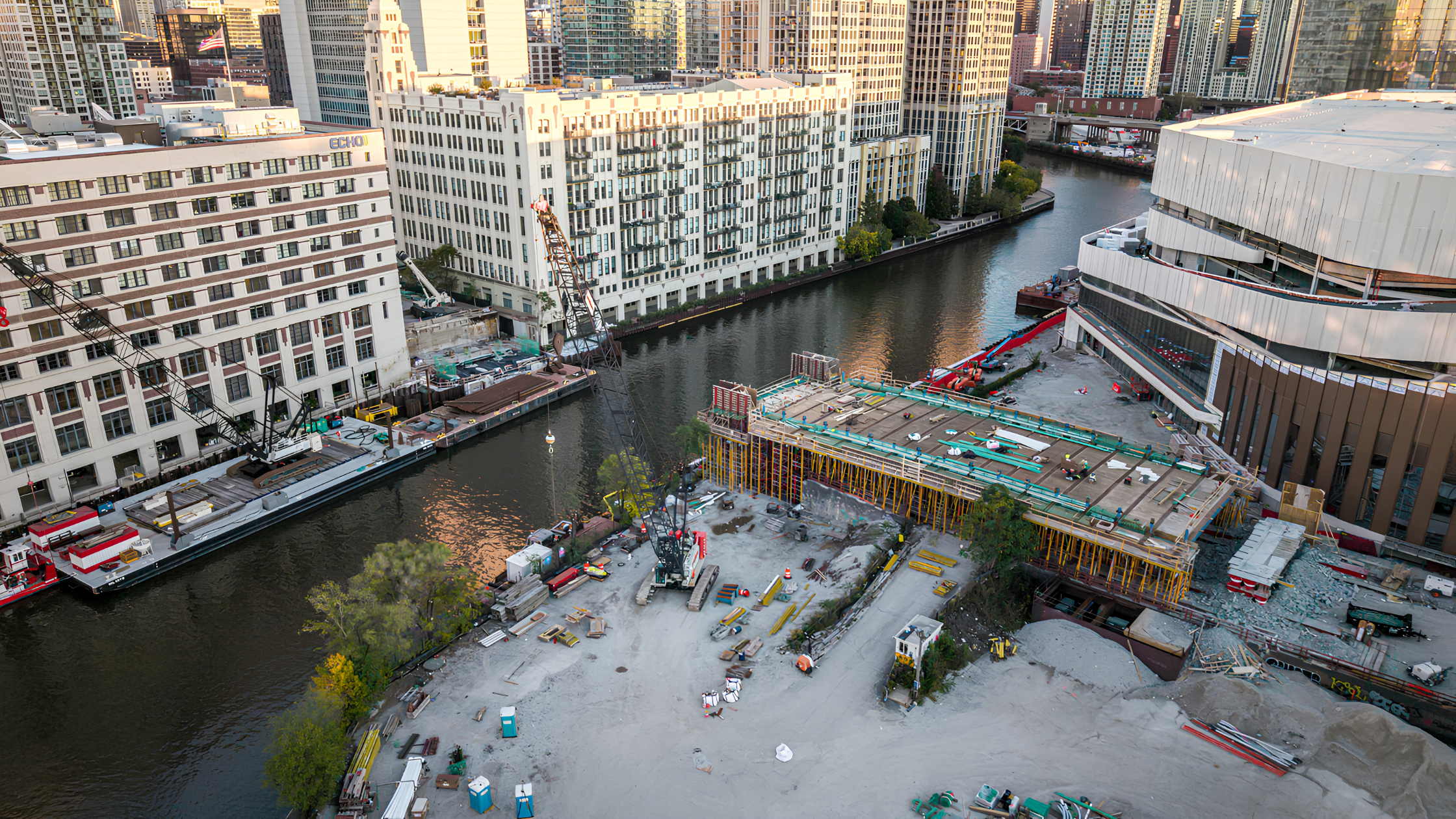
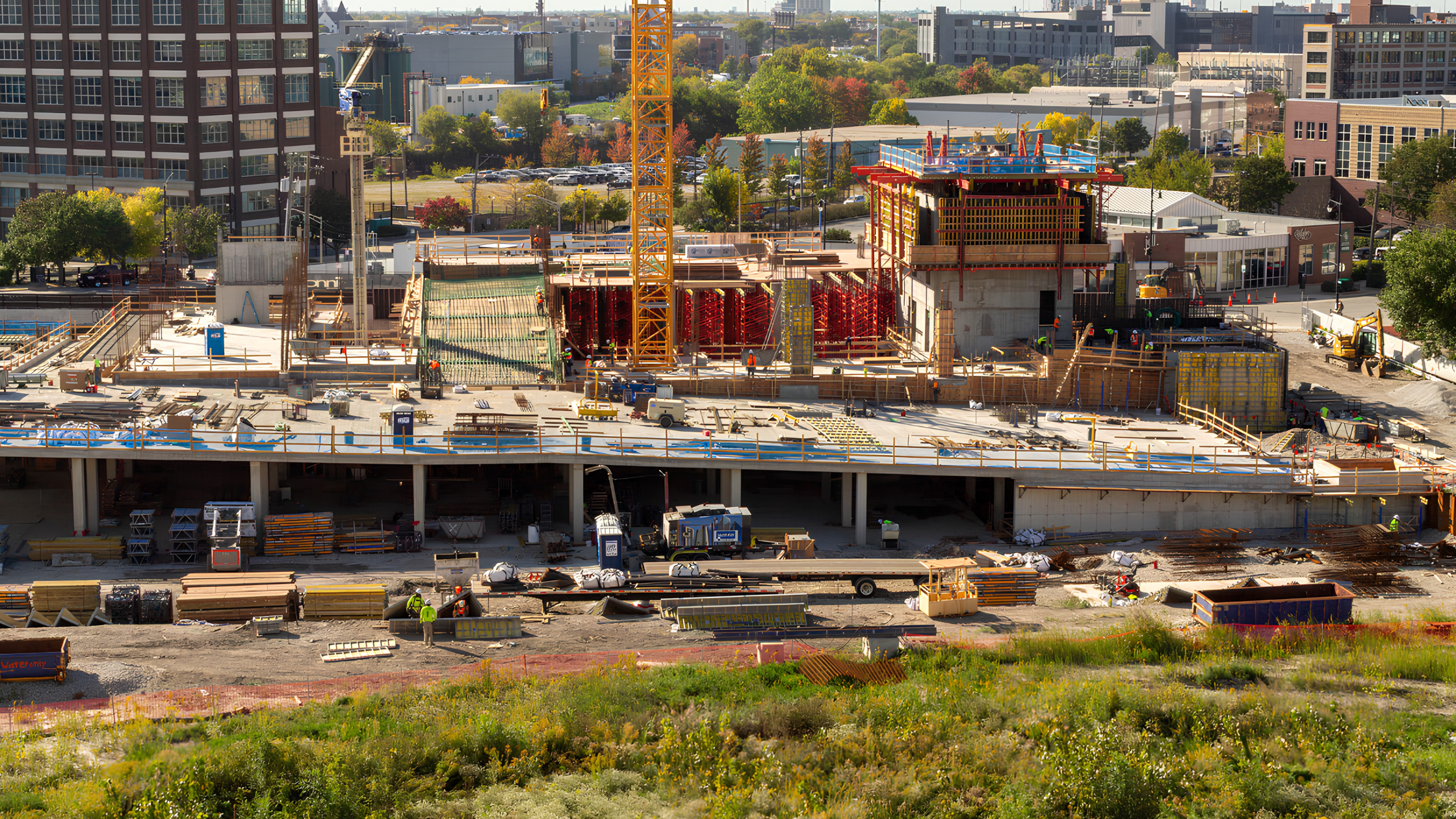
There is development happening too. Construction at 1010 S Wells, part of the larger Riverline site, had reached its 15th floor by August. The project adds hundreds of apartments and new riverfront public space to the western side of South Loop.
Buyers comparing these two downtown markets should start with our South Loop vs. West Loop guide.
Logan Square: “Has Logan Square Become a Luxury Market?”
This is one of the biggest changes in how buyers talk about Logan Square.
The neighborhood is no longer automatically the affordable alternative to Lincoln Park, Bucktown, or Wicker Park.
Current Logan Square market data put the median sale price at approximately $715,000, up 8.1% from a year earlier. More strikingly, 71.4% of homes sold above asking, and the average sale-to-list ratio reached roughly 105%.
That tells buyers something important.
The right Logan Square property can still produce serious competition.
The neighborhood is also continuing to evolve around Milwaukee Avenue, with new residential projects proposed or moving forward and recent investment around public spaces and transit-oriented development. Current Logan Square development activity includes projects on Armitage, Milwaukee, Mozart, and other corridors.
The question is no longer whether Logan Square is popular.
It is whether the specific block and property justify today's price.
Lake View: “Can I Get the Lake and Still Feel Like I Live in a Neighborhood?”
This is where Lake View remains difficult to replace.
Buyers can be close to Lake Michigan, Belmont Harbor, neighborhood restaurants, CTA service, Wrigleyville, Lakeview East, and Southport without choosing a downtown high-rise environment.
That combination is translating into strong competition.
Lake View's latest market numbers show a median sale price of approximately $601,000, up 9.2% year over year. About 61.5% of homes sold above asking, with the overall market classified as very competitive.
But Lake View is another neighborhood where the median can be misleading.
A single-family home near Southport and a one-bedroom lakefront high-rise condo are technically part of the same broader market but may have almost nothing in common financially.
The neighborhood is also still adding housing. Recent Lakeview development activity includes new projects around Belmont, Sheffield, Halsted, Clark, and Irving Park.
For condo buyers specifically, building choice often matters as much as neighborhood choice.
Lincoln Park: “Why Are Buyers Still Paying This Much?”
Lincoln Park provides one of the clearest examples of how competitive desirable Chicago neighborhoods remain.
The latest Lincoln Park market data show a rolling median sale price of approximately $930,000, up 22.3% year over year.
About 63.8% of homes sold above asking, and the average property sold at roughly 105% of list price.
That does not mean every Lincoln Park condo suddenly costs close to $1 million.
The neighborhood includes everything from one-bedroom lakefront condos to multi-million-dollar single-family homes. But it does show how heavily buyers are competing for its combination of parks, lakefront access, walkability, restaurants, transit, residential streets, and housing variety.
The mistake would be treating all of Lincoln Park as equally expensive or equally competitive.
A high-rise condo near the lake, vintage walk-up, newer boutique condo, and single-family home west of Halsted can behave like four completely different markets.
Uptown: “Why Is This Market Suddenly So Competitive?”
Uptown may be the surprise on this list.
Current Uptown housing data show a median sale price of roughly $443,000, up 14.4% year over year.
Even more notable, about 70.1% of homes sold above asking, and the average sale-to-list ratio reached approximately 107%.
Why the interest?
Uptown can give buyers Montrose Beach, Montrose Harbor, lakefront access, Red Line service, historic architecture, high-rises, vintage condos, Buena Park, and proximity to Lake View at a price point that can still look more approachable than Lincoln Park or Lake View.
It is also seeing continued investment. Development activity includes new housing and retail projects around Sheridan and other major corridors.
For buyers prioritizing the North Side and Lake Michigan, Uptown deserves a much more serious comparison than it did several years ago.
Bronzeville: “Is This Still a Value Play?”
Bronzeville is increasingly part of the conversation when buyers want more space, proximity to the lake and downtown, historic housing, newer construction, or a lower entry price than many North Side neighborhoods.
Current Bronzeville housing data put the median sale price around $336,000, up 13.5% year over year, with sales up 17.1%.
That price movement is happening alongside substantial development activity.
Chicago's Plan Commission recently approved a major mixed-use project around 39th and State, with plans that include hundreds of residences plus retail and a grocery component. Current Bronzeville development coverage also shows residential, cultural, and community projects progressing elsewhere in the neighborhood.
The important buyer question is not simply:
“Will Bronzeville go up?”
Nobody can guarantee that.
A better question is:
“Which part of Bronzeville fits my budget and lifestyle today, and what development is actually planned around the property?”
Humboldt Park: “Is Buyer Attention Moving West?”
This neighborhood deserves to be here because current search data actually support the attention.
In an August 2026 analysis of listing-view growth and market competition, Redfin ranked Humboldt Park as the hottest Chicago-area neighborhood of 2026. The ranking was based on growth in listing views combined with Redfin's competitiveness metrics.
More recent July market data show the broader Humboldt Park neighborhood with a median sale price around $550,000, up 8.3% year over year. Nearly 49% of homes sold above asking.
This is a good reminder that buyer demand does not simply move from one famous neighborhood to another.
As Logan Square, Bucktown, and other nearby areas become more expensive, buyers naturally start looking at surrounding neighborhoods for more space or a different entry point.
But Humboldt Park is large, and pricing can change significantly depending on the exact location, property type, and proximity to the park itself.
This is another place where searching by neighborhood name alone is not enough.
Which Chicago Neighborhood Should You Actually Choose?
The neighborhood getting the most attention is not automatically the one you should buy in.
A West Loop condo may be right for someone who wants Fulton Market outside the door.
A South Loop buyer might happily trade some nightlife for the lake, parks, and a different price point.
A buyer who wants a vintage three-flat, yard, or multi-unit property may spend more time in Logan Square, Humboldt Park, or Bronzeville than downtown.
And a buyer prioritizing the lake may quickly narrow the search to Lake View or Uptown.
The Cory Tanzer Group at Option Premier helps buyers compare Chicago at the neighborhood, block, building, and property level, rather than choosing an area simply because it is currently popular.
The goal is not to buy in the neighborhood everyone is talking about.
It is to figure out which neighborhood people will still be talking about after you have figured out where you actually want to live.
More to Explore: Chicago Condo Buildings With Incredible Views of The Bean
Looking for homes, condos, or investment opportunities in Chicago?
Start Your Search With Option Premier
Visit Option PremierStay Connected
Ranked among the top 1% of real estate teams in the Chicagoland market, Cory Tanzer and the Cory Tanzer Group are experts in helping buyers and sellers navigate today’s market across Downtown Chicago, the North Shore, and the Western Suburbs. Recognized for their neighborhood expertise in areas such as University Village, University Commons, South Loop, and Pilsen, the team helps clients stay one step ahead by understanding where the Chicago market is headed next.
Related Articles