Before You Move to Chicago, Ask These 7 Questions About the Neighborhood
Choosing where to live in Chicago gets complicated quickly.
A neighborhood can look perfect after scrolling through restaurant guides and apartment photos but feel completely different once you are actually commuting from it on a Tuesday morning, grocery shopping in January, looking for parking at 8 p.m., or trying to get to O’Hare for a 6 a.m. flight.

That is why we would not start a Chicago relocation search by asking, “What is the best neighborhood?”
We would start with a different question:
What does your normal week actually look like?
Chicago is a city where a few blocks can change the housing stock, train access, noise level, restaurants, green space, and even how convenient daily errands feel. Before you sign a lease or make an offer, these are the seven questions worth answering.
1. What Does My Tuesday Morning Commute Actually Look Like?
Do not measure a Chicago commute only by miles.
A home six miles from work with a direct CTA connection may make your routine easier than a property three miles away that requires a bus, transfer, and a long walk.
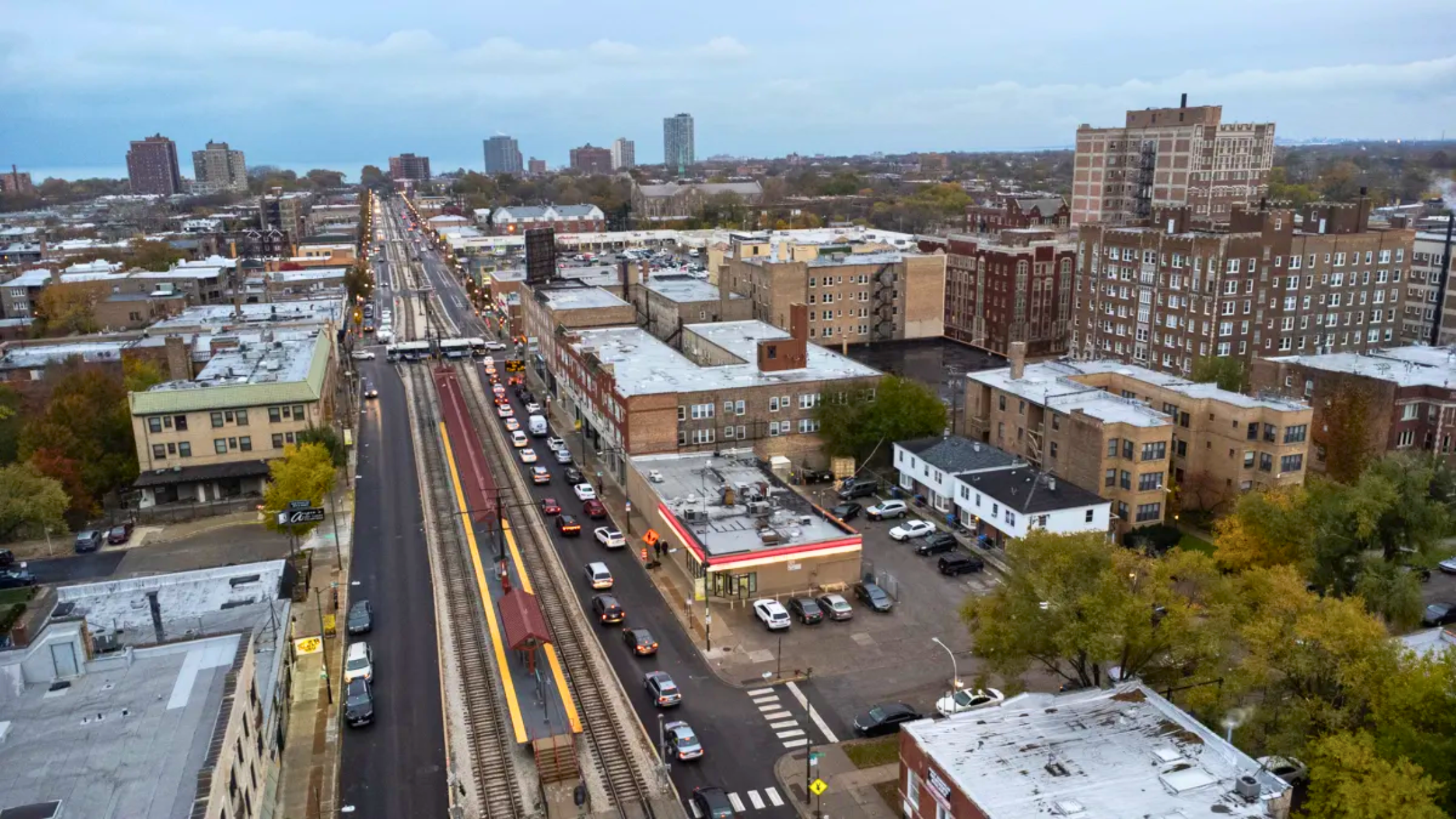
For example, someone flying frequently for work may value Blue Line access differently than someone commuting into the Loop every morning. The CTA's Red and Blue Lines operate 24 hours a day, and the Blue Line provides direct rail service between downtown and O'Hare.

A suburban commuter may care much more about reaching Ogilvie Transportation Center or Union Station, which can make parts of the West Loop especially practical.
Someone working near Michigan Avenue may find River North or Streeterville convenient on paper, but a South Loop resident near Roosevelt may have direct access to the Red, Orange, and Green Lines.
Before choosing a neighborhood, map the commute you will actually make at the time you will actually make it.
Better yet, ride it.
Our comparison of South Loop vs. West Loop shows why two neighborhoods that both look “close to downtown” can produce very different daily routines.
2. What Can I Actually Reach Within a 10-Minute Walk?
“Walkable” is too broad to be useful.
The better question is what you can reach on foot from the exact address you are considering.
If you cook regularly, how far is the grocery store? If you have a dog, where is the nearest useful green space rather than simply a landscaped plaza? If you work from home, are there coffee shops or coworking spaces nearby? If you do not own a car, can you reach a pharmacy, gym, dry cleaner, and train station without turning every errand into a 30-minute trip?
This is where Chicago neighborhoods begin separating themselves.
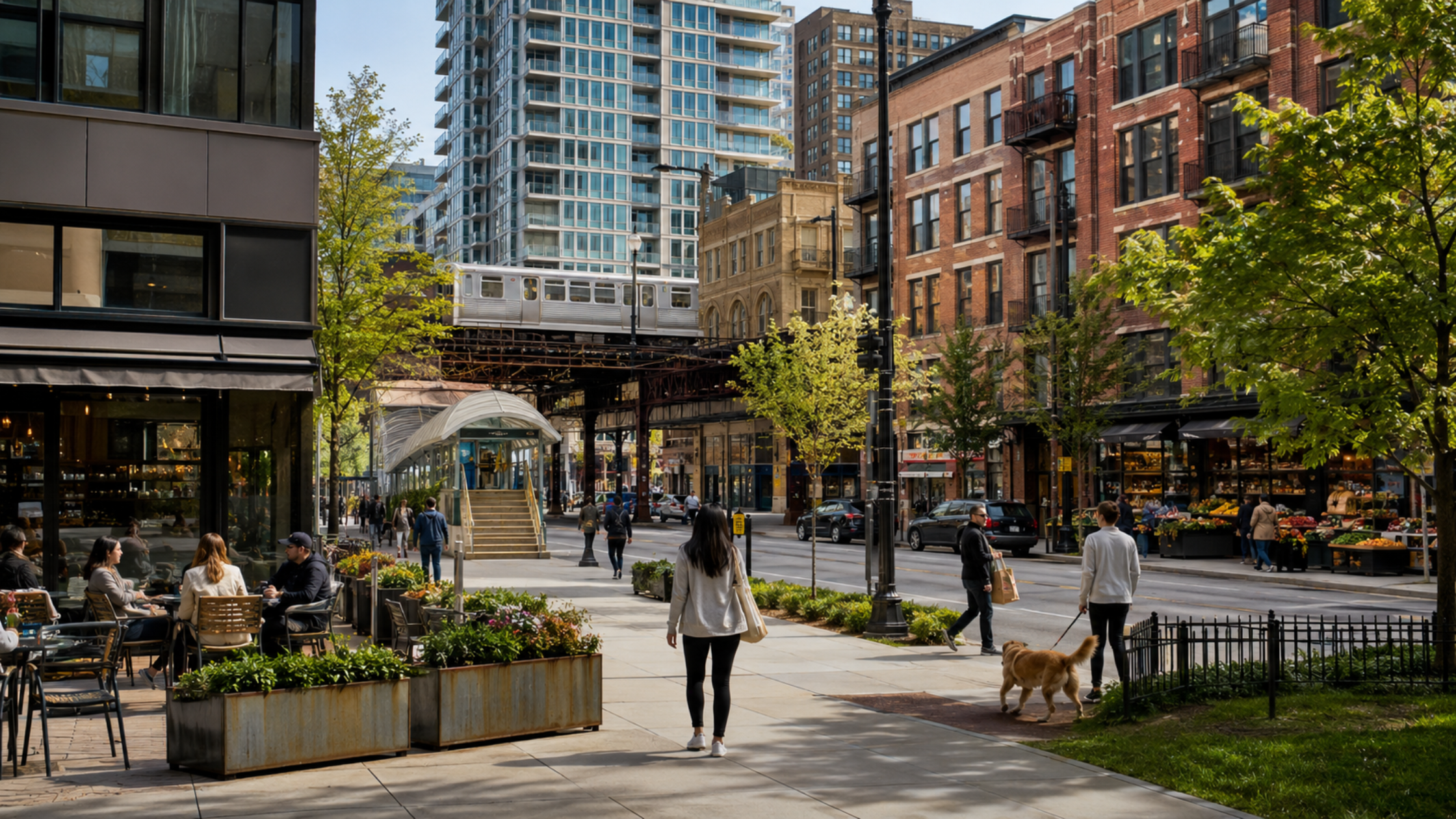
In the West Loop, living near Mary Bartelme Park creates a different routine from living farther north in Fulton Market.
In the South Loop, a condo near Roosevelt Road can put groceries, CTA service, Grant Park, and everyday retail close together, while a residence farther east may trade some convenience for better access to the lakefront and Museum Campus.
In River North, you may have restaurants and nightlife immediately outside your door but need to decide whether that same activity is something you want every night of the week.
If you are considering downtown specifically, our guide to what living in Downtown Chicago is really like breaks down how those differences play out across River North, Streeterville, South Loop, West Loop, and the Loop.
3. Does the Housing in This Neighborhood Match How I Want to Live?
Sometimes buyers choose the neighborhood first and discover later that they do not actually like the homes available there.
That is backwards.
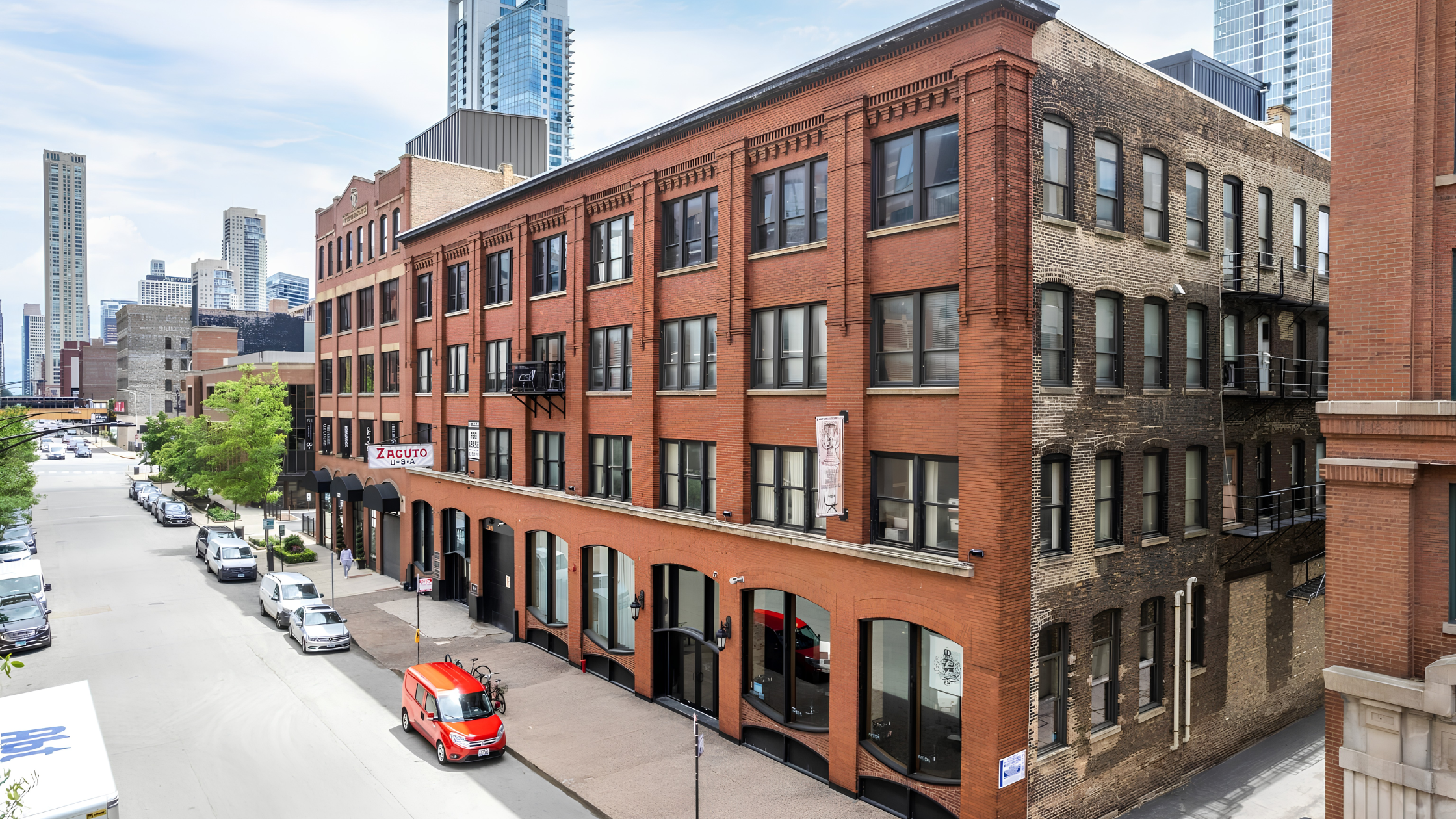
The West Loop is one of Chicago's strongest markets for converted warehouses, timber lofts, concrete lofts, boutique condos, and newer luxury construction.
River North provides far more traditional high-rise inventory, including full-service buildings with door staff, pools, fitness centers, river views, and skyline exposure.
South Loop offers everything from glass high-rises and Printer's Row lofts to townhomes and larger condo communities.
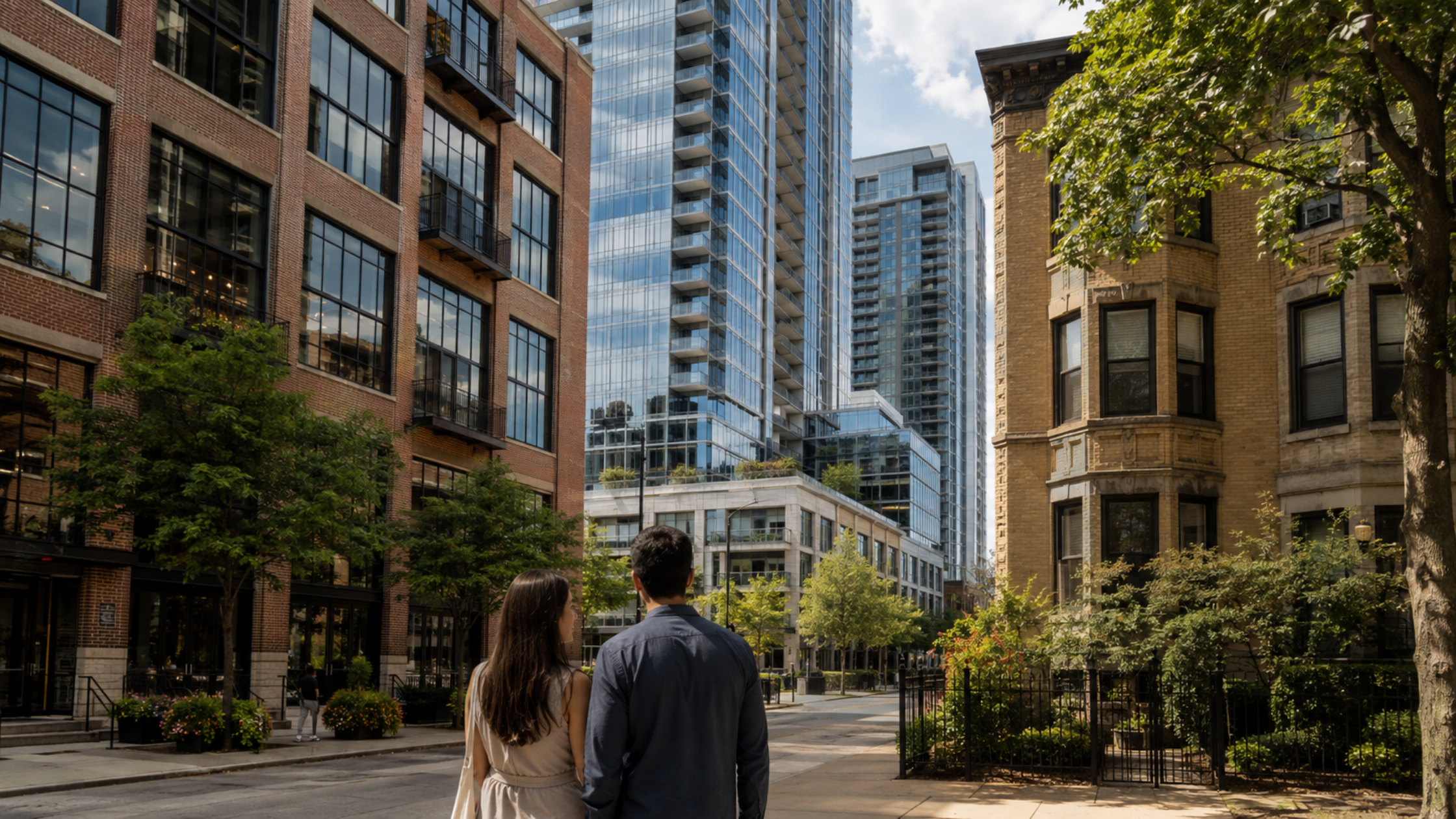
Move farther into neighborhoods like Lakeview, and vintage courtyard buildings, three-flats, walk-ups, and smaller condo associations become much more common.
The property type affects much more than aesthetics.
A loft may give you 12-foot ceilings and exposed brick but have partially enclosed bedrooms. A full-service high-rise might provide a pool and door staff but come with a substantially higher monthly assessment. A vintage walk-up could offer more neighborhood character but no elevator or garage parking.
Before falling in love with a neighborhood, make sure its housing inventory actually contains the kind of home you want to live in.
Buyers comparing two of Chicago's most popular downtown condo markets can see this clearly in our River North vs. West Loop comparison.
4. What Will Living Here Really Cost Every Month?
The listing price or advertised rent is only the first number.
For condo buyers, Chicago ownership costs can include property taxes, HOA assessments, parking, homeowners insurance, utilities, move-in charges, and potential special assessments.
That can completely change a neighborhood comparison.

A $425,000 condo with a $900 monthly assessment may create a very different budget from a $475,000 condo with a $450 assessment. Likewise, a building with included garage parking is not directly comparable to one where the parking space costs another $30,000 or must be rented separately.
Renters should look beyond base rent as well. Some buildings charge separate amenity fees, utility packages, parking, pet fees, storage fees, application charges, or move-in fees.
We also look at what you are getting for those costs.
A higher assessment may be justified if it includes heat, internet, a pool, door staff, on-site management, fitness facilities, reserves, and extensive building maintenance. Paying less is not automatically a better deal if a smaller association is underfunded.
If you are not sure whether buying immediately makes sense, our guide to renting or buying when relocating to Chicago is a useful place to start.
5. What Does This Exact Block Feel Like at 8 A.M., 6 P.M., and 11 P.M.?
This is one of the most important things online research cannot fully answer.
A block can feel completely different throughout the day.
A street beside offices may be packed during business hours and nearly empty at night. A residential street near restaurants might be quiet Monday through Thursday and busy on weekends. A condo facing an elevated train, fire station, loading dock, nightlife venue, or major intersection may have a very different noise profile than the same building's rear-facing units.
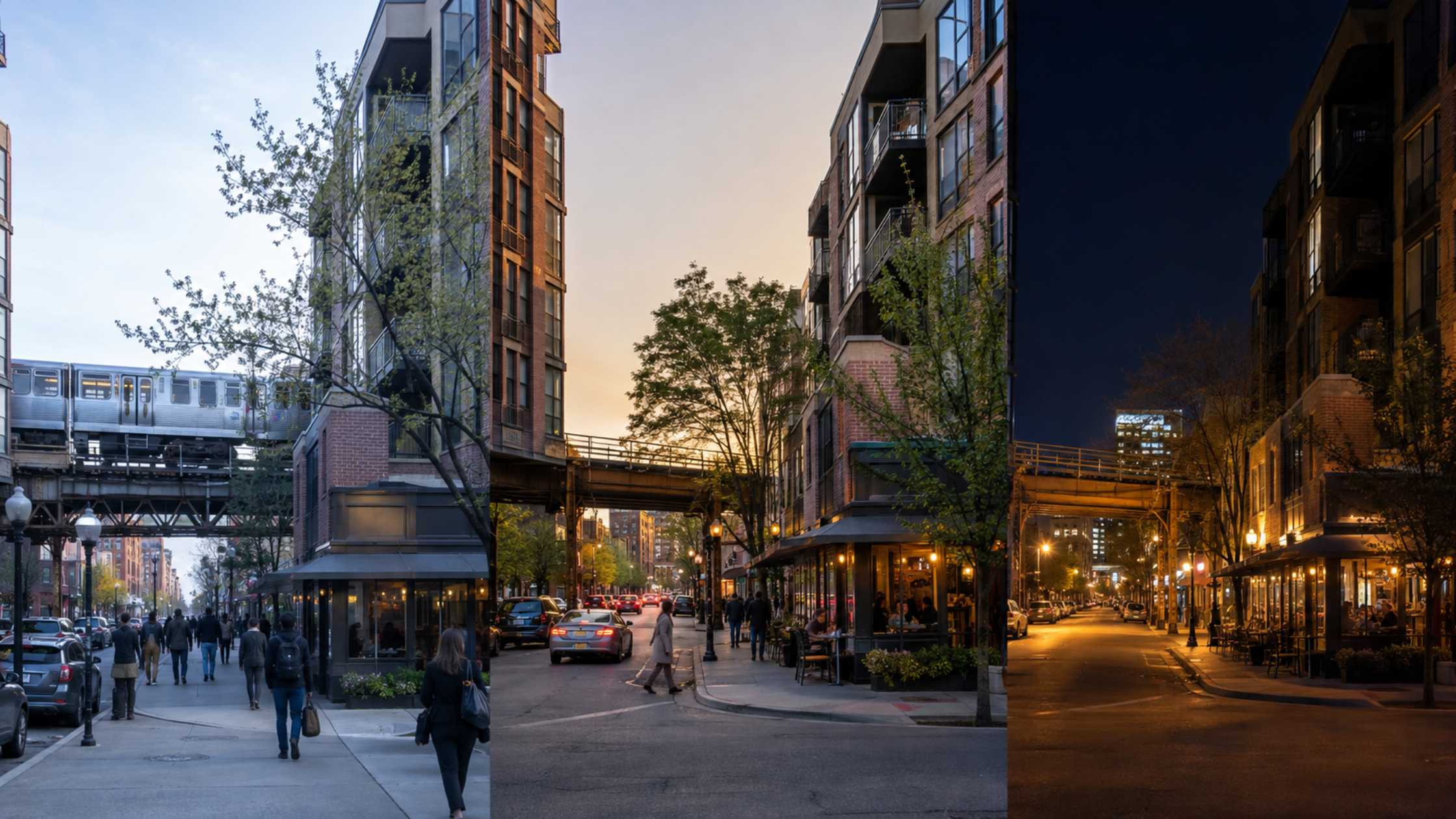
We recommend visiting a serious contender more than once whenever possible.
Walk from the train station after work. Visit on a Saturday evening. Stand outside the building for ten minutes instead of immediately walking into the showing.
For buyers researching reported crime, Chicago provides an official Crime Map through the City of Chicago Data Portal. The data is useful for reviewing reported incidents around an area, but it should be considered alongside an actual visit rather than reducing an entire neighborhood to a single “safe” or “unsafe” label.
The question should always come back to the specific address and how comfortable the location feels for your routine.
6. What Is About to Change Around This Property?
This is one of the questions buyers overlook most often.
Chicago is constantly rebuilding itself.
A surface parking lot outside your window today could eventually become an apartment tower. A quiet commercial corridor may be scheduled for major development. New restaurants, grocery stores, parks, transit improvements, stadium projects, and office developments can change how a neighborhood functions over time.
That can be positive.
New investment may improve walkability, retail options, and neighborhood demand.
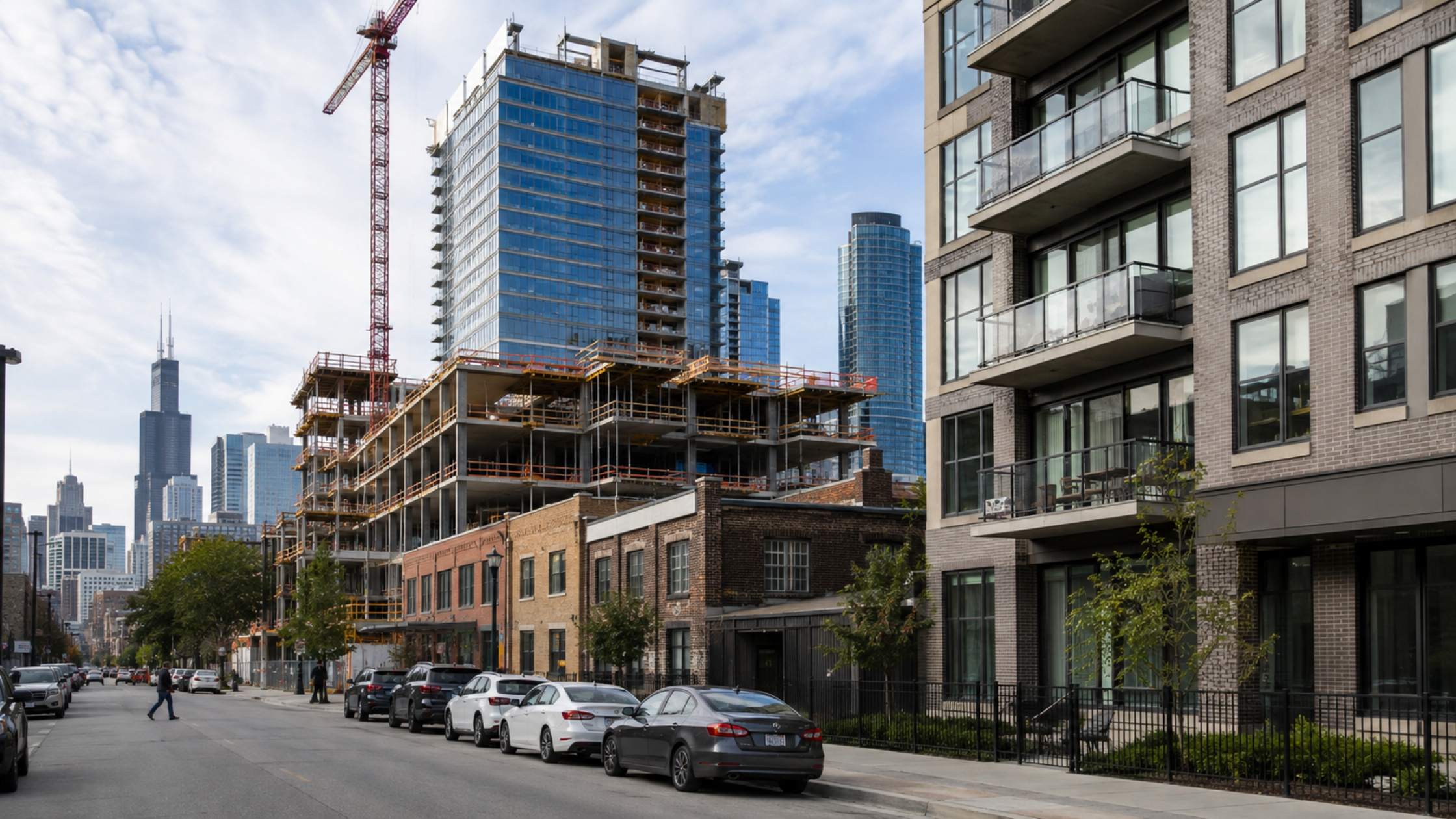
But it can also mean years of construction noise, blocked views, additional traffic, or losing the open exposure that made you love a particular unit.
This matters especially in fast-changing areas such as Fulton Market and the West Loop, where individual blocks have transformed dramatically, and in the South Loop, where large-scale developments continue reshaping portions of the neighborhood.
Before buying, we look beyond the property listing and ask what is happening around it.
Chicago's official Building Permits database lets the public search issued permits and can provide another clue about construction and renovation activity near a property.
For a relocation buyer who is unfamiliar with Chicago, this kind of local context can be just as important as the finishes inside the condo.
7. If This Specific Home Disappeared Tonight, Would I Still Choose This Neighborhood?
This is one of the best tests we use when someone is stuck between locations.
Imagine the condo or apartment you love is suddenly unavailable.
Would you still search in that neighborhood tomorrow?
If the answer is yes, you probably found a location that genuinely fits your life.
If the answer is no, there is a good chance you are choosing the property rather than the neighborhood.

That distinction matters because you can renovate a kitchen, change flooring, repaint a bedroom, or eventually upgrade the bathroom.
You cannot move the building closer to the train.
You cannot relocate the lakefront.
You cannot make Fulton Market quieter at midnight or move a South Loop condo six blocks closer to Grant Park.
The home matters, but the neighborhood is the part of the purchase you can never change.
The Neighborhood Name Is Only the Starting Point
One of the biggest mistakes newcomers make is choosing Chicago based on reputation alone.
Someone tells them West Loop is the hottest neighborhood, so they only look there.
Another person says River North is best for downtown living, so they stop considering anything else.
Or they choose South Loop because it looks closest to the lake on a map without checking how their actual commute will work.
A better search compares neighborhoods against your real routine.
Where do you work? How often do you fly? Do you own a car? Do you want nightlife outside your front door or five minutes away? Would you rather have a doorman and pool or a larger loft with fewer amenities? How often will you actually use the lakefront? What monthly housing cost feels comfortable after taxes, assessments, and parking?
Once those questions are answered, the right part of Chicago usually becomes much clearer.
How The Cory Tanzer Group Helps Chicago Relocation Buyers
For buyers relocating to Chicago, The Cory Tanzer Group at Option Premier focuses on more than sending listings.
The team helps clients compare neighborhoods, micro-locations, commute options, building types, monthly ownership costs, association considerations, and the day-to-day differences between Chicago communities.
For clients moving from outside Chicago, the team can also assist with virtual tours, neighborhood comparisons, property research, inspections, association-document review, attorney and lender coordination, remote signing, and closing logistics.
Because finding the right Chicago home starts with something more important than the listing:
finding the part of the city where your everyday life actually works.
Ready to Find the Right Chicago Neighborhood?
If you are moving to Chicago and still deciding between West Loop, South Loop, River North, Streeterville, University Village, the North Side, or the surrounding suburbs, start with the way you actually want to live rather than someone else's list of the “best” neighborhoods.
Connect with Cory Tanzer and The Cory Tanzer Group at Option Premier for a personalized Chicago relocation consultation, neighborhood comparison, virtual tour, or building-by-building search.
More to Explore: Chicago Condo Buildings With Incredible Views of The Bean
Looking for homes, condos, or investment opportunities in Chicago?
Start Your Search With Option Premier
Visit Option PremierStay Connected
Ranked among the top 1% of real estate teams in the Chicagoland market, Cory Tanzer and the Cory Tanzer Group are experts in helping buyers and sellers navigate today’s market across Downtown Chicago, the North Shore, and the Western Suburbs. Recognized for their neighborhood expertise in areas such as University Village, University Commons, South Loop, and Pilsen, the team helps clients stay one step ahead by understanding where the Chicago market is headed next.
Related Articles