How to Price a Chicago Condo: Factors That Drive Your Number
Pricing a Chicago condo correctly from day one is one of the most important decisions you will make as a seller. Get it right, and you attract qualified buyers quickly; get it wrong, and your listing sits while the market moves on without you.
Key Takeaways
Accurate pricing starts with recent comparable sales in your specific building and neighborhood, not just the broader Chicago market.
HOA fees, special assessments, and parking situations directly affect buyer perception and your final number.
Overpricing by even 5-10% can cause a listing to go stale, which typically leads to a lower final sale price.
Floor, views, unit condition, and finishes all carry measurable weight in condo valuations.
Working with a local, neighborhood-focused team gives you an edge that automated tools simply cannot replicate.
Your list price and your appraised value need to align, especially for buyers using conventional or FHA financing.
Knowing how to price a Chicago condo well means understanding that this market operates differently from the suburbs or from other major cities. Chicago's condo landscape is hyper-local, building-specific, and sensitive to factors that don't show up in a zip code average.

Why Chicago Condo Pricing Isn't One-Size-Fits-All
Chicago is made up of distinct neighborhoods, each with its own price dynamics. A two-bedroom unit in the West Loop trades at a very different price per square foot than a two-bedroom in Rogers Park or Bronzeville. Even within the same neighborhood, the building matters enormously.
Factors like the age of the building, reserve fund health, monthly HOA dues, doorman versus non-doorman status, and whether the building has pending or recent chicago condo special assessments can all shift your pricing by tens of thousands of dollars. Buyers and their agents know this, and they will factor it in whether you do or not.
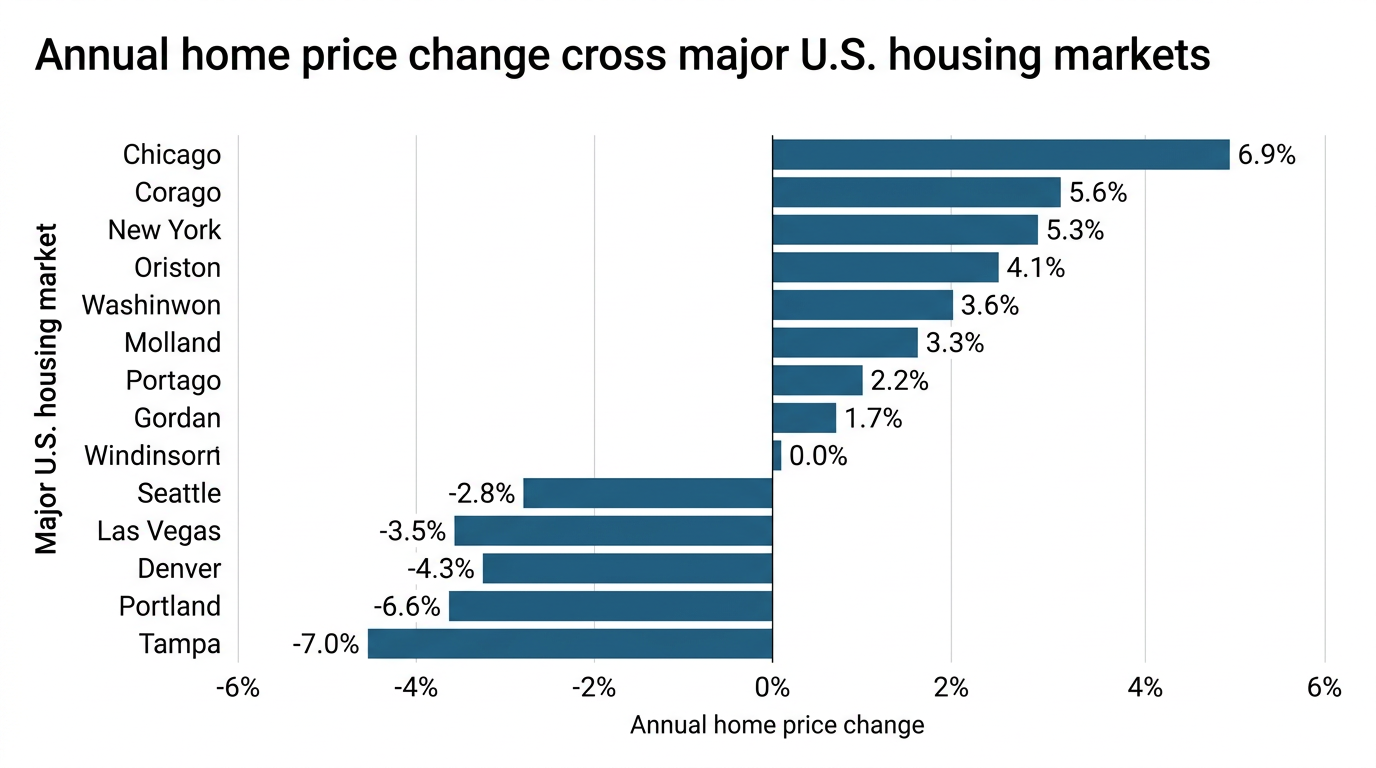
For a useful reference on how Chicago stacks up against other major urban markets, our breakdown of chicago vs new york condo costs puts the numbers in perspective and shows why Chicago remains one of the more competitively priced condo markets among major U.S. cities.
The Comps-First Approach: What Actually Sets the Price
The foundation of any solid pricing strategy is comparable sales, commonly called comps. These are recently sold units that share meaningful similarities with yours: square footage, bedroom and bathroom count, floor level, parking situation, and building type.
Here is what separates a useful comp from a misleading one:
Recency: Sales within the last 90 days carry the most weight. Chicago's condo market can shift meaningfully quarter to quarter.
Same building: A sale in your exact building is far more reliable than one three blocks away. Buyers and appraisers both prioritize this.
Condition and finishes: A gut-renovated unit with quartz countertops and wide-plank flooring will not price the same as an original 1990s build, even with identical square footage.
Floor and views: Higher floors with unobstructed views consistently command premiums. The gap between the second floor and the eighteenth floor in the same building can be significant.
Parking: In many Chicago neighborhoods, a deeded garage space adds real and measurable value. Some buyers will not even tour a unit without it.
The Zillow Home Value Index methodology provides a useful overview of how automated valuation models work at scale, but local experts consistently outperform algorithms in dense, condo-heavy urban markets like Chicago.
HOA Fees and Assessments: The Hidden Pricing Variables
Monthly HOA fees have a direct effect on how buyers perceive affordability. A unit priced at $375,000 with $700 per month in assessments feels very different to a buyer than a unit at $390,000 with $350 per month in assessments, even though the gap in list price is small.
If your building has a pending special assessment, expect buyers to either request a price reduction or walk away entirely unless the assessment is disclosed clearly and the math still works in their favor. Transparency here is not just good ethics; it is smart strategy. The Consumer Financial Protection Bureau's guidance on HOA disclosures is worth reviewing if you are unsure what needs to be disclosed under Illinois law.
Buildings with healthy reserve funds, clean financials, and well-maintained common areas support stronger pricing. Buildings with deferred maintenance or litigation history work against you, and no amount of staging overcomes a bad balance sheet.
Timing, Market Conditions, and Neighborhood Trends
Chicago's condo market has seasonal patterns. Spring, typically March through June, tends to be the most active period for condo listings, with more buyers in the market and faster days-on-market figures. Listing in late fall or winter is not a dealbreaker, but it usually means a longer path to closing and sometimes softer pricing pressure.
Beyond seasonality, macro conditions matter. Interest rate movements have a direct effect on buyer purchasing power, which flows directly into the price range buyers can realistically target. According to the National Association of Realtors, even a one-percentage-point move in mortgage rates can shift buyer affordability by tens of thousands of dollars, which affects how your price lands in the market.
For a real-world example of how a specific building's features and location affect pricing, our writeup on marielle on the park west loop condos walks through the kinds of details that determine value in one of Chicago's most active condo corridors.
Using Professional Tools Alongside Local Expertise
Automated valuation tools like Redfin's estimate tool and Zillow's Zestimate give you a starting range, but they frequently miss building-specific nuances in urban condo markets. They are best used as a starting point, not a final answer.
A proper home valuation from a local agent who knows your building and neighborhood will account for what the algorithm misses: the HOA's financials, the parking situation, the specific view from your floor, and recent pending sales that have not yet closed and therefore do not appear in public data.
Our team at the Cory Tanzer Group at Option Premier focuses specifically on Chicago condo markets and brings that granular knowledge to every pricing conversation. You can also browse our blogs for additional market context and neighborhood-level insights across the city.

Things to Know
Appraisal alignment matters: If your price is too far above appraised value, financed deals fall apart. Price with the appraisal in mind, especially in buildings where recent sales are thin.
Days on market signals everything: Chicago buyers track listing history. A price reduction after 45 days on market signals weakness and often triggers lowball offers.
Investor buyers think differently: If your building allows rentals, investor buyers will evaluate your unit as a rental income asset, not just a lifestyle purchase. This can sometimes support pricing in ways that owner-occupant comps do not fully capture.
Illinois disclosure requirements are strict: The Illinois Real Estate License Act requires specific disclosures for condo sales. Work with a licensed professional to stay compliant.
Overpricing is more expensive than underpricing: A home that sells quickly at fair market value almost always nets more than one that chases the market down over several months.
Price Your Chicago Condo With the Right Team Behind You
The Cory Tanzer Group at Option Premier knows Chicago's condo market at the street level. Whether you are in the West Loop, Lincoln Park, South Loop, or anywhere in between, we can build a pricing strategy based on real data and real neighborhood knowledge. Reach out to the Cory Tanzer Group today by calling (312) 218-4483 or emailing cory@optionpremier.com, and let us walk you through exactly where your unit sits in today's market.
Frequently Asked Questions
-
A thorough pricing analysis for a Chicago condo usually takes one to three days when done properly.
It involves pulling recent building-specific comps, reviewing HOA financials, and factoring in current market conditions. Rushing this step is one of the most common and costly mistakes sellers make.
-
Overpricing to create negotiation room usually backfires in Chicago's condo market.
Buyers and their agents are well-informed. A listing priced above market value tends to sit longer, accumulate days on market, and ultimately sell for less than it would have at an accurate opening price.
-
High monthly HOA fees reduce buyer purchasing power, which directly compresses what they can offer for your unit.
A buyer pre-approved for a $400,000 mortgage payment budget will offer less for a unit with $700 per month in fees than for a comparable unit with $300 per month in fees. The math is straightforward for buyers.
-
A formal pre-listing appraisal is not required, but it can be useful in buildings with limited recent sales activity.
In buildings where comparable data is thin, a licensed appraiser's opinion gives you and your agent a documented baseline that can also support buyer financing later in the transaction.
-
Deeded garage parking consistently adds measurable value in most Chicago neighborhoods, often between $20,000 and $40,000 depending on the area.
In dense neighborhoods where street parking is scarce, a garage space can be the deciding factor for buyers. Units without parking often attract a narrower pool of interested buyers.
The Bottom Line on How to Price a Chicago Condo
Knowing how to price a Chicago condo accurately comes down to combining solid comparable sales data, an honest assessment of your building's financials, and real knowledge of your specific neighborhood's current demand. No algorithm replaces that combination. Start with a professional valuation, stay objective about your unit's strengths and weaknesses, and work with agents who know this market from the inside out. Contact the Cory Tanzer Group at Option Premier at (312) 218-4483 to get a pricing conversation started today.
More to Explore: 7 Best Concrete Loft Buildings in Chicago: Local Picks for Buyers
Looking for homes, condos, or investment opportunities in Chicago?
Start Your Search With Option Premier
Visit Option PremierStay Connected
Ranked among the top 1% of real estate teams in the Chicagoland market, Cory Tanzer and the Cory Tanzer Group are experts in helping buyers and sellers navigate today’s market across Downtown Chicago, the North Shore, and the Western Suburbs. Recognized for their neighborhood expertise in areas such as University Village, University Commons, South Loop, and Pilsen, the team helps clients stay one step ahead by understanding where the Chicago market is headed next.
Related Articles